
Ten Best Things to Do in Athens Greece
Athens attractions paint a vivid picture of ancient Greek history. When you discover the allure of the ten best things to do in Athens Greece, you’ll walk the same paths where ancient philosophers like Socrates and Plato once roamed.
Whether you’re a history enthusiast, a culture connoisseur, or simply seeking adventure, Athens has something for everyone. From historical landmarks to vibrant cultural experiences, explore the richness of Athens and make your visit truly unforgettable.
Disclaimer: This post may contain affiliate links, meaning I receive commissions for purchases made through those links at no cost to you. Please read my full disclosure for more information.
1. The Acropolis and Parthenon
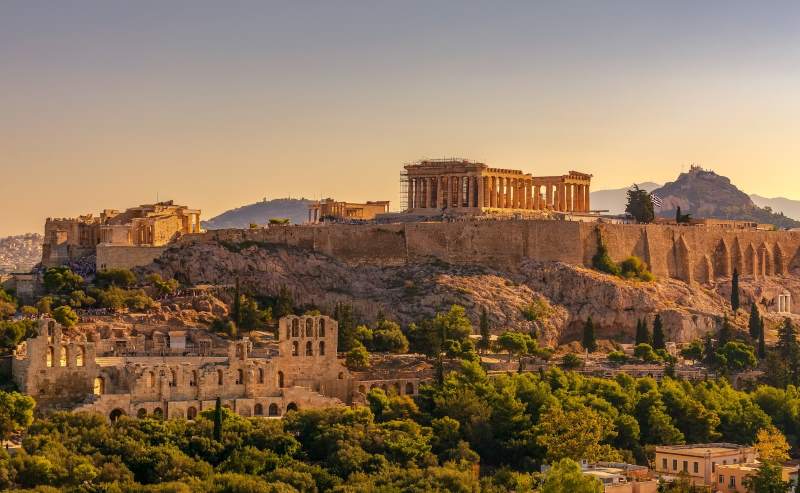
Perched high above Athens on a hilltop, the Acropolis is a must-visit for anyone who loves history and breathtaking views.
As you wander through this ancient citadel, you’ll encounter iconic landmarks like the Parthenon —each echoing tales of ancient Greece.
It’s not just about the ruins; it’s about standing where philosophers once pondered and democracy took root. Plus, the panoramic vistas of Athens from the hilltop are simply unforgettable!
Skip-the-line tips for Acropolis
This UNESCO World Heritage site draws about 1 million visitors each year, making it one of earth’s most beloved archeological treasures.
These tips can help you avoid long queues:
- Pre-Purchase tickets online
- Get there by 8:00 AM opening time, before cruise ship tourists arrive
- Use the quieter southeastern side entrance (Dionysus Theater entrance) instead of the main western entrance (Propylaea)
- Visit on weekdays to avoid bigger weekend crowds
- Plan your visit during March-May or September-November to escape both crowds and summer heat
Note that despite “skip-the-line” ticket advertisements, all visitors must go through security checks that take 30-40 minutes during peak season. Visitors usually spend 2-3 hours exploring the various buildings across this vast site.
The Acropolis Museum

The award-winning Acropolis Museum is located on the Acropolis hill and opened in 2009.
The museum’s floor-to-ceiling windows offer spectacular Acropolis views, making this one of Athens’ best attractions whatever the weather.
Acropolis Museum Highlights
The museum’s four levels tell different stories of ancient Athenian history.
Glass floors on the ground level reveal archeological excavations below, showing findings from sanctuaries and settlements around the Acropolis slopes.
The third-floor Parthenon Gallery is the museum’s crown jewel. Its design matches the Parthenon’s orientation and dimensions perfectly.
Tips for Visiting the Acropolis Museum
These tips will help you have a smooth visit to this popular Athens attraction:
- Book tickets online
- Arrive before 9 am opening time, especially in summer
- The museum rarely has long entry lines outside peak season, unlike the Acropolis
2. Temple of Olympian Zeus
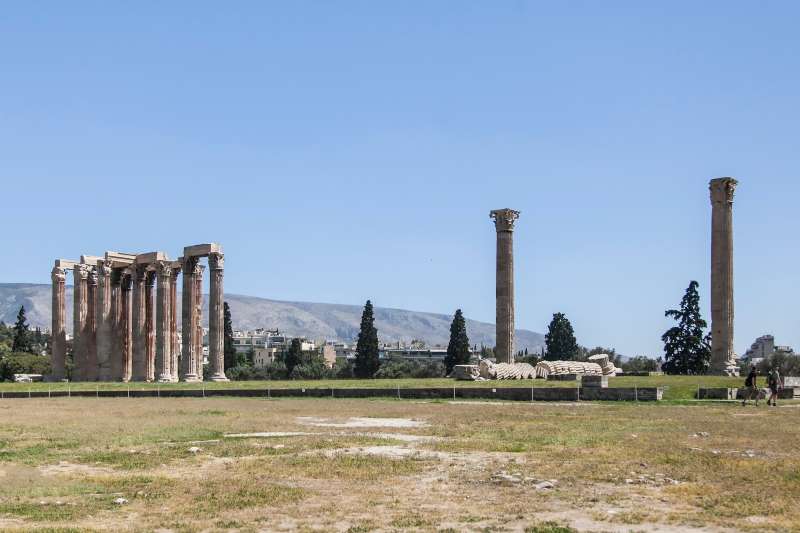
The Temple of Olympian Zeus is one of history’s most ambitious building projects. Its construction spanned six centuries with many breaks along the way.
The project began in the 6th century BCE under Peisistratus and Emperor Hadrian finally completed it in 131 CE. Today, this massive temple gives visitors an amazing look at ancient Athens’ glory.
Today, just 15 of the original 104 columns still stand. Thirteen columns group together at the southeastern corner while 2 remain at the southwestern corner. A sixteenth column lies on the ground where it crashed during a fierce storm in 1852.
The Temple of Olympian Zeus ranks high among Athens’ must-see attractions. Even after centuries of stone removal for other buildings, the remaining structure offers amazing photo opportunities with the Acropolis in the background.
Visiting Tips for the Temple of Olympian Zeus
Here’s how to make the most of your visit to this historic Athens site:
- Pre-purchase your Temple of Olympian Zeus E-Tickets online
- Summer visitors (April-August) should arrive right at opening time – 8:00 AM
- Winter hours run from 8:00 AM to 3:30 PM (November through March)
- A combined archeological sites ticket might save you money
- You’ll need about 30-45 minutes to explore this compact but remarkable site
3. Odeon of Herodes Atticus
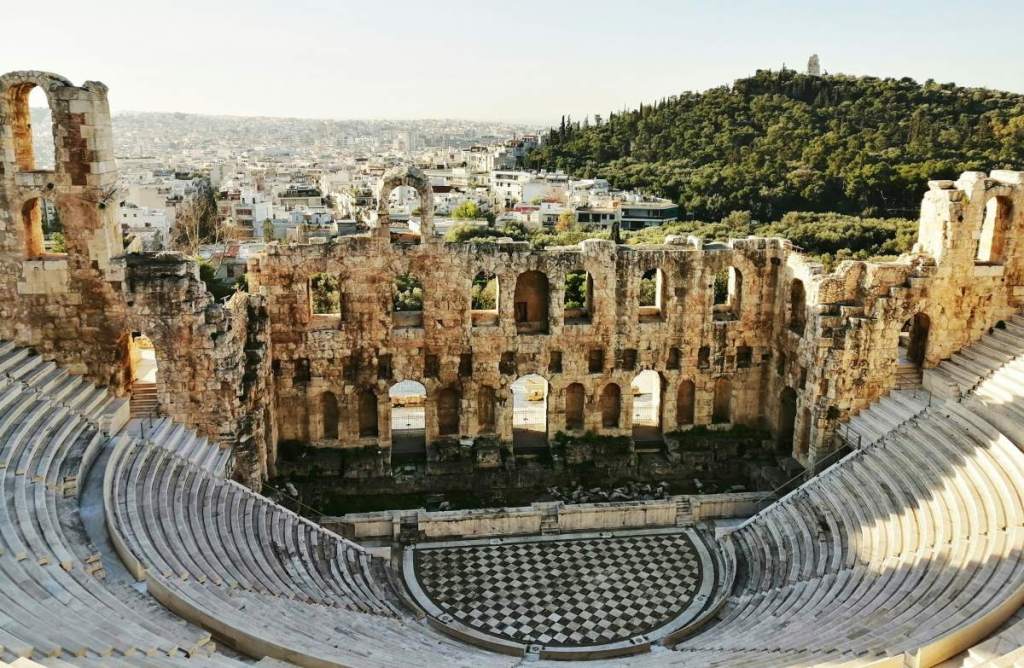
The Odeon of Herodes Atticus, a remarkable ancient theater still used today, is located on the southwest slope of the Acropolis. This stone Roman theater ranks among the best things to do in Athens Greece, perfectly blending history with culture.
Odeon of Herodes Atticus overview
A wealthy Athenian benefactor Herodes Atticus built this theater in 161 AD to honor his late wife, Aspasia Annia Regilla.
The original structure featured a steep-sloped auditorium, three-story stone front wall, and a luxurious cedar wood roof. Rock carvers created the semicircular cavea (auditorium) and divided it into two sections with a 1.20m wide corridor.
Each section displayed 32 rows of white marble seats. The renovated Odeon now seats about 5,000 people and delivers exceptional acoustics. Even the softest sounds reach every corner of the venue.
Cultural importance
Music has filled this venue throughout history, and that tradition continues today. Many legendary artists like Luciano Pavarotti, Elton John, and Frank Sinatra have performed here. A performance at this historic venue should be on everyone’s Athens bucket list!
Tips for Odeon of Herodes Atticus
The Odeon’s access works differently from most venues:
- Your Acropolis ticket lets you view the Odeon from above
- You’ll need separate performance tickets to enter the theater
- The steep stairs can make finding your seat tricky, so arrive early
- Wear flat shoes – the theater doesn’t allow high heels
- People with mobility concerns should book seats near the stage
The magic happens during evening performances. Picture yourself under the stars with the lit-up Acropolis as your backdrop – that’s the best way to experience this Athens gem.
4. Ancient Agora and Temple of Hephaestus
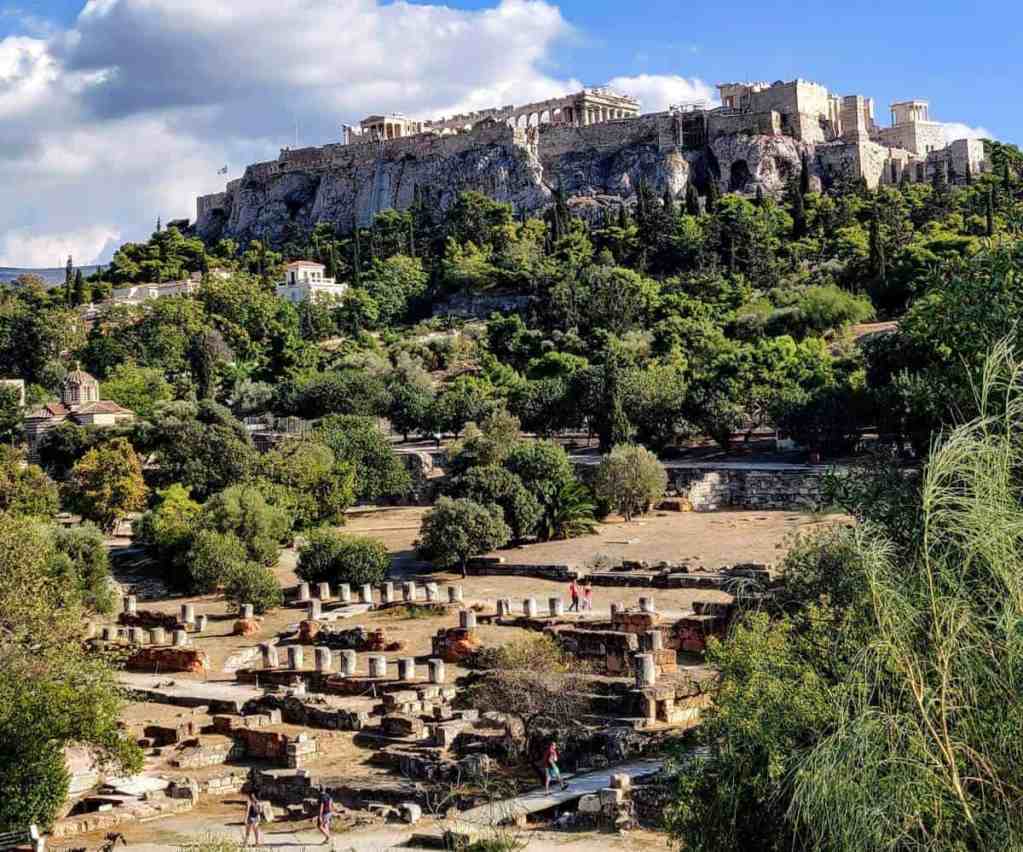
The Ancient Agora lies northwest of the Acropolis. This remarkable site was once Athens’ beating heart of civic life and ranks among the top attractions in Athens, Greece today. Visitors can get a real glimpse into ancient Athenians’ daily lives here.
Ancient Agora overview
The Ancient Agora’s original purpose in the 6th century BCE was a place for military duty and royal pronouncements. The site later became Athens’ main marketplace, political forum, and social hub.
Democracy was born here, as citizens gathered to discuss politics. Great philosophers like Socrates, Aristotle, and Plato shared their revolutionary ideas in these spaces.
Temple of Hephaistos significance
The Temple of Hephaistos stands proudly atop Agoraios Kolonos hill at the Agora’s northwest side. Many experts call it Greece’s best-preserved ancient temple.
Built between 449-415 BCE, this Doric peripteral temple showcases six columns on its shorter sides and thirteen along its longer ones. The temple pays tribute to Hephaestus, god of fire and metalworking, and Athena.
Tips for Visiting Ancient Agora
These tips will help you make the most of your visit:
- Beat the crowds and midday heat by arriving early (8-9 AM) or late afternoon
- Take the main entrance near Monastiraki Square to access key sites easily
- Buy tickets online to skip long queues, especially during peak season
- Save money: Get the Athens combo pass to visit multiple archeological sites
5. Changing of the Guard at Syntagma Square
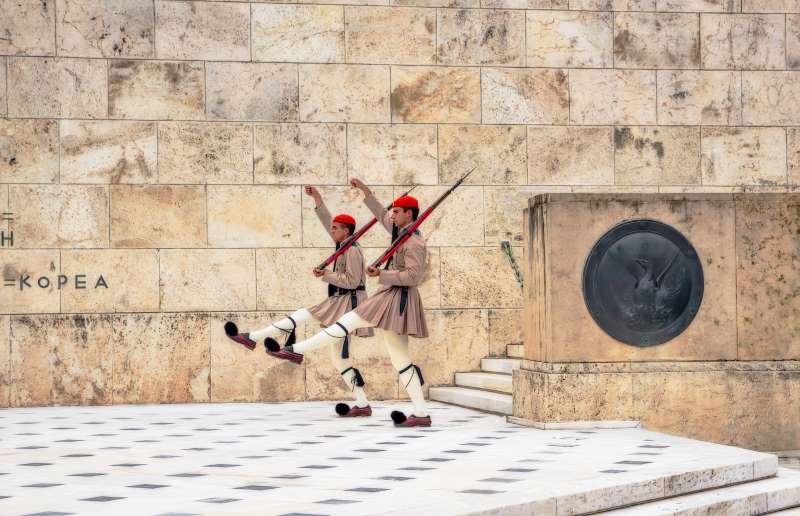
The Changing of the Guard at Syntagma Square is a one-of-a-kind ceremony that’s both entertaining and completely free to watch.
Located right in front of the Hellenic Parliament, this event combines military precision with theatrical pageantry, making it one of the most memorable experiences you can have in the city.
Changing of the Guard Overview
The guards are called Evzones—or Tsoliades—and they belong to an elite unit of the Greek army. You’ll find them standing stoically at the Tomb of the Unknown Soldier, a war memorial that honors every Greek soldier who gave their life in battle.
The Evzones stand perfectly still during their one-hour shift, 24/7, no matter the weather. And they’re not just standing there looking good—their presence is deeply rooted in Greek heritage and tradition.
But what really sets this ceremony apart is how uniquely Greek it is. The movements aren’t just symbolic—they’re highly choreographed and steeped in meaning. It’s not your average guard change; it’s a performance, a ritual, and a history lesson all rolled into one.
When’s the Best Time to Visit?
While you can watch the guard change every single hour, rain or shine, the best time to go is Sunday at 11:00 AM. That’s when they pull out all the stops for the full ceremonial parade.
The guards march in from their barracks behind Parliament, led by a military band, and they’re dressed in their full ceremonial whites. The whole thing takes around 30 minutes, and it’s definitely worth showing up 30 minutes early if you want a great viewing spot.
6. Panathenaic Stadium
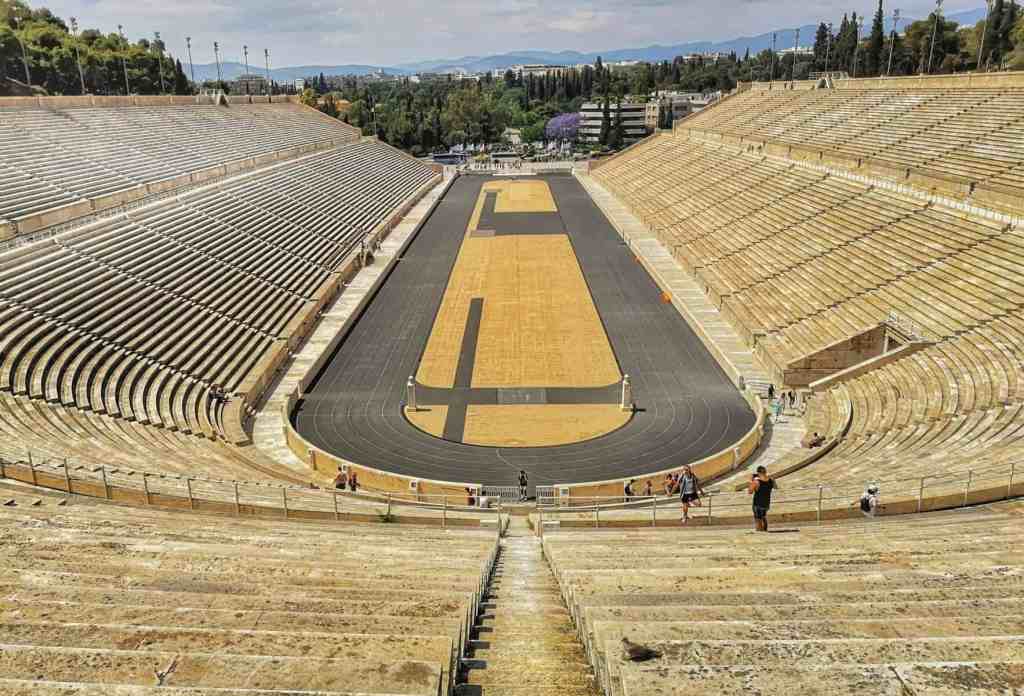
The world’s only major stadium built completely from white marble, the gleaming Panathenaic Stadium is an extraordinary Athens attraction.
Local residents call it “Kallimarmaro” (meaning “beautiful marble”).
Panathenaic Stadium History
This massive U-shaped structure originally hosted the Panathenaic Games way back in the 4th century BC. Fast forward to the Roman era, when seating was expanded to fit 60,000 spectators.
But like a lot of historical sites, it eventually fell into ruin. That is, until the 1800s, when it was rediscovered and completely rebuilt in time for the first modern Olympic Games.
The Stadium’s Olympic Legacy
The very first modern Olympic Games kicked off in 1896 at the Panathenaic Stadium. Then in 2004 Athens Olympics, the stadium hosted the archery competitions and the finish line for the marathon.
Even today, it plays a special role in every Olympic Games around the world—it’s where the Olympic flame is officially lit before it begins its journey to whichever city is hosting.
Tips for Visiting the Panathenaic Stadium
Want to get the most out of your visit to this marble masterpiece? Here are some insider tips to make your experience unforgettable:
- Don’t miss the permanent exhibit in the stadium atrium—”Memories from Olympic Games” features posters and Olympic torches dating all the way back to 1896.
- Book your tickets online in advance—they usually come with an audio guide in multiple languages, which is super helpful.
- Go early, especially in summer
- Snap a photo on the winner’s podium—it’s a classic souvenir shot with the iconic stadium as your backdrop.
- Climb up to Section 21 for panoramic views of the Acropolis, the Parthenon, the Zappeion, the National Gardens, and Lycabettus Hill.
- Don’t miss the opportunity to join the morning jog from 7:30 to 9:00 AM
7. Mount Lycabettus
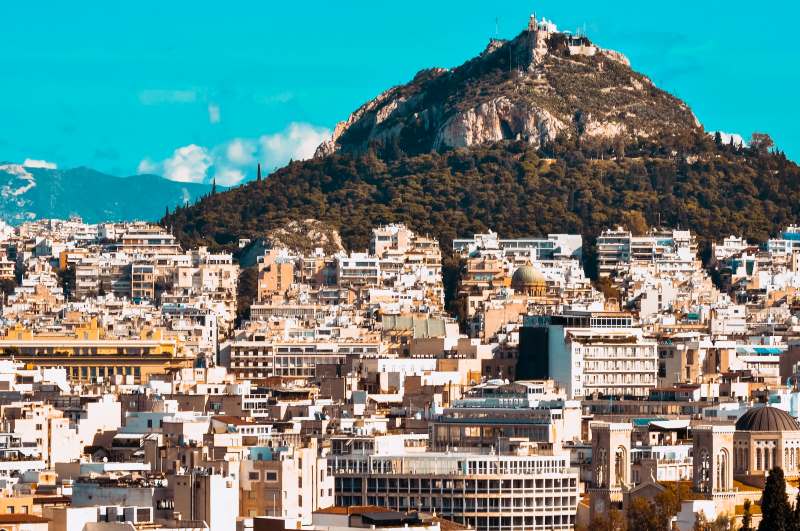
Looking for the best view in Athens? Mount Lycabettus has you covered.
With an impressive height of 277 meters (or 886 feet) above sea level, this limestone hill is the highest point in the city, and it offers the kind of jaw-dropping panoramic views that postcards can only dream of capturing!
More Than Just a Pretty View
At the summit, you’ll find the charming whitewashed Chapel of St. George. This 19th-century gem adds a touch of romance to the peak and houses some beautiful religious icons and art inside.
Not far from the chapel, you’ll come across the Lycabettus Theater—a 3,000-seat open-air venue carved right into the hillside. Since opening in 1964, it’s welcomed legendary performers like Ray Charles.
How to Get There (Options for Every Style)
Getting to the top of Mount Lycabettus is easier than you think. Here are your options:
- By Cable Car (Funicular): You can hop on the funicular from Kolonaki (you’ll find the station at the corner of Aristippou and Ploutarchou streets). It runs daily from 9:00 AM until 2:30 AM, and the ride takes about 3 minutes. Tickets are €12 round trip or €9 one way.
- By Foot: There’s a lovely walking path that leads to a stairway that zigzags its way up the hill. You can walk by yourself or join a guided walking tour. Many people hike up and then take the cable car down for an easy descent.
- By Car: If you’re driving, you can take the ring road around the hill, which leads to a parking area near the open-air theater. From there, it’s just a short walk to the summit.
If you want the best experience, try visiting on a weekday when it’s less crowded. You’ll have a better chance of finding the perfect spot to sit, relax, and soak it all in.
8. National Archaeological Museum

The National Archeological Museum opened in 1866 and has grown into Greece’s largest museum, becoming one of the most important archeological institutions worldwide.
Museum overview
In this impressive neoclassical building, more than 11,000 exhibits give visitors a detailed view of ancient Greek culture from prehistory through late antiquity.
The museum’s core consists of five major permanent collections: Prehistoric Antiquities, Sculpture Works, Vase and Miniature Collection, Metalworking Works, and the unique Egyptian and Eastern Antiquities collection.
Tips for visiting the museum
It is recommended that you pre-purchase museum entry e-tickets before your visit. Long queues often form at the entrance, so pre-booking guarantees entry on your chosen date.
You’ll need about four hours to see the museum’s detailed exhibits. The best time to visit during peak tourist seasons is early morning, as tickets can sell out quickly.
Note that visitors can’t bring backpacks and large bags inside – you’ll need to leave them at the entrance.
9. Visit the Plaka Neighbourhood

The northeastern slope of the Acropolis is home to Plaka, where labyrinthine streets and timeless charm fascinate visitors.
Plaka overview
Plaka is Athens’ oldest neighborhood and stretches from Filomousson Square at the intersection of Kidathinaion and Adrianou Streets to Monastiraki.
The neighborhood grew around the ruins of the Ancient Agora and still keeps its historical character. Locals call it the “Neighborhood of the Gods” because of its location near sacred sites.
Cultural charm
This living museum lets you find neoclassical mansions, Byzantine churches, and the remarkable Anafiotika quarter with its distinct Cycladic architecture.
The shops here sell everything from handmade jewelry and olive oil products to unique art pieces, perfect for authentic souvenirs.
Best walking routes
Plaka’s pedestrian-friendly streets make it perfect to explore on foot on your own or with an expert guided tour.
Your journey can start at Syntagma Square – walk down Ermou Street until you reach the Church of Kapnikarea. Next, head toward Adrianou Street, the main path that separates Upper Plaka (Ano Plaka) beneath the Acropolis from Lower Plaka (Kato Plaka) between Syntagma and Monastiraki.
Take a break at one of the cafés near the Monument of Lysicrates, where Lord Byron wrote part of his work.
The whitewashed alleys of Anafiotika are a must-see – they’ll make you feel like you’ve stepped from urban Athens into an island village.
10. National Garden of Athens

The National Garden provides a refreshing green sanctuary between ancient ruins and bustling city streets in Athens’ heart. This 15.5-hectare (38-acre) green oasis gives you a perfect break from learning about historic sites.
Athens National Garden is located right next to the Greek Parliament building and Syntagma Square. Seven entrances lead into the garden, with the main entrance on Amalias Avenue.
Good news, it is FREE to visit!
National Garden overview
You’ll find a remarkable botanical collection with more than 7,000 trees and 40,000 bushes spanning 519 species and varieties. The garden holds several hidden gems:
- Six lakes with playful ducks
- A small zoo and children’s playground
- A conservatory that’s Greece’s first working greenhouse
- A children’s library with over 6,000 books
- An ancient Roman floor found during 19th-century excavations
The garden stands as one of the few large green areas in Athens’ urban landscape. Visitors seeking shade and peace rate it among the best things to do in Athens.
Best time to visit
The garden stays open from sunrise to sunset every day, and early morning visits give you the most peaceful experience.
Spring months (March-May) offer the best garden experience with blooming flowers and pleasant temperatures. Fall (September-November) brings milder weather and smaller crowds.
Frequently Asked Questions (FAQs)
Conclusion: Ten Best Things to do in Athens Greece

Athens stands as proof of human achievement through thousands of years, where ancient wonders blend with modern life. Every site in this piece tells a story about the birthplace of Western civilization.
The city has way more to offer than ruins and relics. A walk through Anafiotika’s whitewashed lanes feels different from the view of the Parthenon’s mighty columns, though they’re just minutes apart. This mix of sights makes Athens special.
The €35 combined ticket, valid for five days, gives access to most archeological sites. This smart investment lets you visit multiple venues and skip long queues. Smart timing of your visits—early morning or late afternoon—makes your time at popular spots like the Acropolis better.
Athens shows its true character beyond the famous monuments. Plaka’s neoclassical beauty, Varvakeios Market’s food treasures, and Mount Lycabettus’ sweeping views show different sides of Athenian life. The city rewards travelers who step away from the popular landmarks.
Weather shapes your Athens experience. Spring (March-May) and fall (September-November) bring perfect conditions with fewer crowds and nice temperatures to visit outdoor sites. Summer visitors should plan their activities during morning or evening hours. The midday heat can be intense at marble-filled places like the Panathenaic Stadium.
Athens creates a deep connection to history that few other places can match. Socrates once walked these same paths through the Ancient Agora. The Odeon of Herodes Atticus still hosts shows after almost two thousand years. These timeless places have seen countless generations pass, yet they stand strong as Athens grows around them.
Your time in Athens will be both educational and fun. You can marvel at archeological treasures in the National Museum or enjoy modern Greek life in local neighborhoods. This amazing city connects past and present with unmatched elegance.
From ancient landmarks to contemporary delights, the ten best things to do in Athens Greece promise an enriching experience. Plan your visit, immerse yourself in the city’s essence, and create memories that will last a lifetime.
Athens Travel Blog

Where to Stay in Athens
Cheapest Time to Travel to Athens
Day Trips From Athens
Athens 3 Day Itinerary
Athens Bucket List Experiences