
The Ultimate Greece Bucket List: Dream Destinations, Hidden Gems & Must-Do Experiences
Your Greece’s bucket list deserves more than ordinary tourist stops, especially at the time you’re learning about a country with cities over 5,000 years old and traditions dating back to 776 BCE.
Greece offers an extraordinary range of things to do, from ancient temples and monasteries perched on cliffs to pristine beaches. You’ll find vibrant island nightlife too.
Whether you’re seeking the best places to visit in Greece or wondering what to do beyond the typical itinerary, this blog covers the top things to do and the unforgettable things to see in Greece.
Disclaimer: This post may contain affiliate links, meaning I receive commissions for purchases made through those links at no cost to you. Please read my full disclosure for more information.
1. Explore the Acropolis and Athens
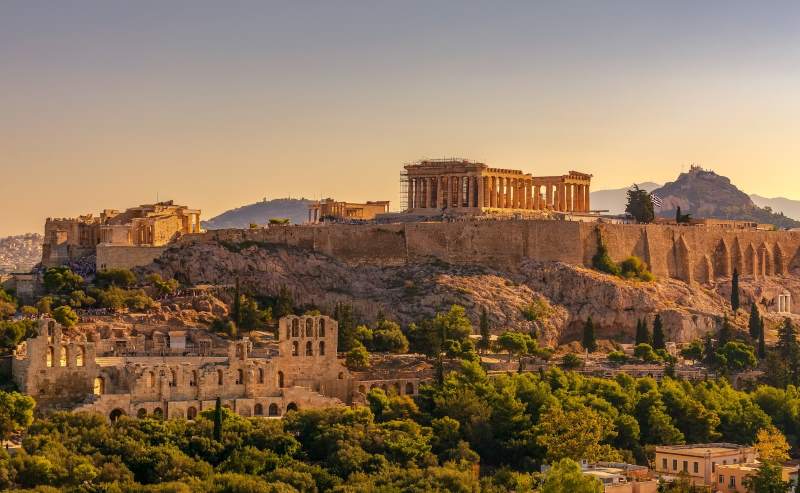
Standing atop the limestone hill that birthed democracy and Western philosophy, the Acropolis represents one of the most important archeological sites in the world. This UNESCO World Heritage complex is a must-visit in Athens!
The site spans approximately 3 hectares and features five major landmarks. The Parthenon, completed in 438 BC, dominates the plateau with its mathematically precise design based on the golden ratio of 1.61.
Walk through the monumental Propylaea gateway, admire the elegant Caryatids at the Erechtheion, and visit the Temple of Athena Nike perched on the cliff edge. The Odeon of Herodes Atticus, a Roman amphitheater, still hosts performances beneath the glowing Acropolis.
Your visit timing matters a lot. Peak season runs from April through October. Arrive at 8 am to beat the crowds and heat, or visit at 6 pm for sunset views. Wait times reach 2 to 3 hours outside the gates between June and August.
Plan 2 to 3 hours for the Acropolis itself. Pairing your visit with the Acropolis Museum extends the experience to 5 to 6 hours total and provides important context since most artifacts now reside in the museum.
Wear sturdy walking shoes with rubber soles. Ancient marble surfaces become slippery. Bring at least 1 liter of water per person. The exposed hilltop offers minimal shade and temperatures exceed 85°F during summer months.
Book your tickets well in advance. Morning time slots fill quickly as the date approaches.

ATHENS TRAVEL BLOGS:
- Ten Best Things to do in Athens, Greece
- 25 Must-Do Athens Bucket List Experiences for 2026
- Discover the Cheapest Time to Travel to Athens, Greece
- Essential Athens Travel Tips for an Unforgettable Adventure
- Beyond the Acropolis: Your Ultimate Day Trips from Athens Guide
- Your Stress-Free Athens 3 Day Itinerary: Every Stop Mapped Out For You
- Confused About Where to Stay in Athens, Greece? This Guide Makes it Simple For You
2. Marvel at Santorini’s Iconic Views
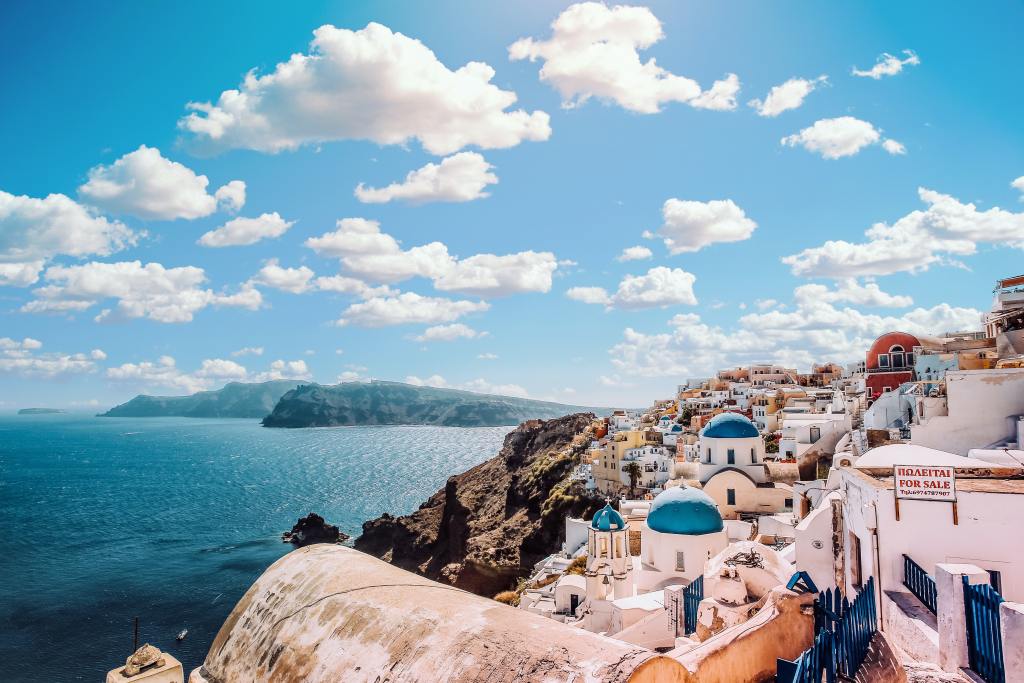
Watching the sun dip into the Aegean Sea from Santorini’s clifftop villages ranks among the most spectacular sights in Greece.
Oia, perched on volcanic cliffs overlooking the caldera, offers one of the most beautiful sunsets in the world! The village’s whitewashed cave houses and blue-domed churches glow in orange and red hues as daylight fades. This creates a scene straight from a postcard.
The ruins of the Venetian Castle of Agios Nikolaos offer the best vantage point to watch the sunset. You’ll watch the sun tuck directly into the sea from the caldera’s edge while surrounded by fellow travelers. Arrive at least 3 hours early to secure your spot because crowds pack this location.
Santorini’s Three Blue Domes near the Church of Agios Spyridonas have become the island’s most iconic symbol. These structures appear on virtually every Santorini postcard. You’ll need to navigate through narrow alleys in Oia’s main square to find them.
Four caldera villages provide stunning views beyond Oia. Each village gives you breathtaking caldera panoramas that define your Greece bucket list.
Firostefani has the Church of Agios Theodoros with sweeping caldera backdrops and fewer tourists. Imerovigli is nearly 1,000 feet above sea level. People have nicknamed it the balcony to the Aegean.
Fira combines traditional Cycladic architecture with vibrant nightlife. Akrotiri’s southwestern position has the 1892-built lighthouse and delivers quieter sunset experiences.
3. Explore the Ancient Ruins of Delphi

Perched on Mount Parnassus slopes 180 kilometers northwest of Athens, Delphi stands as Greece’s most spectacular archeological site and blends ancient ruins with dramatic mountain vistas overlooking the Gulf of Corinth.
The Sanctuary of Apollo housed the legendary Oracle of Delphi from the 6th century BC through Roman times. The Pythia (High Priestess) delivered prophecies that influenced wars and shaped city-states. Ancient Greeks marked this location with the omphalos stone and designated it the “navel of the world”.
Your exploration starts along the Sacred Way, where the partially reconstructed Athenian Treasury showcases how victorious city-states displayed their offerings to Apollo.
The path climbs toward the Temple of Apollo, where six broken Doric columns remain from the 4th century BC structure. Pythia sat on her sacred tripod here and inhaled vapors from the earth to channel Apollo’s prophecies. The temple survived until 390 AD. Emperor Theodosius I ordered its destruction.
The ancient theater sits above the temple and seated 5,000 spectators to host artistic competitions during the Pythian Games. The venue received upgrades after Emperor Nero’s visit in 67 AD. It still stages performances. The stadium accommodated 6,500 people higher up the mountainside to host athletic events held every four years and rivaled the Olympic Games in prestige.
Ancient pilgrims bathed at the Castalian Spring to purify themselves after the long experience before entering the sanctuary. A short walk from the main site brings you to the Sanctuary of Athena Pronaia. The circular Tholos from the 4th century BC originally featured 20 Doric columns surrounding 10 Corinthian columns.
Allocate substantial time for Delphi’s Archeological Museum, where 14 rooms display the bronze Charioteer statue and the Large Sphinx of Naxos.
KTEL Fokidas operates buses from Athens four times daily. It is recommended to arrive at 8 am when the site opens to see the ruins before the tourist crowds arrive.
4. Discover the Monasteries of Meteora

Six Byzantine monasteries cling to sandstone pillars up to 400 meters above the Thessaly plain, 360 kilometers north of Athens near Kalambaka. The name Meteora translates to “suspended in the air” and describes monasteries that appear to float on vertical rock formations.
Twenty-four monasteries operated here during their 16th-century peak, with over 300 monks residing in Great Meteoron alone. Six remain active and house 50 nuns and 17 monks.
Great Meteoron is the oldest and largest. Saint Athanasios the Meteorite founded it in the 14th century. Three hundred steep steps lead to the museum, main church with mid-16th-century frescoes, and valley views. Summer hours run from 9:30am to 3pm.
Varlaam is the second largest monastery and has 140-195 steps. Two brothers from Ioannina rebuilt it in the early 1500s after years of abandonment. The museum displays the rope basket and winch tower once used to haul supplies and pilgrims up the cliffs. It closes Fridays.
Holy Trinity gained recognition from the 1981 James Bond film For Your Eyes Only. The 15th-century monastery has over 130 steps and is the hardest to access.
Agios Stefanos has the easiest entry via a simple bridge with minimal stairs. This nunnery was converted in 1961, now houses 28 nuns and closes Mondays.
Roussanou functions as a nunnery with 15 nuns and sits on a narrow rock column.
Agios Nikolaos is the smallest and first monastery encountered from Kastraki. It features frescoes by renowned artist Theophanes.
Each monastery charges €5 entrance per person. Children under 12 enter free.
Dress codes at all religious sites require covered shoulders and knees. Shawls are available at entrances if needed.
Each monastery closes one day weekly, so weekend visits work best for seeing all six.
5. Visit the Ancient City of Mycenae
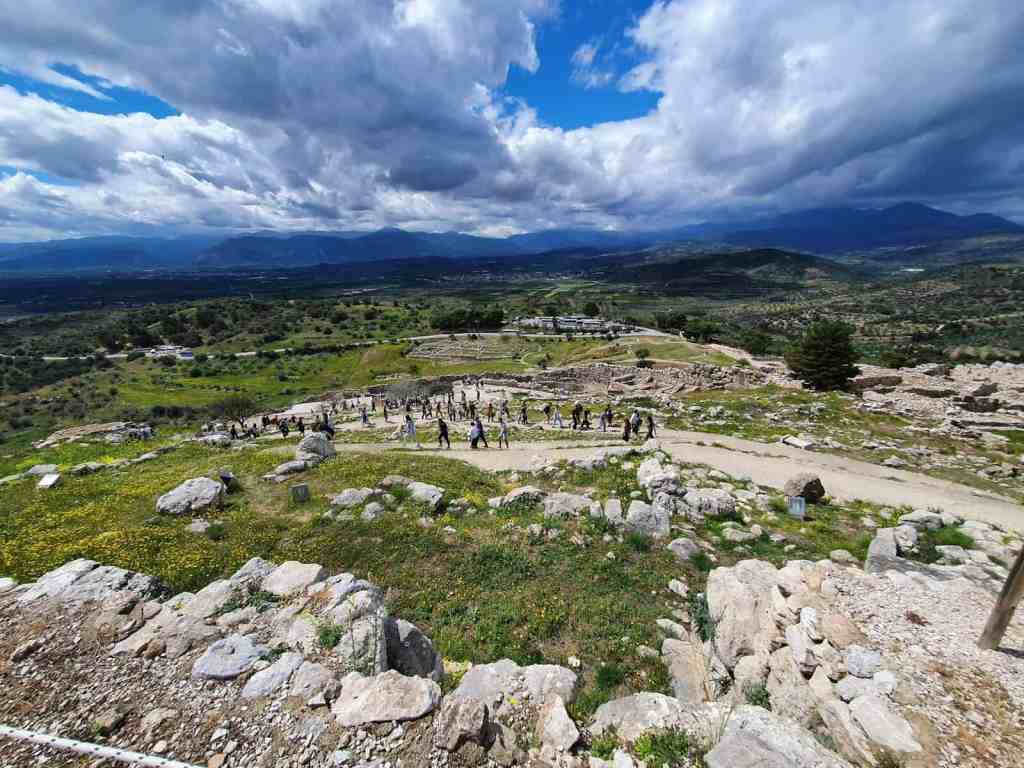
Mycenae sits on a rocky hilltop in the northeastern Argolid plain. This fortified citadel served as the hub of a civilization that dominated the Greek world between 1600 and 1200 BC.
The site covers 30,000 square meters and is surrounded by a 900-meter circuit wall. UNESCO designated it a World Heritage Site in 1999.
The Lion Gate is the main entrance and has become the trademark of the entire archaeological site. This monumental structure was built around 1250 BCE. It features two limestone blocks weighing about 20 tons each, topped by a triangular relief depicting two lionesses flanking a column.
Ancient people believed only the mythical Cyclops possessed strength to move the huge boulders used in the massive fortification walls. This belief gave them the name Cyclopean Walls.
Heinrich Schliemann found Grave Circle A in 1876. It contained the richest burial goods ever found in Bronze Age Greece. The six shaft graves yielded spectacular gold masks, jewelry, weapons and precious objects, including about 15 kilos of gold. These treasures now reside in the National Archeological Museum of Athens.
The Treasury of Atreus sits 400 meters from the citadel and represents the finest example of Mycenaean architecture. This beehive-shaped chamber is 13.5 meters high, with a 14.5-meter diameter. Workers constructed it using cut limestone blocks without mortar.
Mycenae is 120 kilometers from Athens, making it an ideal day trip destination for your Greece bucket list.
6. Party on the Island of Mykonos

Mykonos rivals Ibiza as Europe’s premier party destination. Beach clubs transition from relaxed lunch spots to full-scale parties around 4:00 PM or 5:00 PM. The volume increases, and DJs take the stage. What began as a beach day becomes an all-night experience.
Cavo Paradiso, the island’s most legendary club, is perched on a cliff above Paradise Beach. International DJs such as Alok, Benny Benassi, and Marshmello perform here. Advanced bookings are recommended, with shuttles running to and from Mykonos Town.
Super Paradise Beach Club attracts celebrities and hardcore clubbers with nightly DJ sets. Things stay mellow during the day before the music cranks up in the afternoons.
Scorpios at Paraga Beach is an excellent seafood restaurant by day, before morphing into a club at sundown. The famous Sunset Rituals require mandatory reservations weeks in advance. Lounge activities are best enjoyed from 5:00 PM onwards.
Tropicana Beach Bar attracts a young, high-energy crowd. The party starts daily at 4:30 PM and escalates into table-dancing. Loud DJ sets continue until 5:00 AM.
August brings shoulder-to-shoulder crowds that push the island’s infrastructure to its limit. So the atmosphere is much more relaxed in late May, June, or September.
7. Hike the Samaria Gorge of Crete
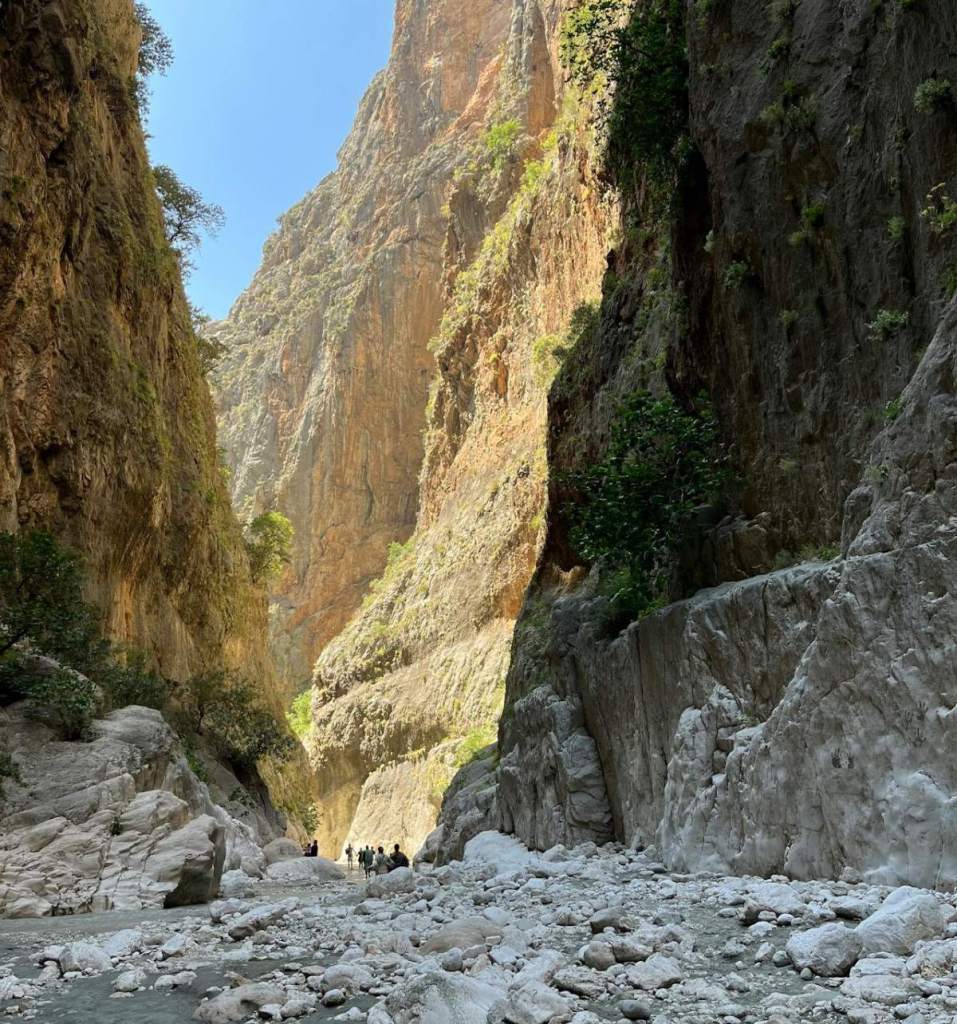
Europe’s second-largest gorge cuts through Crete’s White Mountains as a UNESCO Biosphere Reserve. It extends 16 kilometers from Xyloskalo at 1,250 meters elevation down to the Libyan Sea at Agia Roumeli.
The one-way descent takes 5 to 7 hours and drops through cypress forests, abandoned villages and narrow passages where canyon walls soar 500 meters high.
The trail opens May 1 through October 30. Gates open at 7:00 AM. Start early to beat crowds. Hikers entering after 1:00 PM can trek the upper portion only, as the last ferry from Agia Roumeli departs around 5:30 PM.
Your descent begins with steep switchbacks built during Ottoman times. You drop 1,000 feet in the first hour. The gradient eases after two miles once you reach the abandoned village of Samaria.
At kilometer 14, you’ll squeeze through the Iron Gates, where the gorge narrows to just 3 to 4 meters wide between walls rising 1,000 feet overhead.
Pack 2 liters of water minimum. Mountain springs along the route provide refill points until late summer at the time they dry up.
Wear sturdy hiking boots with hard soles to handle the sharp stones and rocky riverbeds. Bring sunscreen, a hat, and sunglasses. You’ll also need swimwear for the black-sand beach and cash for the €10 entrance fee and €14 ferry ticket.
Busses from Chania depart around 6:15 AM and reach Xyloskalo by 7:45 AM. Ferries run to Chora Sfakion or Sougia from Agia Roumeli and connect to buses back to Chania.
8. See the Shipwreck at Navagio Beach

Zakynthos Island harbors one of the most photographed beaches in the world, where rusted metal meets turquoise waters in an exposed cove framed by towering limestone cliffs.
Navagio Beach earned its dramatic backdrop when the coaster MV Panagiotis ran aground during stormy weather on October 5, 1980. The vessel was allegedly smuggling contraband cigarettes from Turkey to Italy when the Greek Navy gave chase and forced the crew to abandon ship.
Boat access is the only way to reach this beach. Porto Vromi is the best departure point. Tour options range from shared cruises to private boat rentals. Early-morning departures offer the quietest experience before hundreds of tourists arrive between 11 am and 1:30 pm.
But viewing Navagio from sea level misses the postcard-perfect view. The clifftop platform offers a new perspective, allowing you to see the entire scene from above. Driving from Zakynthos town takes about 45 minutes.
Please note that safety concerns have restricted access following landslides. Current regulations permit boats to approach but prohibit swimming near the beach. Verify the latest access status before planning your visit, as this remains one of the top things to do in Greece when conditions allow.
9. Explore Corfu’s Beaches and Old Town

Corfu blends aristocratic European heritage with Mediterranean beach culture in ways few Greek islands achieve.
The Old Town earned UNESCO World Heritage status in 2007. This recognition came from its strategic position at the Adriatic Sea entrance and roots extending to the 8th century BC.
Three forts designed by renowned Venetian engineers defended maritime trading interests against the Ottoman Empire for four centuries. The Old Fortress dates to the 13th century. The New Fortress was built between 1572 and 1645.
Venetian and French influences shaped the island’s distinctive character. The neoclassical buildings from the 17th through 19th centuries create an architectural ensemble rare in Greece. Narrow streets called kantounia wind through the town with their characteristic arches and colorful buildings.
The Liston Promenade, modelled after Paris’s Café de la Paix, has Italian-style arcades where locals gather for coffee. Spianada Square ranks as one of the largest squares in Greece and displays the elegant Palace of St. Michael and St. George from the 19th-century British protectorate.
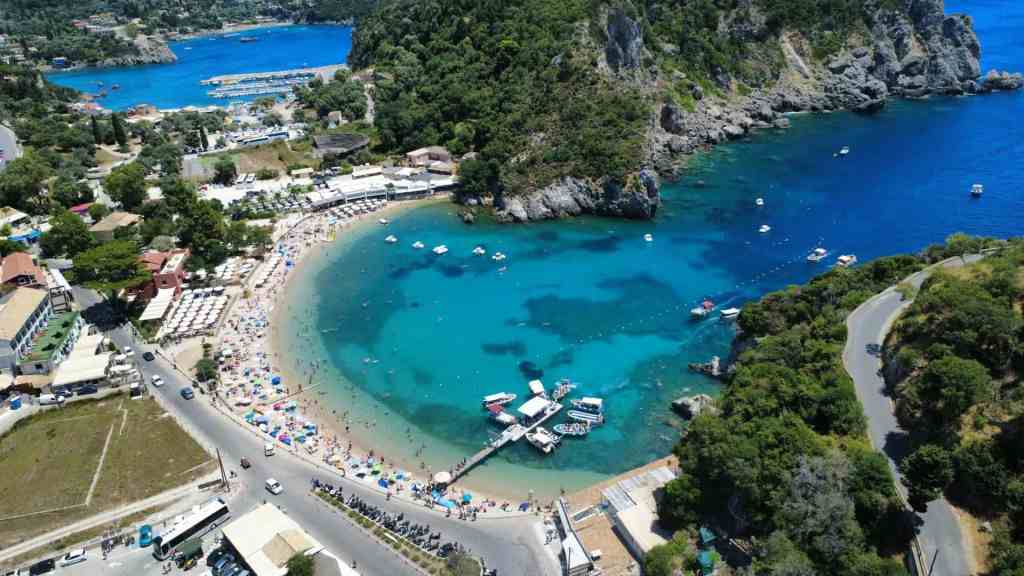
Corfu’s coastline delivers crystal-clear waters and diverse beach experiences. Paleokastritsa, located 23 kilometres from the capital, has sandy beaches surrounded by green cliffs with sea caves, diving clubs and water-sports facilities.
Agios Gordios is 19 kilometres from Corfu Town, with turquoise waters and rock formations. Glyfada, 16 kilometres away, holds Blue Flag status for water quality.
The west side offers lusher scenery with stunning rock formations and sandy beaches. The east side provides warmer, quieter alternatives.
CORFU TRAVEL BLOGS:
- Best Time to Travel to Corfu Greece
- Corfu Solo Travel: A First-Timer’s Complete Guide
- Where to Stay in Corfu For Your Perfect Greek Island Getaway
- Corfu Bucket List: Essential Experiences You Simply Can’t Miss
- Unusual Things to do in Corfu: A Hidden Gem of the Ionian Sea
10. Visit Thessaloniki and the White Tower
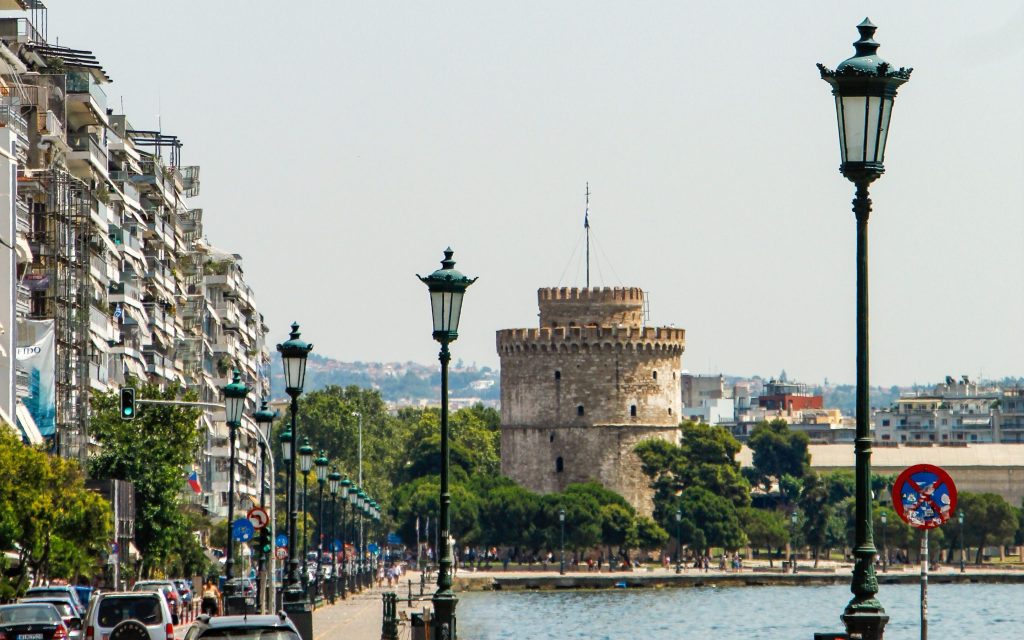
Greece’s second city welcomes you with beauty, history, great cuisine and sweeping sea views. Thessaloniki delivers a vibrant urban experience distinct from island destinations, anchored by its iconic symbol perched on the waterfront.
The White Tower dominates the cityscape as the most recognizable landmark. Following their capture of Thessaloniki in 1430, the Ottomans built this stone fortress in the 15th century. It served as a prison and execution site, earning the grim nickname Tower of Blood.
The museum offers exhibitions tracing Thessaloniki’s history from its founding through recent times. You can also climb to the top of the White Tower for sweeping views of the city, Thermaic Gulf and surrounding hills.
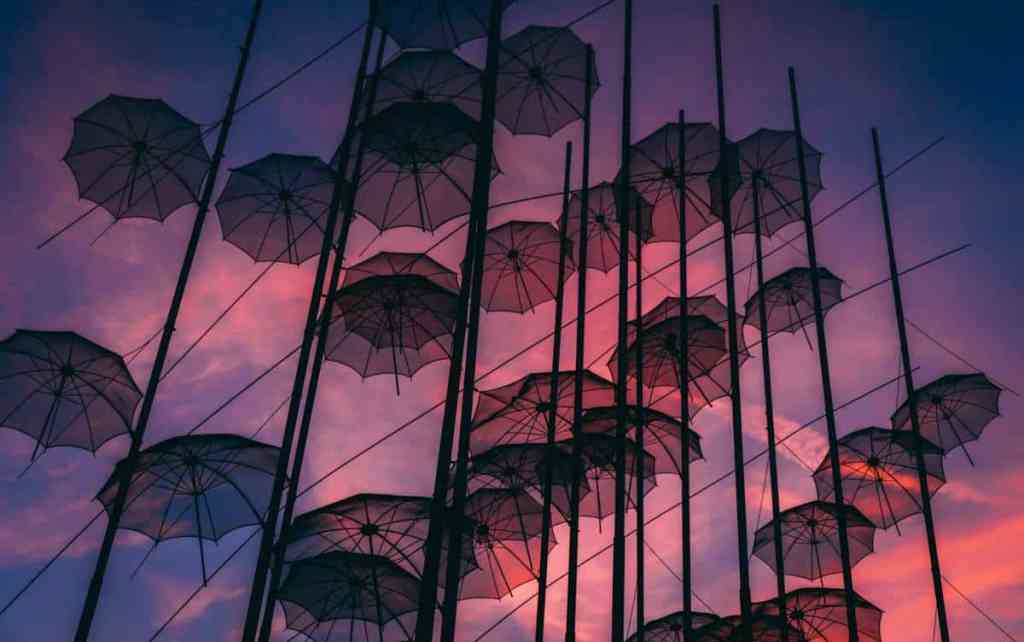
The 3.5-kilometre waterfront extends from the tower past thematic parks. These feature the Alexander the Great statue on Bucephalus and Zoggolopoulos’s distinctive Umbrellas sculpture.
UNESCO World Heritage Sites dot the area, including the Rotunda and Byzantine Walls. This makes it essential for your Greece bucket list!
THESSALONIKI TRAVEL BLOGS:
- Thessaloniki Hotels: Where to Stay For Every Budget
- Thessaloniki Hidden Gems: Secrets Only Greeks Know About
- Thessaloniki Travel Tourist Attractions You Simply Can’t Miss!
- Thessaloniki Bucket List: Ancient Treasures and Modern Delights
- Thessaloniki Itinerary: How to Spend 1 to 7 Amazing Days in Greece’s Cultural Capital
11. Visit the Corinth Canal
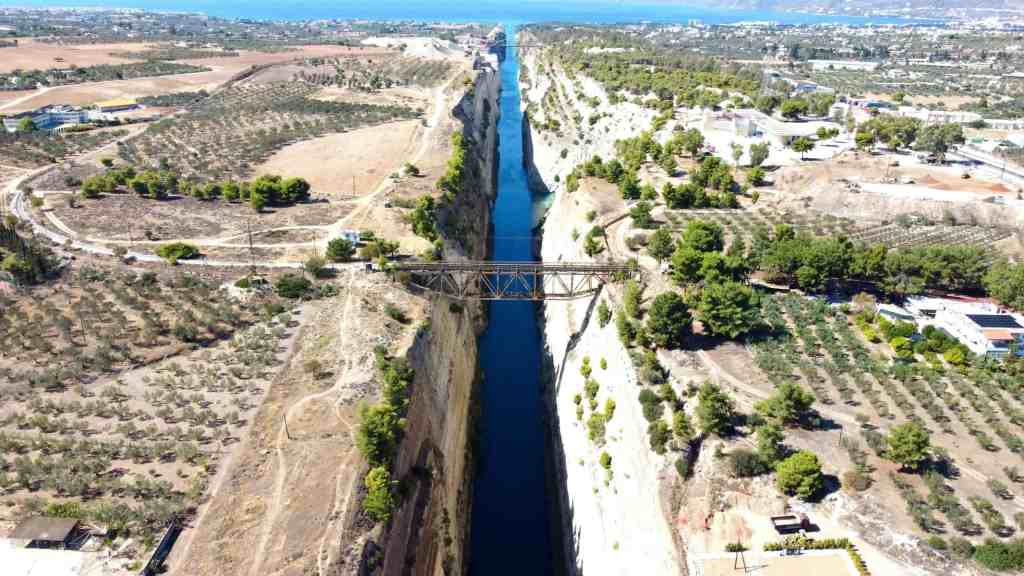
The Corinth Canal is an impressive engineering achievement that took centuries. Solid rock was carved to create this waterway. Emperor Nero partially began the work in AD 67. The French finished the modern project in 1893.
The canal spans 6.3 kilometres in length. Vertical limestone walls rise 90 meters above the water. The waterway measures just 21 meters wide at the bottom at its narrowest point.
Most modern commercial vessels cannot pass through. Around 15,000 ships traverse it annually, though most carry sightseers rather than cargo.
The canal connects the Gulf of Corinth in the Ionian Sea with the Saronic Gulf in the Aegean Sea. It cuts a route that saves vessels from traveling 400 kilometers around the Peloponnese peninsula.
Boat tours depart from Loutraki. Those wanting to experience the passage from water level can take these tours.
Bungee jumping operates from the Old Bridge. Adrenaline seekers can drop 70 to 78 meters into the narrow channel. Participants must be 18 years or older and free from serious health conditions.
There is free parking on the eastern side of the bridge. Restaurants and walking paths provide viewing access from there.
The Corinth Canal is located 48.8 miles away from Athens. Hourly trains reach it in 1 hour 17 minutes, buses in 1 hour 42 minutes, or by car in 59 minutes.
12. Visit Hydra Island
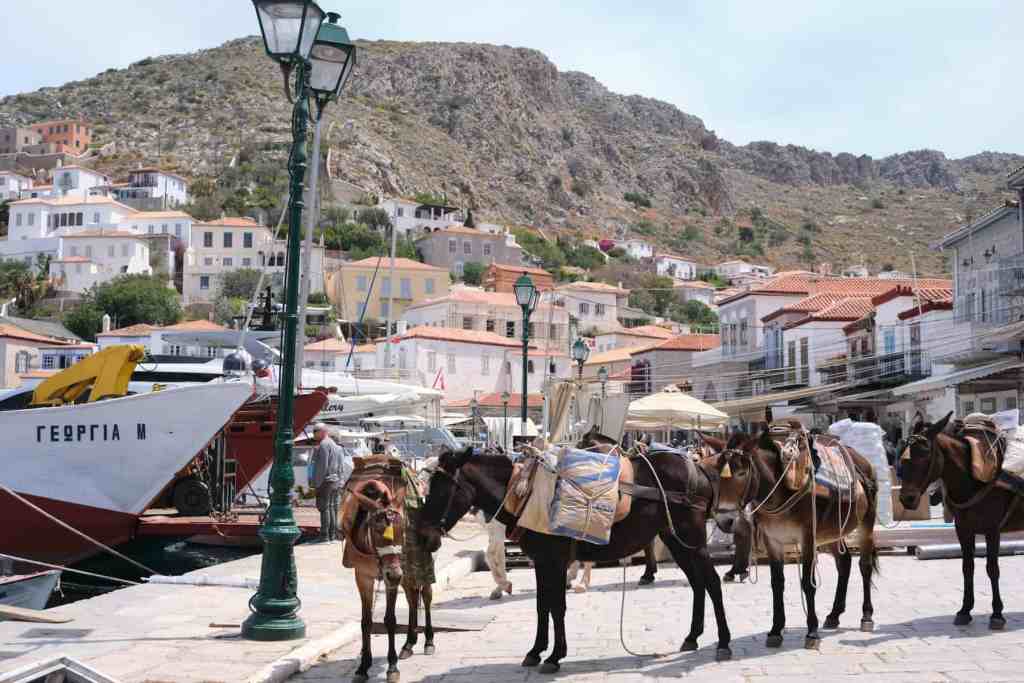
A 1950s presidential decree banned wheeled vehicles from Hydra and preserved an island where donkeys, horses, and mules remain the only form of transport beyond your own feet.
The horseshoe-shaped harbour serves as Hydra’s beating heart. Stone mansions from the 18th century ring the harbour, built by wealthy shipping magnates. The ochre-colored Lazaros Koundouriotis Historical Mansion overlooks the port.
Step inside the former residence of a naval hero from Greece’s War of Independence and discover a fascinating slice of history. Today, the home is part of the Historical Archives Museum. As you wander through the exhibits, you’ll find artifacts from the Balkan Wars alongside beautifully carved ship figureheads that bring Greece’s maritime past to life.
Spilia and Hydronetta platforms near town are popular spots to swim. You can plunge straight from the rocks into turquoise water. Water taxis run every 30 minutes to beaches like Vlychos, Plakes, and Bisti.
Harriet’s Hydra Horses offers ten different riding itineraries. The popular hour-long trek to Kamini costs €40 per person.
Ferries depart from Athens’ Piraeus Port daily and cover the distance in just under two hours for approximately €40 one way.
13. Climb Mount Olympus
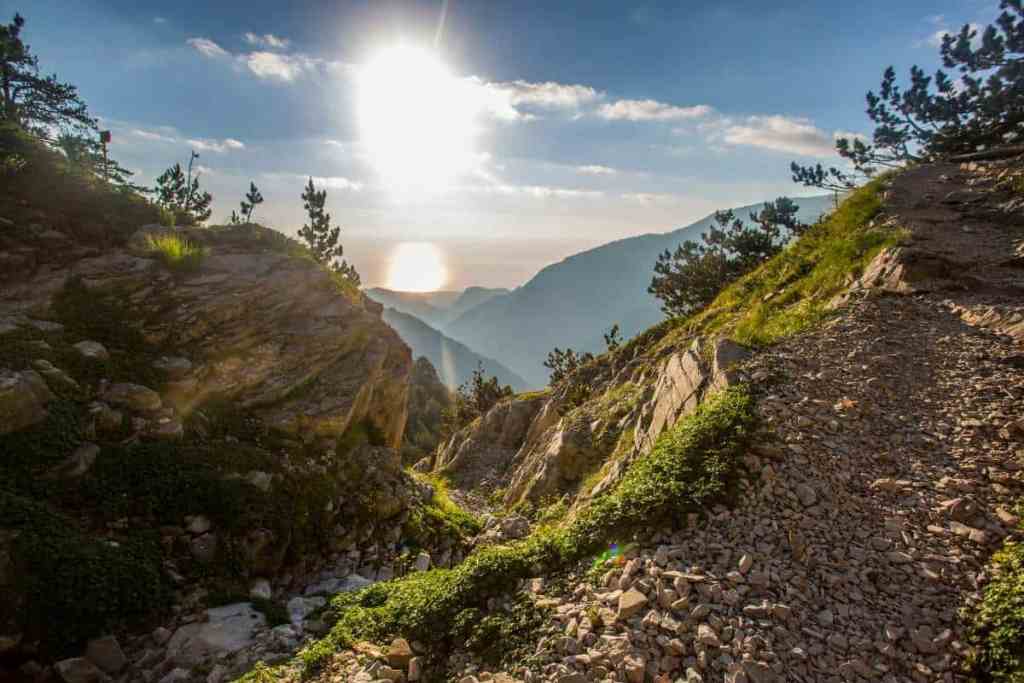
Mytikas is Greece’s highest peak (2,917 meters). Around 10,000 climbers ascend Mount Olympus each year, though not all reach Mytikas due to the Grade III scramble required near the summit.
This expedition spans two to three days. You would start at Litochoro, the mountain’s base. Drive or take a taxi to the Prionia trailhead at 1,100 meters.
The Prionia Trail follows the E4 international hiking path and climbs through heavily forested terrain for three hours to reach Spilios Agapitos Refuge (Refuge A) at 2,060 meters. This well-managed hostel charges €13 per night for a bunk or €4 for tent camping on the plateau.
Then you will wake at 6:00 AM for the final 850-meter ascent to Skala (2,880 meters). The climb takes around three hours. The hike to Mytikas involves 30 minutes of careful scrambling marked with red spray paint, with a permanent steel cable bolted into exposed sections.
Plan your climb between June and September for optimal conditions. Bring helmets, trekking poles, sturdy boots and a waterproof jacket. Pack a sleeping bag and water. Book refuge accommodations in advance, especially during peak season.
14. Visit the Birthplace of the Olympics at Ancient Olympia
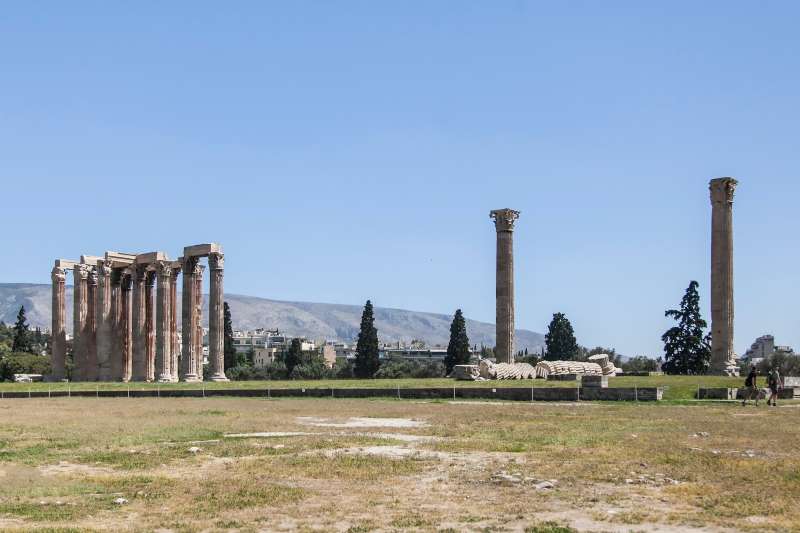
Your Greece bucket list gains profound meaning when you visit the birthplace of the Olympics at Ancient Olympia. You walk the same ground where ancient athletes competed for olive wreath crowns cut from sacred trees.
The birthplace of the Olympic Games sits in a valley in the northwestern Peloponnese. Athletic competitions honoured Zeus every four years from 776 BC through 393 AD.
The Temple of Zeus was built between 470-457 BC. It once housed Phidias’ gold-and-ivory statue of Zeus and was recognized as one of the Seven Wonders of the Ancient World.
The Temple of Hera, built around 600 BC is the most intact structure at Olympia. This temple now serves as the location where the modern Olympic flame ignites before traveling to host cities worldwide.
You’ll find the original Olympic Stadium beyond the temples. The site also features the Palaestra for wrestling training and the Gymnasium with its covered running track.
The Archeological Museum nearby has the largest collection of ancient Greek weapons and remarkable artifacts that include the temple pediments and Hermes of Praxiteles. The Archeological Museum ranks among Greece’s most important.
15. Explore Rhodes Old Town and Lindos
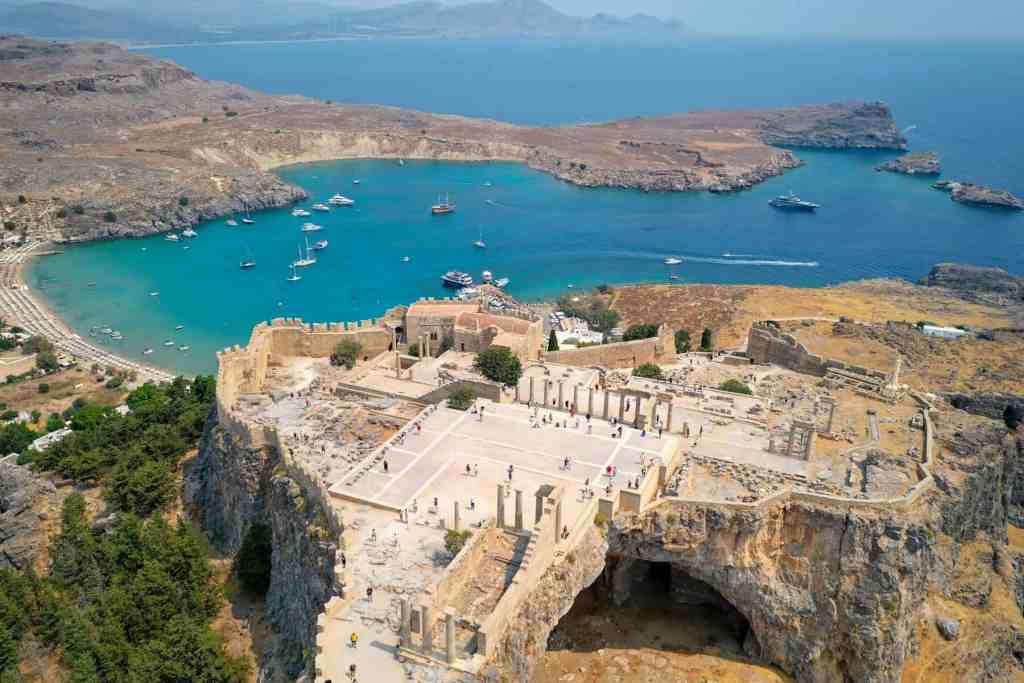
Encircling the city for nearly four kilometres, Rhodes Old Town medieval walls surround what UNESCO recognized in 1988 as Europe’s largest and best-preserved fortified city. A defensive network of two adjacent moats and massive ramparts protected the Knights of St. John from 1309 through 1522.
The Palace of the Grand Master dominates the Upper Town. The Knights Hospitaller built it in the 14th century as their administrative center and residence. The palace now functions as a museum displaying Hellenistic and Roman antiquities among medieval artifacts.
The Street of the Knights extends about 600 meters as one of the finest examples of Gothic urbanism in existence. Seven inns lined this cobblestoned avenue and housed knights from Italy, France, and other European regions. The Archeological Museum now occupies the former Hospital of the Knights at the street’s eastern end.
Lindos is located 40 kilometers south on the island’s east coast. The Acropolis of Lindos ranks as the second most important archeological site in Greece.
The Temple of Athena Lindia from around 300 BC crowns the summit, rewarding you with panoramic views of St. Paul’s Bay and medieval fortifications added by the Knights.
The Ancient Theater sits below the citadel. Dating to 400 BCE, it once accommodated 2,000 spectators.
Lindos delivers authentic Greek island charm through maze-like alleys. This makes it a must-see for what to do in Greece beyond typical tourist paths.
16. Explore the Palace Knossos in Crete

Bronze Age Europe’s oldest city reveals itself just 5 kilometres south of Heraklion. The site draws over a million visitors each year and ranks second only to Athens among Greece’s archeological attractions.
The Palace of Knossos served as the ceremonial center of Minoan civilization, flourishing between 1700-1500 BC with over 1,500 rooms spanning 20,000 square meters.
Walk the Central Court where original paving stones have endured for millennia, then enter the Throne Room where gypsum benches surround an alabaster seat built into the north wall.
The Grand Staircase connects multiple palace levels with walls decorated in figure-of-eight shields. Evans’ controversial reconstructions help visualize the original grandeur, though many interpretations face modern questioning.
The site opens 8:00 AM to 8:00 PM April through October and reduces hours to 8:30 AM-5:00 PM November through March. Visit during off-season months (November to March) to enjoy smaller crowds and cooler weather.
17. Visit the Pink Sand Beach in Elafonissi

Southwestern Crete conceals one of the world’s most distinctive beaches, where pink-hued sand meets turquoise lagoons 75 kilometers from Chania. Elafonissi ranks among the planet’s top beaches.
The unique coloration comes from crushed seashells and pigmented microorganisms called foraminifera that live symbiotically with native seaweed. The pink intensity varies with tides, lighting conditions, and seasons. It appears most vivid along the water’s edge during sunrise or sunset.
A shallow sandbar connects the mainland to Elafonissi Island, a protected Natura 2000 reserve spanning 200 meters offshore. You can wade across when depths exceed one metre, though younger swimmers may need assistance.
The island shelters 110 plant species and includes the rare Androcymbium rechingeri, which blooms from December through February.
The crystal-clear waters are suitable for swimming and snorkelling across soft sand bottoms with minimal seaweed. Visit before mid-morning or after 4:00 PM to avoid peak crowds that overwhelm limited facilities during summer months.
Public buses depart Chania at 9:00 AM and return around 4:00 PM. Cars can also be parked at designated lots. Another option to experience Elafonissi Beach is to join a guided tour.
Corfu vs Crete: Ultimate Comparison for the Best Greek Island Escape
18. Take a Boat Tour Through Melissani Cave
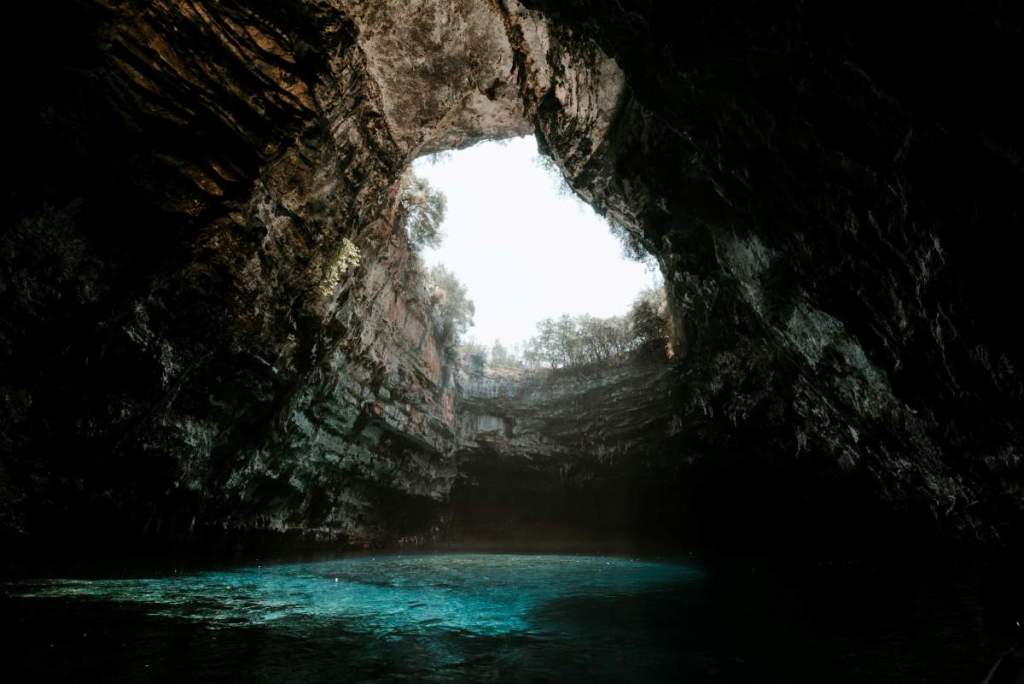
Stone steps descend approximately 20 meters down on Kefalonia island near Karavomilos. They take you into an otherworldly realm where crystal-clear turquoise waters reflect ancient limestone formations.
Discovered in 1951, Melissani Cave (also known as Drogarati Cave) on Kefalonia reveals a partially collapsed underground lake where small wooden boats ferry visitors through two distinct chambers spanning 160 meters.
Your boat tour will last 10-20 minutes and starts in the wider sunlit chamber where daylight streams through a 36-metre-tall opening in the collapsed roof. The turquoise glow intensifies between 11:30 AM and 1:30 PM as sunlight hits the water at the best angles.
Your boatman will row through the first chamber. Underwater reflections create an ethereal atmosphere before passing a small island where excavations uncovered oil lamps and figures of Pan and nymphs. Mythology tells that the nymph Melissani drowned here after Pan rejected her and gave the cave its alternate name, the Cave of the Nymphs.
The passageway to the second chamber narrows so much that boatmen pull the vessel through using wall-mounted ropes. This dark chamber houses 20,000-year-old stalagmites and stalactites that installed lights brighten. The brackish water reaches depths of 30 meters and maintains cool temperatures year-round.
19. Visit Skopelos Mamma Mia Island
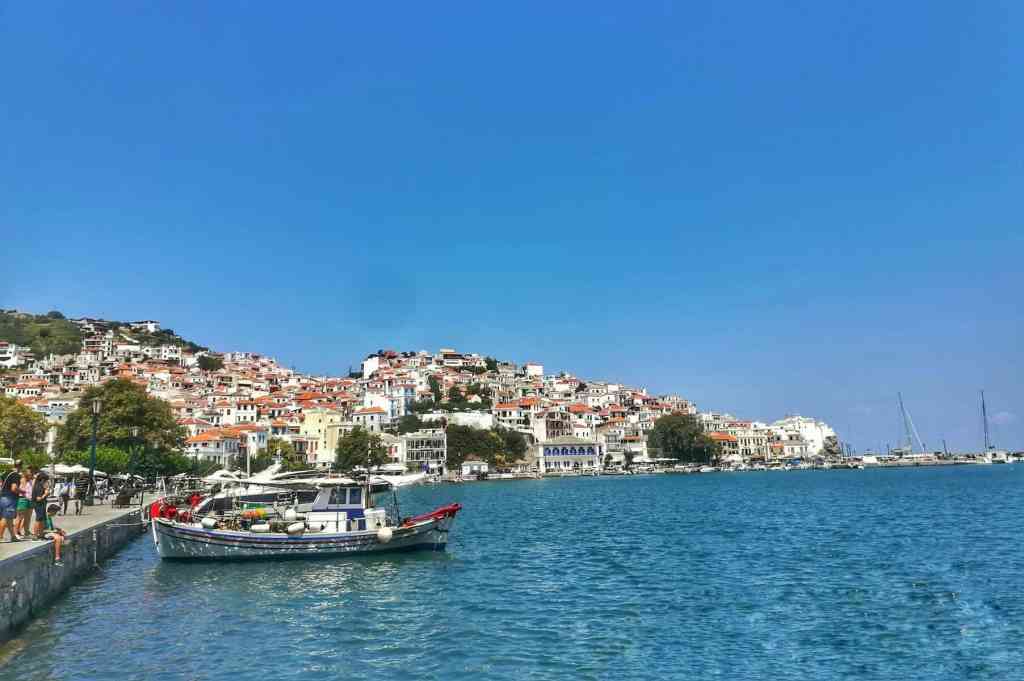
The sleepy Sporades island of Skopelos reshaped the scene as a cinematic icon when filming crews arrived in 2007 for the hit movie Mamma Mia. Movie buffs consider it one of the best places to visit in Greece.
Chapel of Agios Ioannis steals the show as Sophie and Sky’s wedding location. This tiny whitewashed church is perched atop a rock, and visitors must climb 202 steep steps carved into the hillside to reach this chapel.
Kastani Beach, located 18 kilometers from Skopelos Town, provided the setting for “Lay All Your Love on Me” and “Does Your Mother Know” scenes.
Glysteri Beach is featured in the jeep ride through olive groves and the cliff-jumping scene. Amarandos Cove showcases the sailing scenes for “Our Last Summer”, while Agnontas inspired the “Money, Money, Money” fantasy sequence.
Mamma Mia tours visit these top filming locations in Greece, or you can explore by rental car on your own.
21. Experience Greek Island Hopping

The Cyclades offer the quintessential island-hopping experience with whitewashed villages and blue-domed churches. Frequent connections make this the best region for first-timers.
Smart planning minimizes travel time and maximizes beach time. Stick to one island group, as ferries run like a wheel with Athens at the center.
Ferry networks connecting Greece’s roughly 220 Cycladic islands will help your Greece bucket list come to reality through strategic route planning.
The Route of Diamonds follows Athens to Mykonos, Paros, Naxos, and Santorini. It connects four iconic destinations with short 1-2 hour crossings. Visiting 2-3 islands well beats rushing through 4-5 for most trips. Seven to ten days proves ideal.
You can book through Ferryhopper or directly with ferry companies once routes are confirmed. High-speed ferries (SeaJets) cost more and can be a bumpy ride, but cut time by 50%. Conventional ferries (Blue Star) cost less and offer stable rides with outdoor decks.
Book hotels early for June through September travel. Top properties sell out months ahead.
Frequently Asked Questions (FAQs)
Conclusion

Greece delivers experiences way beyond typical tourist checklists, from ancient temples that shaped Western civilization to pink-sand beaches and monasteries suspended on rock pillars.
Not every destination on this list will strike a chord equally with your travel style, and that’s fine. Some travelers crave the party energy of Mykonos, while others seek the tranquility of Hydra’s car-free streets.
The key is selecting adventures that match your interests rather than rushing through every landmark. Allow flexibility in your itinerary for unexpected discoveries between ferry rides and sunset views.
Your Greece bucket list becomes epic through quality experiences, not just quantity.
Greece Travel Blogs

Places to Visit in Greece on a Budget
Best Quiet Places to Visit in Greece
Ten Must-Visit Greek Cities

Places to Visit in Greece and Turkey
Places to Visit in Greece and Turkey