
35 Epic France Bucket List Experiences You Simply Can’t Miss in 2026!
Your France bucket list is about to get a major upgrade – you deserve more than just the Eiffel Tower!
This country offers experiences that go way beyond the ordinary. From paragliding over alpine lakes to wandering through medieval streets, France promises unforgettable moments at every turn.
Get ready to discover 35 incredible things to see and do in France that will change your life forever.
Disclaimer: This post may contain affiliate links, meaning I receive commissions for purchases made through those links at no cost to you. Please read my full disclosure for more information.
1. Watch the Sunrise at Mont Saint-Michel
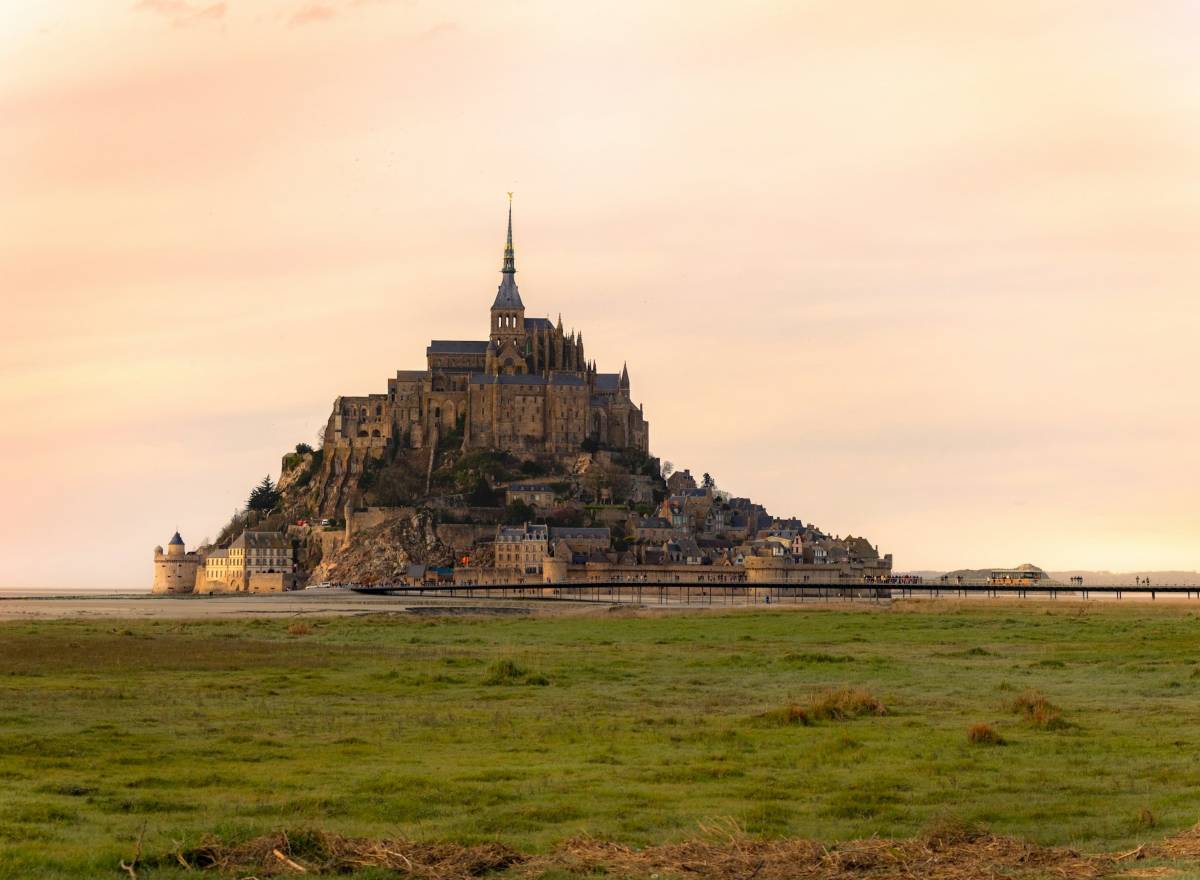
Sunrise at Mont Saint-Michel transforms this UNESCO World Heritage site into an otherworldly scene. The medieval atmosphere intensifies at dawn. Cobbled streets remain quiet, shops stay closed, and you’ll feel transported to another era without commercial distractions.
You’ll want to position yourself on the bridge’s left side on the mainland to get the classic sunrise view. Follow the walkway toward the dam, then continue along the pathway until you reach optimal viewing distance.
The sun appears behind Mont Saint-Michel from this vantage point, casting silhouettes and reflections depending on the tide. The eastern meadows offer an alternative viewpoint, available by a 25-30 minute walk from the dam or by driving to nearby agricultural roads.
Tidal charts need checking before visiting. Access to certain viewing spots depends on low tide conditions, and changing tides pose serious dangers. Never venture onto tidal flats alone, as currents and quicksand create life-threatening situations. Water-resistant shoes are essential if you plan to explore marshy grazing areas closer to the island.
The abbey opens at 9 am, so you should position yourself near the entrance at opening time after capturing sunrise photos. Arrive before 10 am to experience the medieval streets without the overwhelming crowds that descend later.
The temperature drops substantially in the early morning hours. Layers and warm clothing are essential, especially during the winter months when the sky displays its most vivid colours.
An overnight stay in nearby Beauvoir or on the Mont Saint-Michel island itself eliminates pre-dawn travel stress and guarantees you will witness this magical moment.
2. Visit the Louvre Museum in Paris
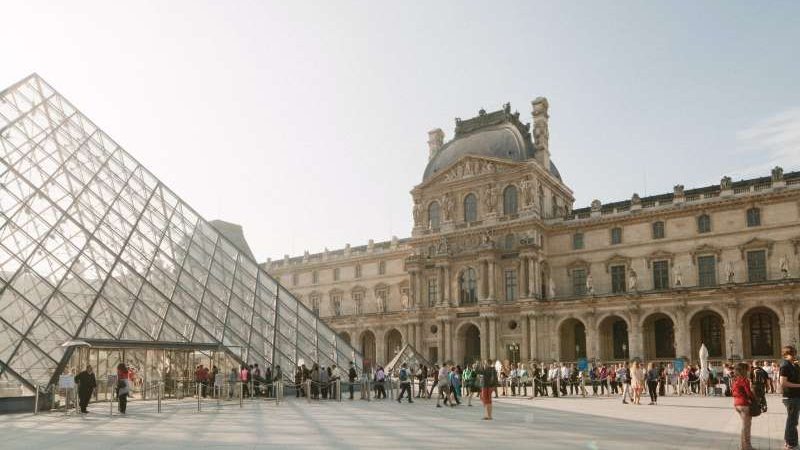
The Louvre Museum in Paris has over 35,000 artworks in 18 acres of gallery space and welcomes nearly 9 million visitors each year. This makes it the world’s most visited museum.
Leonardo da Vinci’s Mona Lisa resides in Room 711 within the Denon Wing. The painting measures just 30 by 21 inches, smaller than most expect, and sits behind bulletproof glass with controlled viewing distance.
The Pyramid serves as the main entrance, though the Carrousel and Porte des Lions entrances often have shorter lines.
Audio guides are available in nine languages. The free Louvre app should be downloaded before arriving for interactive maps and audio content.
The museum opens at 9 AM and closes at 6 PM on Monday, Thursday, Saturday and Sunday. Wednesday and Friday hours extend to 9 PM. Every Tuesday, the museum remains closed, and advance online booking with timed entry slots is required.
It is recommended to arrive right at 9 AM opening or during evening hours on Wednesday and Friday, after 7 PM are the best times to avoid peak crowds. Midday visits between 11 AM and 5 PM face overwhelming congestion.
3. Experience the D-Day Beaches in Normandy
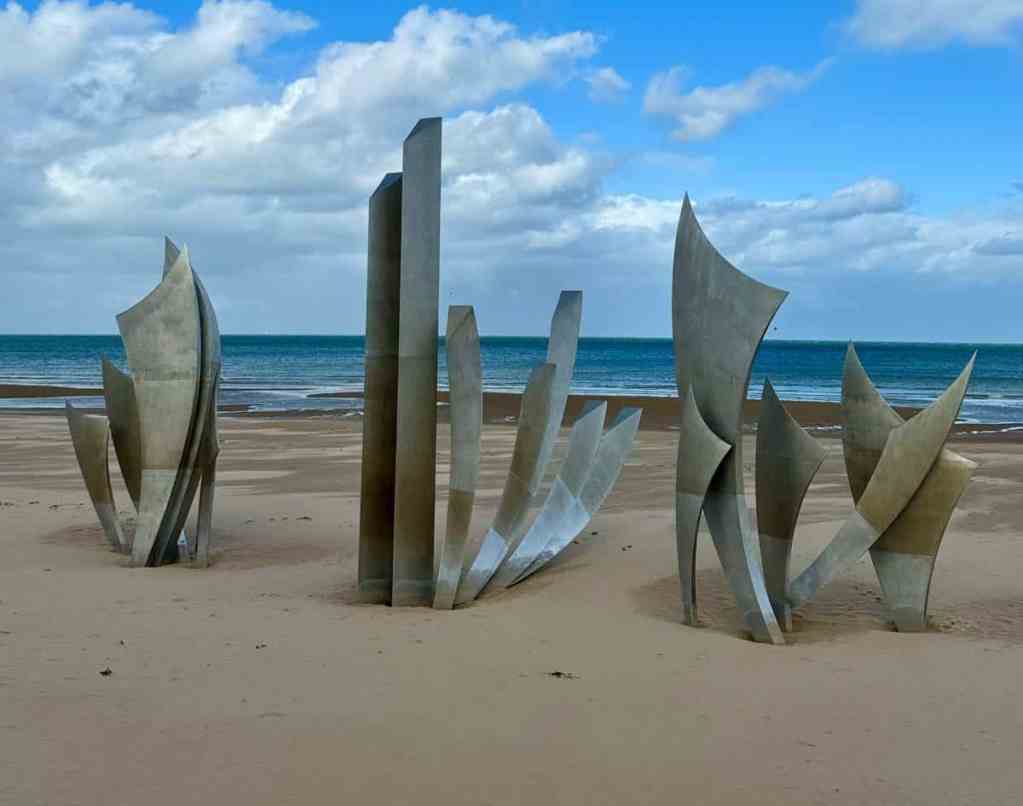
Five code-named beaches stretch 80 kilometers along Normandy’s coastline. Allied forces launched the largest amphibious invasion in history here on June 6, 1944.
You connect to the sacrifice that changed the course of World War II when you walk these shores. A single night saw 135,000 men and 20,000 vehicles land here, marking the beginning of France’s liberation.
Omaha Beach saw the heaviest fighting. American troops numbering 34,250 landed there, and 4,100 soldiers were killed or wounded. The Normandy American Cemetery at Colleville-sur-Mer overlooks the beach. Over 9,000 white crosses mark final resting places.
Utah Beach fell in less than an hour at the cost of 194 American lives and features a museum built inside a German bunker. British forces secured Gold Beach and constructed the Mulberry Harbor at Arromanches-les-Bains. You can see remains offshore at low tide.
Canadian troops at Juno Beach advanced further inland than any other force on D-Day. The Juno Beach Centre commemorates their achievement. Sword Beach served as the easternmost landing zone near Ouistreham.
You need at least two full days to explore several beaches and museums. Guided tours from Bayeux provide transportation and expert historical context.
Spring and autumn offer mild weather with fewer crowds than June’s anniversary commemorations.
4. Tour the Châteaux of the Loire Valley
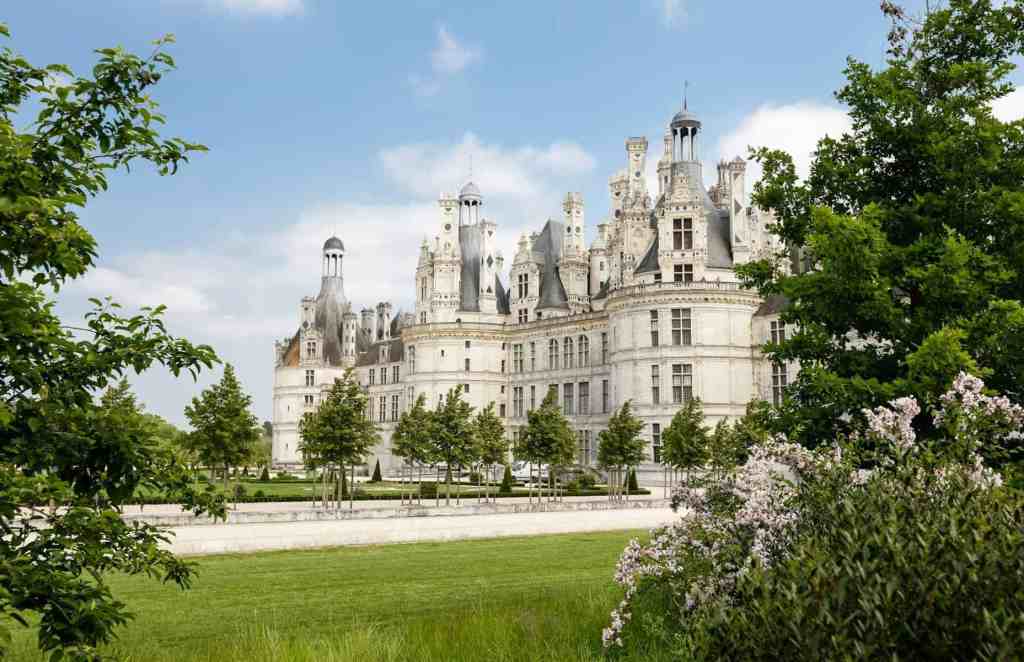
Nearly 300 châteaux remain standing throughout this UNESCO World Heritage region, and approximately 100 welcome visitors. Guided tours provide access to the valley’s most celebrated estates without lengthy commutes.
Château de Chambord dominates as the largest. It has 440 rooms, and 90 are open to visitors. King Francis I commissioned this Renaissance masterpiece, which was originally intended as a hunting lodge. The double-helix staircase, attributed to Leonardo da Vinci, allows people to ascend and descend without crossing paths. Climb to the rooftop terraces to view the surrounding park, where wild deer roam freely.
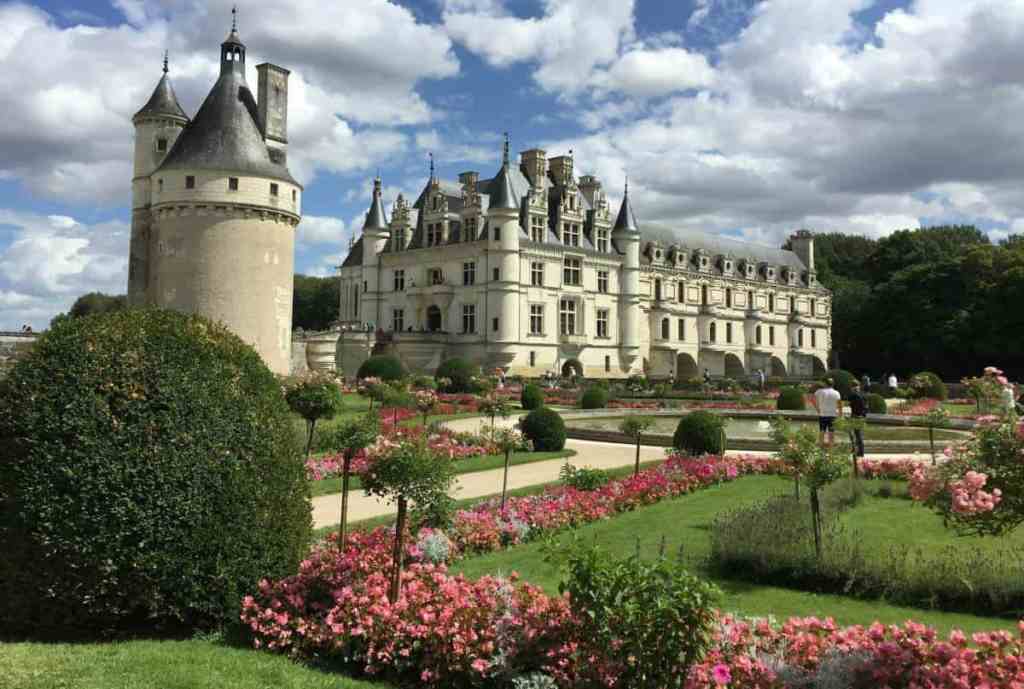
Château de Chenonceau earns its nickname “Ladies’ Château” from the powerful women who shaped its destiny. These include Diane de Poitiers and Catherine de Medici. This elegant monument spans the Cher River through distinctive arches and creates one of France’s most photographed settings. The two galleries stretch 60 meters long and once hosted grand balls. The bridge served as an escape route from occupied France into the free zone during World War II.
Château de Cheverny has remained with the same family for six centuries. Belgian illustrator Hergé drew inspiration from this classical beauty for Marlinspike Hall in the Tintin series. The estate maintains 100 tricolor hunting hounds in kennels and continues France’s hunting traditions. Watch the daily feeding at 11:30 from April through September.
Château de Villandry showcases Renaissance gardens redesigned according to period plans. The gardens have geometric vegetable plots and ornamental rooms. The Moorish ceiling has 3,600 pieces, relocated from a Spanish palace in 1905.
Guided tours departing from Paris provide skip-the-line access, bilingual guides and round-trip transport to multiple châteaux in single-day itineraries.
5. Climb the Eiffel Tower in Paris

Climbing the iron lattice structure from within the Eiffel Tower offers an intimate view you won’t get from an elevator ride. You’ll ascend 674 steps to reach the second floor, though the tower contains 1,665 steps total from ground to summit.
The catch: you cannot climb beyond the second floor. The upper section remains closed to stair access because of safety concerns. You’ll need to take the Duolift elevators to continue to the top once you reach the second level.
Budget 15 to 20 minutes for each floor. Athletic visitors sometimes complete a floor in under 10 minutes. Competitive climbers have conquered all 1,665 steps in less than 8 minutes. The climb burns calories and gives you changing views of Paris unfolding below. The Seine and Parisian rooftops become visible as you ascend.
Stair access costs €14.80 for adults, €7.40 for ages 12-24, and €3.80 for children 4-11. Want to reach the summit? Opt for the combination ticket at €28.00 for adults that has stairs to the second floor, plus elevator access to the top.
The first floor gives you a break with a transparent floor, terrace seating, restrooms, and food options. You can admire 360-degree views at the second floor before lining up for the summit elevator.
Timing matters. Visit after 5 PM to avoid peak crowds, which concentrate between 11 AM and 5 PM. Sunset visits offer you daylight Paris and the illuminated city in one trip. The tower sparkles every hour after dark and makes for memorable photos.
Stairs aren’t available for people with reduced mobility. The route isn’t recommended for families with strollers or young children.
Purchase tickets online up to 60 days in advance. They sell out fast!
6. Explore the Lavender Fields of Provence

Provence’s lavender season has a narrow window that requires precise planning.
Fields bloom from late June through mid-August, with timing controlled by altitude and weather patterns. Lower areas like Valensole bloom first, while higher elevations around Sault extend the season into August.
The Valensole Plateau delivers the iconic experience. It stretches across 800 km² with endless purple rows paired with golden wheat fields. This area peaks during early to mid-July, though harvest begins by the second week. The plateau sits near Verdon Gorge and lets you combine both experiences.
Sault offers a different viewpoint at a higher elevation, where the Chemin des Lavandes walking trail loops 4 km through Provencal landscapes in 1 hour and 40 minutes. Interpretive panels explain botany and distillation as you traverse Europe’s largest production area of true lavender.
The Luberon Valley blends lavender with medieval villages like Gordes and Bonnieux. Fields here appear smaller and scattered, yet the Abbaye de Sénanque provides one of the most photographed scenes, with lavender surrounding 12th-century stone architecture. The Claparèdes plateau between Bonnieux and Saignon displays vibrant fields.
Visit at sunrise to get optimal light and minimal crowds. Weekday mornings beat weekend traffic. Respect private farmland by staying on marked trails, as these working farms depend on their crops. Tours depart from Aix-en-Provence if you prefer guided experiences.
The region celebrates with festivals: Ferrassières on July 5, Valensole on July 19, and Sault on August 15 in 2026.
If you’re visiting between July 1- 20, you’ll likely catch most fields at peak bloom throughout the region.
7. Wine Tasting in Bordeaux
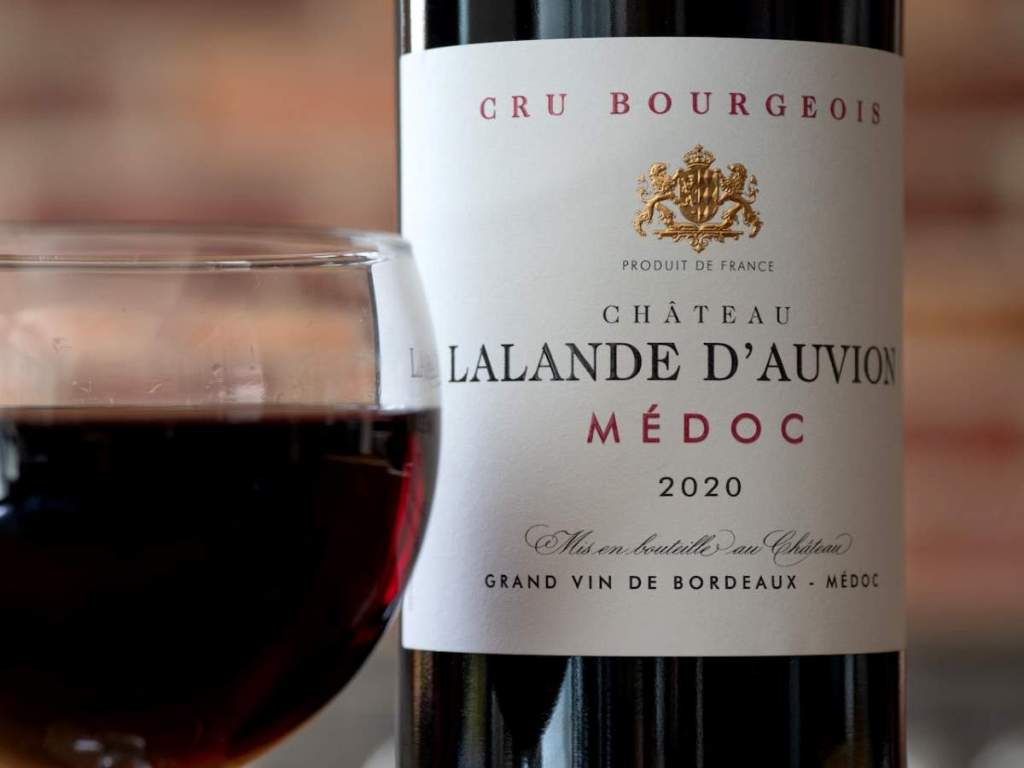
Bordeaux offers an impressive 4,637 wineries. The region produces some of the planet’s most collectible bottles with a winemaking tradition spanning almost 2,000 years.
Château Pape Clément in Pessac-Léognan is Bordeaux’s oldest winery, dating back to the 13th century.
Red wines dominate and account for 85% of production. Merlot claims the title as the most planted grape variety, though Cabernet Sauvignon built Bordeaux’s reputation.
The geography divides into two distinct personalities: the left bank of the Garonne and Gironde estuary includes the Médoc and Graves, while the right bank of the Gironde and Dordogne features St Emilion and Pomerol.
Besides these flagship areas, you’ll find the hill vineyards of Bourg and Fronsac, wines from Entre-Deux-Mers, and the renowned sweet wines from Sauternes.
You need to plan your visit ahead. Reservations are recommended, as prestigious châteaux require them for wine tastings and cellar tours. The best time arrives in spring, March through May, when vineyards bloom and mild weather prevails.
Most wineries are located 20 minutes to just over an hour from Bordeaux city. Pessac Léognan is approximately 20 minutes by car, while deeper Médoc locations or Saint-Émilion take 45 minutes to an hour. You can also take the train to Saint-Émilion for a convenient day trip.
Tastings reveal how French oak barrel aging develops complexity and character. Many experiences compare young and aged vintages and showcase structure and longevity.
Dress smart-casual with comfortable shoes, as visits often include vineyard walks and cellar tours.
For more information about Bordeaux, France you can read these blogs:
- When is the Best Time to Travel to Bordeaux, France
- Top Tourist Attractions in Bordeaux, France
- Discover the Best Places to Stay in Bordeaux, France
- Best Things to do Near Bordeaux, France
8. Visit the Palace of Versailles
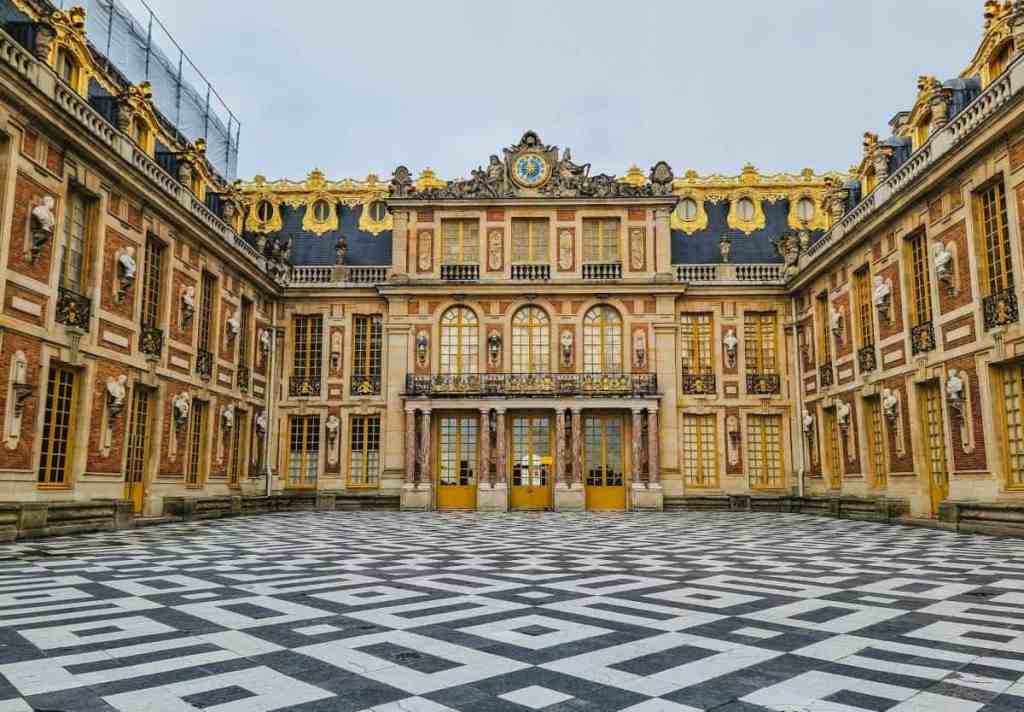
The Hall of Mirrors is the Palace of Versailles’ centrepiece, with 357 mirrors reflecting the gardens through massive windows. This gallery witnessed the signing of the Treaty of Versailles on June 28, 1919, ending World War I.
The Passport ticket grants access to the entire estate. This ticket includes the Palace with timed entry, Grand Trianon, Petit Trianon, Queen’s Hamlet, temporary exhibitions and gardens. Timed entry for the Palace is mandatory. You can explore other estate areas freely throughout the day.
Late afternoon visits offer discounted rates. Enter at 4 PM during high season or 3 PM in low season for reduced pricing. This strategy helps if morning time slots sell out.
The Musical Gardens and Musical Fountains Show animates the grounds on select days April 1st to November 1st. The free Palace app provides audio tours in 12 languages plus an interactive estate map. Download it before arriving to improve your experience.
Plan a full-day visit to explore the sprawling estate. Guided tours unlock otherwise closed rooms and lead to standard tour routes afterward.
The Gallery of Coaches and Sculpture Gallery offer free weekend access. The Park remains free year-round.
Purchasing tickets online up to three months ahead secures your preferred time slot and bypasses ticket office lines.
The Palace opens daily except Mondays at 9 AM. The Trianon estate becomes available from noon.
9. Ride the Cable Car to Aiguille du Midi in Charmonix
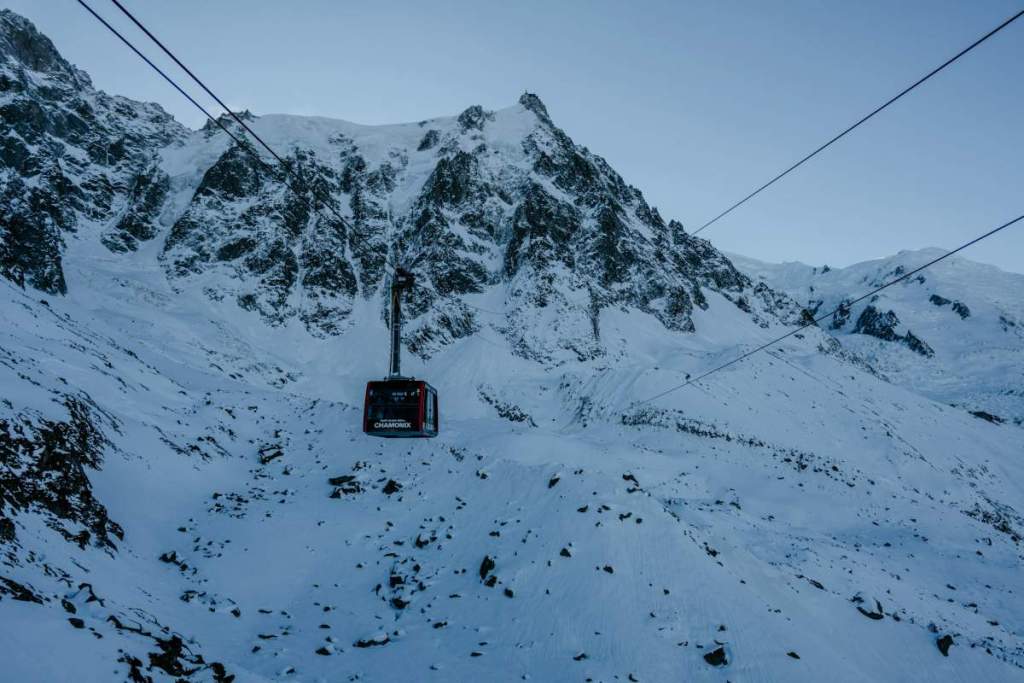
Aiguille du Midi is the word’s highest vertical ascent cable car. It transports you from Chamonix at 1,035 meters to the summit at 3,842 meters.
The trip unfolds in two stages over 20 minutes. You’ll board the first cable car in Chamonix and reach Plan de l’Aiguille at 2,317 meters in about 5 minutes. After transferring, the second cable car climbs to Aiguille du Midi and offers close views of Glacier des Bossons flowing down Mont Blanc.
Booking is mandatory and free if you already own a MONT BLANC Unlimited pass. Children under 3 cannot access the cable car. Purchase tickets up to 60 days in advance. Slots fill fast, especially during summer months.
The cable car’s operating hours vary by season. Between March 30 and May 31, it departs at 8:10 AM on weekdays (7:30 AM on weekends and holidays) with the last return trip at 5:00 PM. Peak summer season from July 1 to August 23 offers the earliest access at 6:10 AM and extends until 6:00 PM for last returns. Cable cars run every 15 to 30 minutes depending on traffic.
Panoramic terraces at the summit showcase views spanning French, Swiss and Italian Alps. Step into the Void, a glass box suspended over a sheer drop, comes included with your cable car ticket. The complex features exhibits on altitude effects and cafés.
Weather conditions can halt operations without notice, so check forecasts before your assigned boarding time.
10. Go Skiing in Val d’Isère

Val d’Isère ranks among the Alps’ most snow-sure destinations. It sits at 1,850 meters with 60% of terrain above 2,500 meters. Three distinct sectors provide variety: Solaise and Bellevarde access from town, while Fornet connects via higher elevation.
The legendary La Face de Bellevarde delivers one of skiing’s ultimate tests. This Olympic downhill course drops nearly 1,000 meters and has an average gradient of 32%. It’s the steepest World Cup run. Wide blues at Solaise’s summit offer perfect conditions to refine your technique for gentler terrain.
Ski season runs from November 29 through May 3. February provides the best combination of snow depth and resort energy, while March delivers powder when other resorts turn slushy. The Pissaillas glacier extends skiing into early summer.
Off-piste terrain attracts advanced skiers, with countless routes available from lifts. A local guide maximizes your experience and safety, especially when you have fresh snowfall and tree runs around Le Fornet become epic.
You can purchase lift passes online at valdisere.ski to skip ticket office queues.
11. Climb the Dune du Pilat
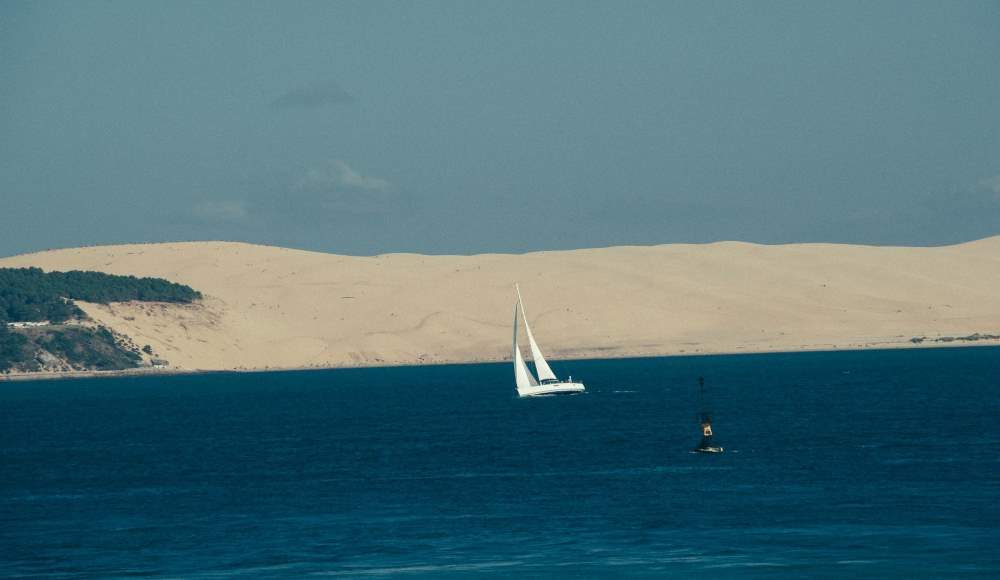
The Dune du Pilat is Europe’s tallest sand dune rises 106.60 meters above sea level near La Teste-de-Buch in the Arcachon Bay area, 60 km southwest of Bordeaux. Nearly 2 million visitors climb this natural wonder annually.
Wooden stairs with 154 steps provide easier access up the steep inland side from April to mid-November. You’ll climb directly through soft sand outside this period, which flows beneath your feet and changes the ascent into a workout.
Allow around 15 minutes to reach the summit. The climb appears easy at first, but fine sand shifts underfoot and this wild natural space becomes more demanding.
You’ll need to bring supplies. Shade, water points, and restaurants won’t be found once on the ridge. Pack water, sunscreen, and a hat. Wear shoes to protect your feet from scorching sand, though many continue barefoot once in the fine grains.
Panoramic views span the Arcachon Basin, Banc d’Arguin, Cap Ferret, and the Landes forest at the top. Sunset provides stunning light.
You can use the stairs or slide down the sandy slopes for descent. Access remains free if you arrive by bus, bicycle, or foot, though parking costs €8.
12. Dine at a Michelin-Starred Restaurant in Lyon
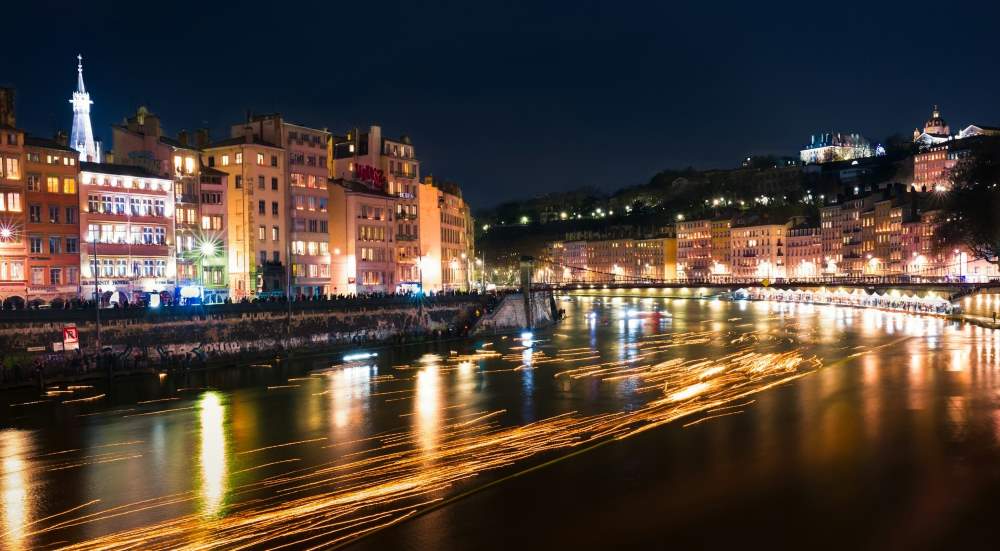
Lyon earned recognition as the World Capital of Gastronomy in 1934. This reputation endures today through a remarkable concentration of Michelin-starred restaurants for food enthusiasts.
Restaurant Paul Bocuse is the crown jewel with three Michelin stars. The opulent dining room beside the Saône River showcases signature dishes that define French haute cuisine on menus guided by chefs Gilles Reinhardt, Olivier Couvin, and Benoît Charvet. The iconic dessert trolley presents Paris-Brest and mille-feuilles.
La Mère Brazier carries historic significance as Eugenie Brazier became the first woman chef awarded three Michelin stars during the 1930s. Chef Mathieu Vianney revived the restaurant in 2008 and earned two stars in 2009 with meals like wild sea bass and langoustine ravioli.
Le Neuvième Art, led by Christophe Roure, holds two stars for inventive dishes such as scallops pan-fried with black truffle and Noilly Prat foam.
Ombellule offers great value with three-course lunch menus at €58 and features line-fished Arctic char from Lake Annecy.
Christian Têtedoie serves langoustines poached in butter from a hilltop location with spectacular city views.
These restaurants demonstrate why dining in Lyon ranks among the top places to visit in France for culinary experiences.
For more information about Lyon, France read the following travel blogs:
- Why Travel to Lyon, France?
- Lyon, France Day Trips: Hidden Gems Beyond the City
- Where to Stay in Lyon, France: Best Areas For Every Budget
- Lyon, France Itinerary: From Tourist Spots to Local Favorites
- Best Things to do in Lyon, France: Local Secrets and Hidden Gems
- Lyon, France Bucket List: Where History Meets Modern French Culture
13. Explore the Fairytale Town of Colmar

Colmar’s half-timbered houses and cobblestone streets earned the Alsatian town recognition as inspiration for the village in Disney’s Beauty and the Beast.
The Pfister House, constructed in 1537, represents the first Renaissance architecture in Colmar despite its medieval features. The Koïfhus serves as the oldest public building, with construction completed in 1480 after planning began in 1433.
Saint Martin Church is a Gothic masterpiece built between 1235 and 1365. Fire unfortunately destroyed the south tower’s framework and roofs in 1572.
Little Venice defines Colmar’s most photographed quarter. Pastel-colored half-timbered houses line the Lauch River in shades of pink and yellow. Fishermen painted their houses blue while butchers chose red, with colors that showed professions.
Little Venice boat tours departing from Pont Saint-Pierre last 25 minutes. The flat-bottomed vessels traverse shallow canals through the historic quarter and into residential areas.
The Quai de la Poissonnerie housed professional fishermen and boatmen. The district attracts visitors for views of timber-framed houses reflected in canal waters. Maison des Têtes features over 100 carved heads that adorn its facade, each displaying unique expressions.
Auguste Bartholdi, sculptor of the Statue of Liberty, was born in Colmar. Replicas of his works appear throughout the town.
The Covered Market, designed in 1865, returned to its original purpose as a market hall. The walkable Old Town holds UNESCO Heritage Site status.
14. Tour the Champagne Region in Reims and Epernay
The Champagne region is divided between two distinctive cities, and each offers unique access to the world’s most celebrated sparkling wine.
Reims serves as the actual capital. Historic champagne houses occupy butte Saint-Nicaise, a chalk hill featuring incomparable cellars called crayères that house prestigious productions. Reims is just 45 minutes from Paris by high-speed train.
Épernay is widely recognized for its central location in the heart of the Champagne region. Top vineyards surround it, and it is home to the famous Avenue de Champagne, where 200 million bottles rest 30 meters underground beneath magnificent mansions.
Champagne growers offer tailored tours at lower costs. More than 16,000 growers own 90% of vineyards, and these family-owned producers provide authentic experiences with generous tastings.
Moët & Chandon operates the largest underground network, 28 kilometres long, and offers guided tours.
Ruinart, founded in 1729 as the first Champagne House, provides private champagne experiences in its cathedral-like cellars 40 meters below the surface.
You should book ahead, as champagne houses require reservations for tastings and cellar tours.
15. Hike the Verdon Gorge
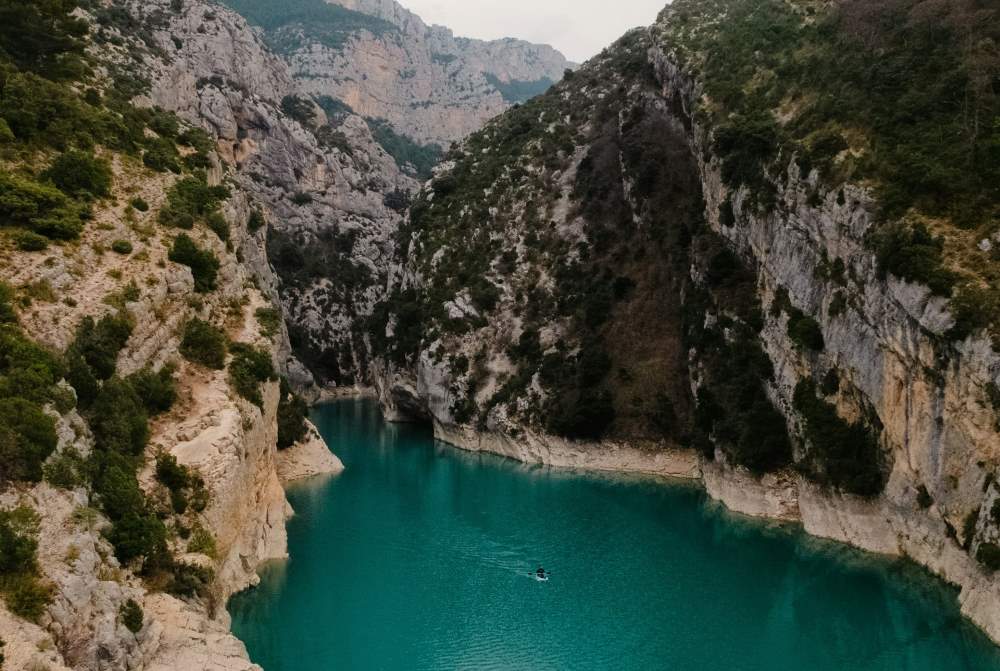
The Blanc-Martel trail descends into Europe’s largest canyon and offers the only route that drops hikers into the depths of the Verdon Gorge.
This legendary 16 km one-way path links La Palud-sur-Verdon to Rougon. It follows the footsteps of speleologist Édouard-Alfred Martel and guide Isidore Blanc, who first explored these gorges in 1905.
You’ll walk for 6 hours across varied terrain between 400 and 1,900 meters in elevation, with 500 meters of cumulative ascent and descent.
Metal staircases with over 250 suspended steps create the most technical sections and require concentration on narrow, vertiginous passages. The Baou tunnel stretches 670 meters through solid rock, so pack a headlamp for safe passage.
Spring (April to June) and autumn (September to October) provide optimal weather conditions. Summer heat exceeding 30°C makes this moderate to difficult hike substantially harder.
You’ll need at least 3 litres of water per person, as no drinking points exist along the trail. Hiking boots with excellent grip are essential because rocky surfaces can be slippery.
A shuttle service runs April through September and transports you from La Palud-sur-Verdon parking to the Chalet de la Maline trailhead. You should book this in advance to avoid logistical complications at the finish point.
16. Explore the Medieval Streets of Rouen
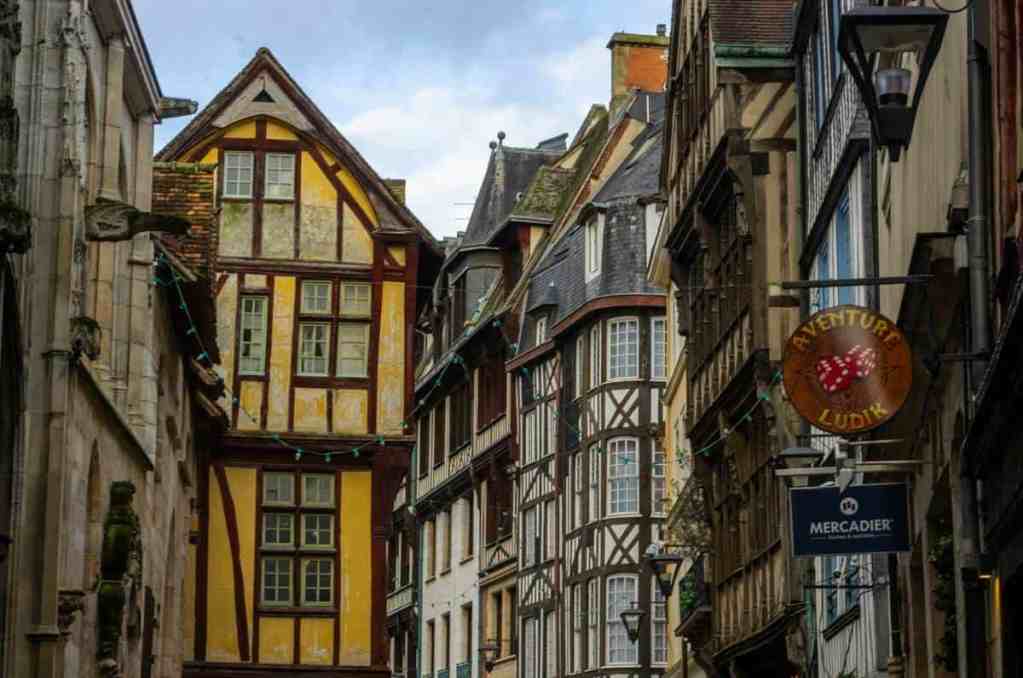
The pedestrianized old town of Rouen contains over 2,000 half-timbered houses. Architecture lovers seeking genuine historic buildings will appreciate how this remarkable concentration makes Rouen one of the best places to visit in France.
Rue du Gros-Horloge offers a good starting point. This 420-meter cobbled street features a 14th-century astronomical clock mounted on a Renaissance arch. Some houses here predate Joan of Arc’s execution in 1431. The clock face shows only one hour hand.
A sheep symbolizes Rouen’s historical wool production. Rue Saint-Romain borders the cathedral’s north side and displays fine half-timbered houses from the 15th to 18th centuries. A remaining gable marks where Joan of Arc’s trial ended on May 29, 1429.
Rue Malpalu showcases jettying construction. Upper floors overhang the street below. This 13th to 15th-century technique maximized living space until authorities outlawed it as a fire hazard. Rue Eau-de-robec features half-timbered houses that line a central streamlet crossed by walkways.
Place du Vieux-Marché marks where Joan of Arc was burnt alive. A commemorative plaque and 20-meter cross identify the exact spot.
17. Conquer a Via Ferrata in the French Alps
The French Alps have 66 documented via ferrata routes in six areas from Geneva to Briançon. These cover the Mont Blanc and Vanoise ranges.
Steel cables, iron rungs, and suspension bridges turn sheer cliff faces into vertical playgrounds in the French Alps. Via ferrata routes with fixed protection let you scale terrain that would otherwise need advanced climbing skills.
Routes span difficulty grades from F (Facile/Easy) to ED (Extrêmement Difficile/Very Difficult). Many offer escape points if conditions exceed your comfort level.
La Dent de Burgin in Méribel claims the title as France’s highest via ferrata at 2,739 meters. It has a long ridge route with panoramic views over Les 3 Vallées and Mont Blanc. The climb takes about 3 hours from La Saulire summit.
Lac de la Rosière in Courchevel provides a gentle introduction for beginners. It never exceeds 40 meters height and includes a 57-meter rope bridge.
You’ll need a helmet, climbing harness, and via ferrata lanyard with energy absorber. Children can start from age 7 on easier routes. Qualified guides provide group and private instruction options.
The season runs June through September, though some lower routes open from early spring to early winter.
18. Experience the Christmas Markets in Strasbourg

Strasbourg’s Christkindelsmärik has revolutionized the Alsatian capital each December since 1570, making it the oldest Christmas market in France and among Europe’s most historic.
Grande Île’s squares host more than 300 wooden chalets that create distinct market zones. Place Kléber showcases a 30-meter Christmas tree, while Place Broglie hosts the original Christkindelsmärik location.
The Marché des Délices near Palais Rohan features artisanal food vendors. Petite France’s markets at Place Benjamin Zix display local crafts. Nine Baccarat crystal chandeliers suspend above Rue des Hallebardes and sparkle against medieval architecture.
Weekdays are best to avoid crushing weekend crowds. Twilight offers the best time for photography when lights glow but buildings remain visible. Vin chaud (mulled wine) served in collectible cups will warm you up, or try flammekueche, pain d’épices, and bredele cookies.
Strasbourg hotels charge premium rates during December. Nearby Colmar, Riquewihr, and Kaysersberg provide quieter market experiences within short train rides.
The festivities run from November 26 through December 24 in 2026, with markets open daily from 11:30 AM to 9 PM (closing at 6 PM on Christmas Eve).
19. Discover the Medieval City of Carcassonne
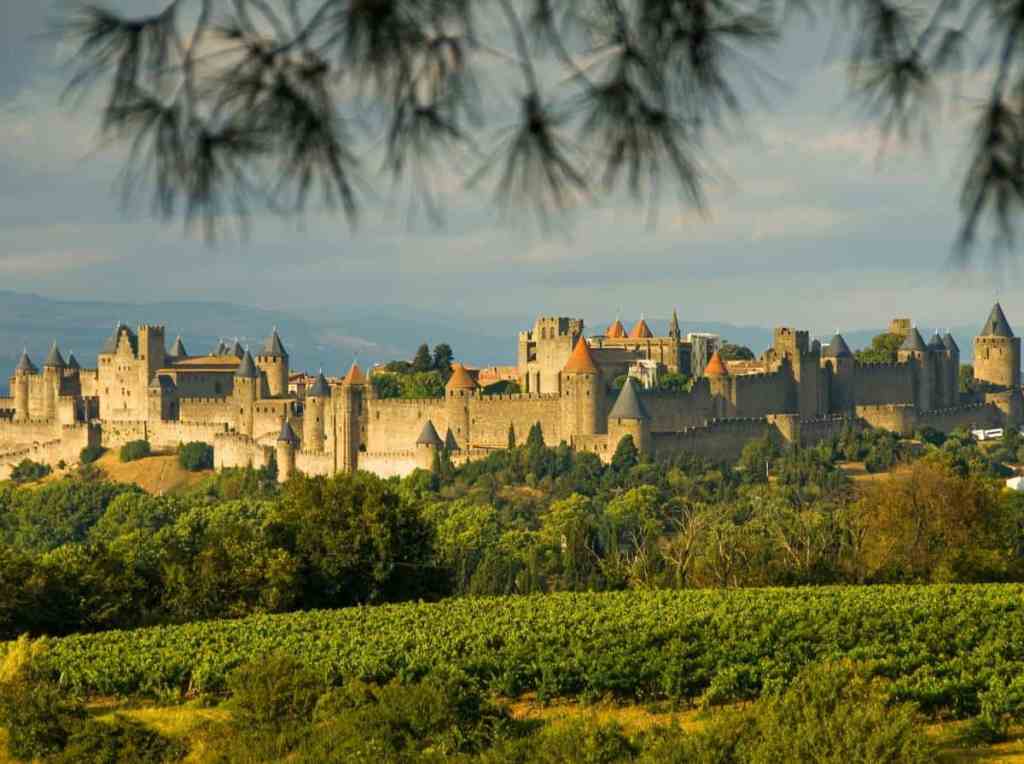
Carcassonne’s fortified walls surround the largest intact medieval city in Europe, a UNESCO World Heritage site since 1997.
The Cité Médiévale remains open for free exploration, and you can walk through cobbled streets at no cost. The Narbonnaise Gate or Aude Gate grants access to this storybook setting.
Château Comtal is an impressive fortress crowned by nine towers, including the Pinte—the tallest point in the city. Its sweeping ramparts extend for nearly three kilometres and are reinforced by a remarkable 52 towers. To make the most of your visit and skip the crowds, it’s best to book your tickets in advance.
Saint-Nazaire Basilica near Porte d’Aude displays France’s most beautiful southern stained-glass windows that depict scenes from Christ’s life and the apostles. Children enjoy spotting gargoyles surrounding the structure.
Place Marcou serves as the central square filled with cafes offering tourist menus, though Michelin-starred restaurants like La Barbacane provide regional cuisine.
21. Take a Hot Air Balloon Ride Over the Loire Valley
Floating above UNESCO-listed landscapes in a hot air balloon offers viewpoints of the Loire Valley you can’t get from the ground.
Flights operate from April through October. Your flight will last 1 to 1.5 hours. You can depart at sunrise or sunset, depending on your viewing preference.
Pilots select take-off points based on wind direction. They launch from Chaumont sur Loire, Amboise, or Chenonceau. You’ll receive a safety briefing, then the basket lifts off with up to 16 passengers for shared flights.
The experience reveals fairy-tale châteaux, sweeping vineyards, and winding waterways from above. Watch for herons, swans, and wild ducks gliding over water expanses while you’re in the air. Deer and wild boar move through the surrounding woods.
The complete experience runs 3 to 3.5 hours. This includes ground transport to the launch site, balloon preparation, flight time and the traditional Toast des Aérostiers landing ceremony.
The landing requires bracing as the basket meets earth. The effect proves gentler than expected though. You’ll enjoy snacks and drinks after touching down while the crew packs the balloon before shuttling back to your meeting point.
Weather confirmation comes the day before morning flights and at noon for evening departures. Bad weather triggers 100% refunds.
22. Experience Wine Tasting in Burgundy

Burgundy’s vineyards rank among the most carefully classified wine regions worldwide.
The celebrated Côte de Nuits and Côte de Beaune produce exceptional Grand Cru and Premier Cru wines, prized for their elegance and expression of terroir. These precisely defined vineyard parcels, known as climats, hold UNESCO World Heritage status.
The Maconnais-Beaujolais wine route is an hour from Lyon and offers different tours through estates producing varied regional appellations. You’ll encounter the prominent Beaujolais and the famous Pouilly-Fuissé, a dry white wine with delicate flavours.
Guided tours departing from Beaune or Dijon have visits to historic cellars and tastings with local producers that let you learn about Burgundy’s winemaking traditions.
Moillard-Grivot, a historic winery operating since 1848 in the famous Côte de Nuits area, has six tastings that feature Grand Cru selections. Domaine Quivy provides a cozy experience in a family-owned historic home where you’ll sample four wines.
Bike tours through Bourgogne Evasion are self-guided or guided experiences cycling through prestigious vineyards. The guided option has Château de La Rochepot and tastings at Domaine Famille Picard with stops in Pommard or Volnay.
Marche aux Vins in Beaune provides self-guided wine tasting in basement wine caves for white burgundy and upstairs wine machines for red burgundy. This centrally located wine center is an alternative to traditional winery visits.
Booking advance reservations proves beneficial, especially when you have sought-after estates in mind. Smaller domaines sometimes accommodate walk-in visitors though.
23. Explore the French Riviera From Nice to Monoco
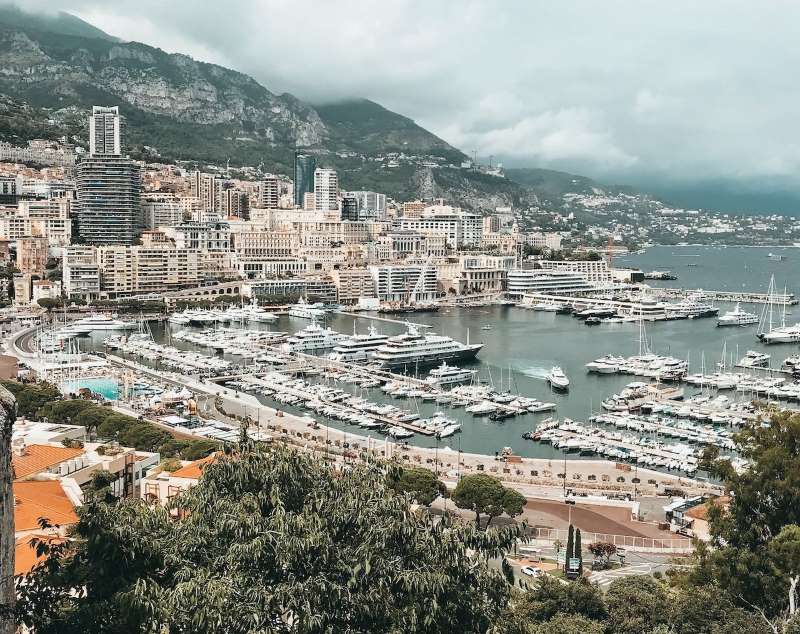
The stretch of coastline from Nice to Monaco packs extraordinary Mediterranean beauty into a compact area.
Nice serves as an ideal base because it’s just 12.67 km from Monaco. Reliable transportation connects you to glamorous destinations and medieval villages perched above the sea.
The Regional Express Train (TER) from Nice-Ville station gets you to Monaco-Monte Carlo in just over 20 minutes. Trains depart every 10-20 minutes, depending on the season and provide the fastest route with comfortable seating.
As a scenic alternative, the Zou bus travels the coastal route in 50-60 minutes for €2.10 and delivers dramatic views of the Mediterranean.
The Nice-Monaco ferry operates May through October on Tuesdays, Thursdays, and Saturdays. It departs from Quai Lunel and it’s a 30 minute boat ride.
Monaco requires no passport or customs, despite being its own country. The principality rewards exploration on foot. Free public elevators and escalators throughout the city help you traverse steep hills. Monaco Harbour showcases luxury yachts.
The Monte Carlo Casino will provide you with ample photo opportunities inside and outside. The Prince’s Palace features royal history tours. Formula 1 enthusiasts can walk the Grand Prix racetrack, including the famous hairpin turn. The Oceanographic Museum displays diverse marine life.
Èze is perched 429 metres above sea level between Nice and Monaco and delivers spectacular coastal views from its medieval streets. Villefranche-sur-Mer showcases pastel houses above a deep blue bay.
These stops turn the journey into a multi-destination experience along one of France’s most celebrated coastlines.
24. Paraglide Over Lake Annecy
Lake Annecy is one of Europe’s premier paragliding destinations. Nearly 130,000 take-offs happen here each year.
This site has France’s highest altitude take-off at 1,250 meters. An 800-meter vertical descent gives you extended flight time over turquoise waters that the Aravis and Bornes massifs frame.
Most flights depart from Col de la Forclaz. You’ll meet your state-certified instructor there, and they will explain safety procedures before giving you a harness and helmet.
The launch requires running a few meters until the wing inflates and lifts you skyward. Thermal winds above the lake create ideal conditions for smooth gliding once you’re airborne, and your pilot may offer you brief control of the wing during flight.
Flight options range from introductory flights for 10-15 minutes to prestige flights that last 45 minutes or more. Children under 12 can participate in specialized flights. The sensation flight has longer airtime with optional acrobatic maneuvers. No prior experience is needed for any tandem flight.
Landings occur near the lake in Doussard, where the ground team awaits. Photos of your flight are available to purchase separately.
25. Explore the Fortified City of Avignon
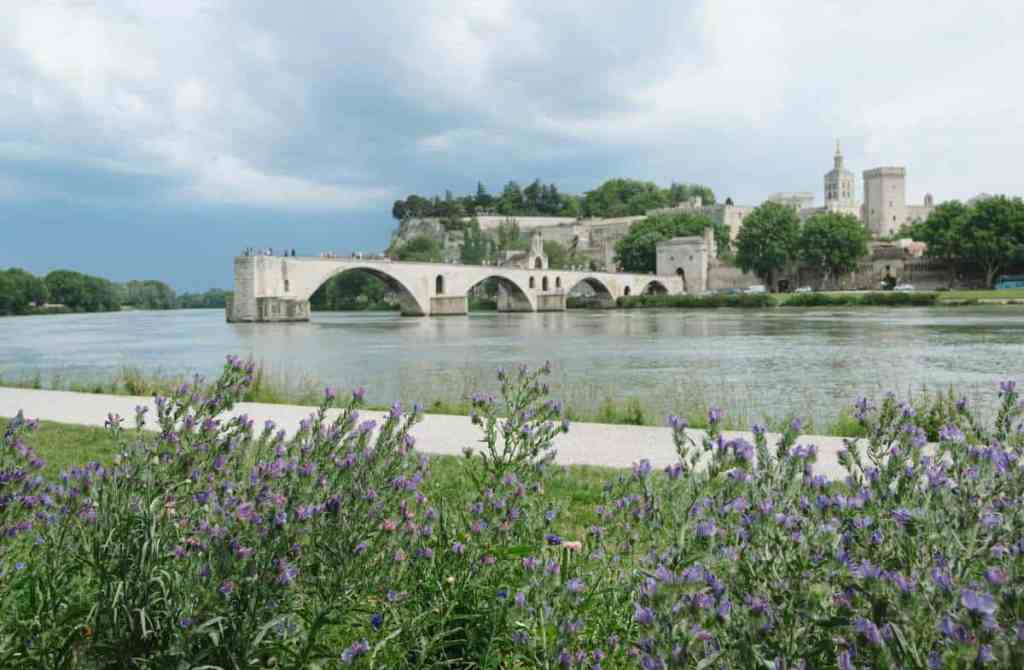
When you arrive in Avignon, it’s hard to believe this charming riverside destination was once the center of the Catholic world.
In the early 1300s, Pope Clement V moved the papacy here, turning what was a quiet town into a powerful and thriving city almost overnight. As you wander the historic streets today, you can still feel that sense of importance woven into every corner.
You can’t miss the towering Palace of the Popes, which dominates the skyline. This massive Gothic structure feels more like a fortress than a palace, and when you step inside, you’ll find yourself exploring grand halls, chapels, and surprisingly intimate rooms once used by the popes.
Take some time to walk along Avignon’s medieval walls, which still wrap around the city for more than four kilometers. As you stroll along the ramparts, you’ll be treated to beautiful views over the Rhône River and the surrounding landscape.
And of course, you’ll want to visit the iconic Pont Saint-Bénézet. Only a few arches remain today, but standing on this partially preserved bridge, you get a real sense of its former importance.
26. Swim in the Calanques National Park
You cannot reach the secluded beaches in Calanques National Park by car. Hiking is the only way to access swimming spots.
The most stunning calanques sit at the end of footpaths ranging from 30 minutes to 1.5 hours. These trails start from parking areas near Cassis or Marseille. Port-Pin offers the easiest access at roughly 45 minutes.
Calanque d’En-Vau, nicknamed the Pearl of the Calanques, displays turquoise and indigo waters between towering cliffs. You can reach it via a challenging 1.5-hour trek.
Only Sormiou and Saint-Estève beaches have lifeguards during summer. The coastline presents ground dangers with steep drops and unpredictable currents.
Timing determines your experience. Visit from May to September at the time water reaches 20-23°C. Summer weekends transform these coves into overcrowded beaches. Arrive on weekdays during early morning or late afternoon to find space on the small pebble shores.
Bring water shoes for slippery rocks and carry out all waste to protect this marine and terrestrial sanctuary.
27. Discover the Historic Port of Honfleur

Where the Seine River meets the English Channel, Honfleur has drawn sailors for over a millennium. Vikings founded this strategic port. The first written record appeared in documents from 1027.
The Vieux Bassin defines Honfleur as the most photographed site in Normandy. Tall timber-framed houses in varied colors surround the harbor on three sides and create distinctive architectural character.
Large stone residences line Quai Saint-Etienne on the south side, whereas high wooden structures occupy Quai Sainte Catherine to the north. Abraham Duquesne remodeled the port in 1681 under orders from Colbert. The western fortifications had to be demolished.
The Lieutenancy marks the harbour entrance as the last remaining piece of 14th-century fortifications built by King Charles V. This 18th-century building housed the King’s Lieutenant and later served as the commerce tribunal from 1793. The structure now operates as the Architecture and Heritage Interpretation Center. Outdoor terraces high above town provide 360° panoramic views.
Church of Sainte-Catherine stands apart from typical French churches. Shipwrights built it of wood and incorporated nautical details, including a ceiling that resembles a ship’s hull. Honfleur escaped World War II destruction and preserved its medieval charm.
28. Experience the White Horses and Flamingos of Camargue
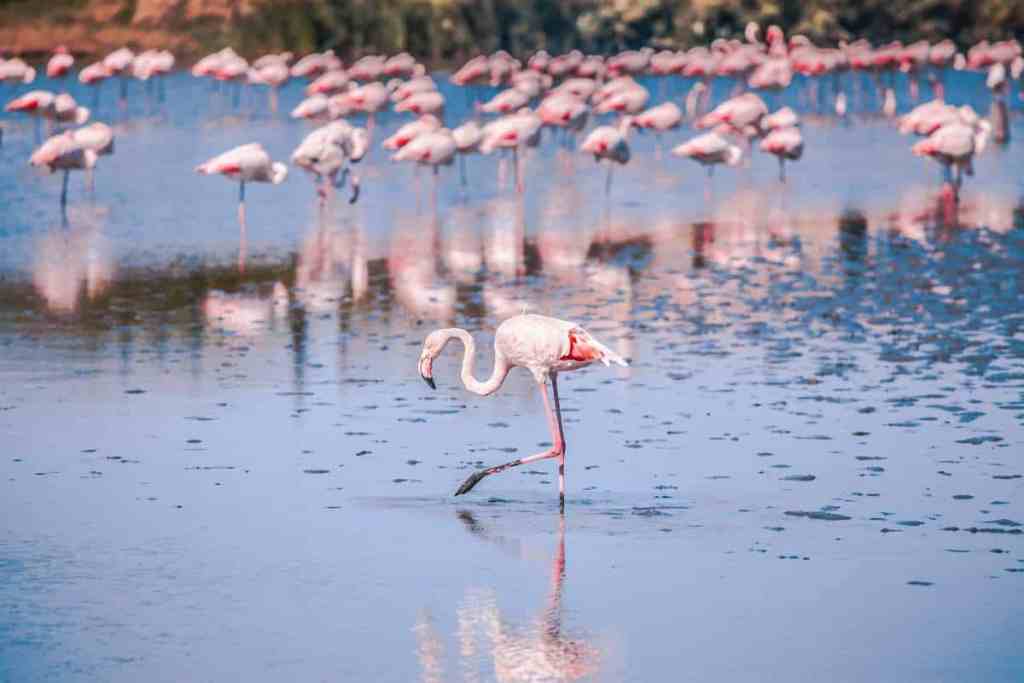
Between the two arms of the Rhône River and the Mediterranean Sea, the Camargue Regional Natural Park protects 85,000 hectares of wetlands unique in Europe.
This vast delta supports over 300 species of birds and positions the region as one of the main European relay points for migratory species. UNESCO granted it biosphere reserve status in 1977.
The Camargue serves as France’s only nesting site for pink flamingos. Spring and summer bring 50,000 to 60,000 flamingos, though only 5,000 to 6,000 overwinter. Breeding occurs from April through June, with birds remaining through approximately September.
Pont de Gau Ornithological Park offers the easiest viewing and concentrates thousands of flamingos along 2.8 kilometers of trails available to people with reduced mobility.
White Camargue horses are one of the oldest breeds worldwide. Foals arrive with black or brown coats and later develop white coats that protect them from the bright sun. You can book horseback riding experiences on these heritage horses throughout the protected wetlands.
29. Create Your Own Perfume in Grasse

Grasse is the world’s perfume capital, where three historic perfumeries open their workshops for hands-on fragrance creation.
Fragonard, Galimard, and Molinard guide you through the art of perfumery. Each offers distinct experiences led by expert “noses” who can identify more than 3,000 essences.
Workshop options range from introductory sessions to premium experiences. The Apprentice Perfume Maker’s Workshop welcomes participants aged 12 and over.
Galimard’s Cologne Break workshop combines a guided factory tour with fragrance creation. Their Signature Atelier produces a 100ml Eau de Parfum plus a matching scent diffuser. The Heritage Atelier has private creation of Eau de Parfum with corresponding body lotion, shower gel, and diffuser, along with tasting of floral notes native to Grasse.
Your workspace has bottles of various essences, pipettes, beakers, and litmus paper called “mouilettes” for scent testing. Instructors will teach you specific techniques. You’ll blend citrus, floral, and aromatic notes until reaching 100ml, then bottle your creation with a customized label.
The tours conclude at perfume stores that display the full product range for purchase.
30. Explore the Alabaster Coast in Étretat

White chalk cliffs plunge 90 meters into the English Channel along the Alabaster Coast, stretching 140 km between the Seine and the Somme. Nature carved three dramatic formations from limestone deposits laid down 100 million years ago.
Falaise d’Aval creates an enormous natural arch that frames L’Aiguille, a 70-meter needle-like sea stack rising offshore. Falaise d’Amont rises on the opposite side, with its arch resembling an elephant dipping its trunk into the Channel.
Claude Monet painted these cliffs between 1883-1886, creating visual catalogs of light’s effects on white stone in over 50 works. His canvases now hang in museums worldwide and make Étretat recognizable instantly.
Jardins d’Étretat presents neo-futuristic gardens that extend over the clifftops with views across the bay, charging €12 for adults.
The GR 21 long-distance trail runs 190 km from Le Havre to Le Tréport and traces clifftop paths with constant Channel views.
Voiles et Galets d’Étretat rents kayaks and paddleboards, letting you paddle beneath the arches at sea level.
31. Visit Claude Monet’s Gardens in Giverny
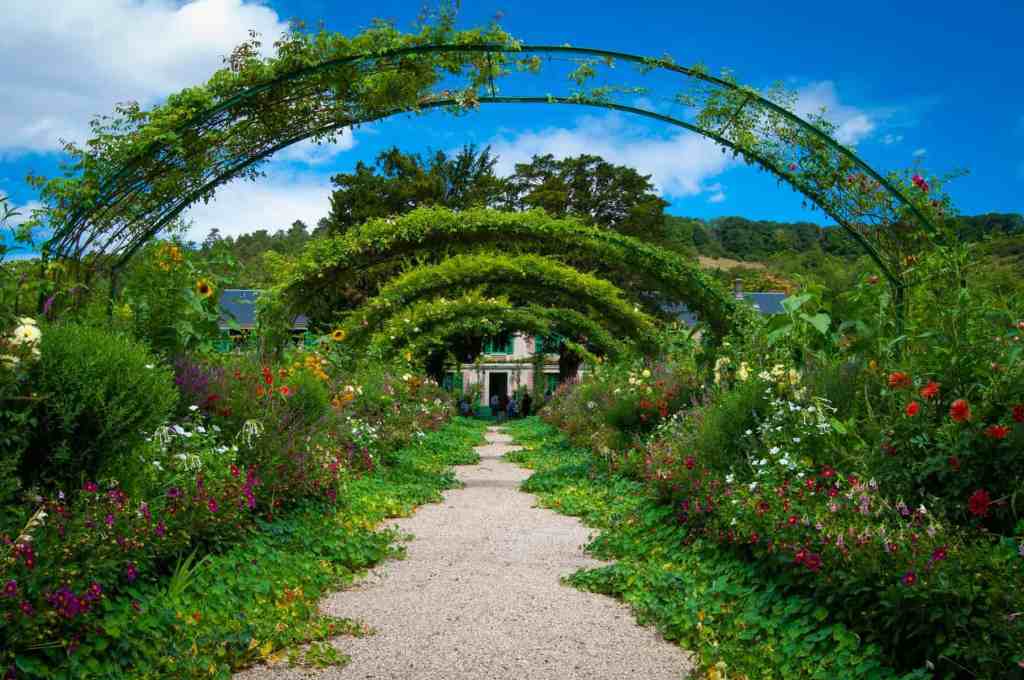
The inspiration behind Monet’s Water Lilies paintings awaits in Giverny, where the artist lived and painted for 43 years until he died in 1926. This Normandy village is ranked as the region’s second most visited site after Mont Saint-Michel.
Two distinctive gardens reveal Monet’s artistic vision in detail. The Clos Normand has thousands of flowers planted in straight-lined patterns and reflects his en plein air approach. Monet transformed vacant land across the road into a water garden in 1893 by diverting the Ru stream. The Japanese bridge spans ponds filled with water lilies tended by a dedicated gardener and is now covered with wisteria.
During the house tour, visitors will see the vibrant yellow dining room and the white-and-blue tiled kitchen displaying copper pots. The restored property remains open April 1st through November 1st from 10:00 am to 6:00 pm. Online bookings are recommended.
Trains reach Vernon-Giverny station from Paris, and a shuttle bus can take you to the village. Weekday visits in spring or mid-autumn offer quieter experiences, as late afternoons tend to be calmer than the busiest period between 10 am and 4 pm.
32. Visit Sainte-Chapelle’s Stunning Stained Glass
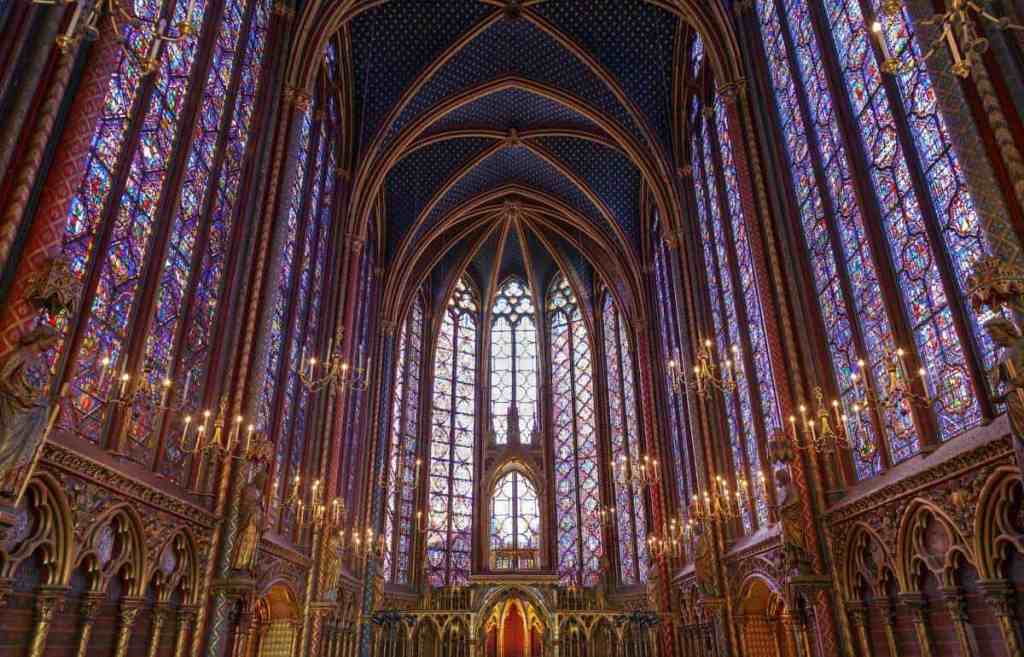
Witnessing the walls of coloured light change in the upper chapel of Sainte-Chapelle in Paris is an experience ranking among the best things to do in France for art and architecture enthusiasts.
Fifteen windows soar 15 meters high and create 600 square meters of stained glass where stone surfaces reduce to delicate frameworks. 70% of the glass remains original 13th-century work. These are the oldest stained glass windows in Paris.
The 1,113 biblical scenes span from Genesis in the north through the Apocalypse in the west rose window. Three distinct workshops crafted these masterpieces between 1242 and 1248.
The Master of the Ezekiel window produced elongated forms with angular draperies, while the Master of Judith and Esther created subtle facial details resembling illuminated manuscripts.
Colour palettes limited to red, blue, two greens, two purples, and yellow create chromatic coherence in narrative medallions depicting coronation scenes and fleurs-de-lis.
The 15th-century rose window measures 9 meters in diameter and is composed of 89 panels showing the Apocalypse. Silver stain techniques allowed artists to paint on glass and create shading with fine details.
Sunny days reveal the glass in absolute shimmering brilliance, though dimmer weather produces thick, glowing blue light. A seven-year restoration using lasers removed eight centuries of grime and revealed intensified colours that change hour by hour.
You can book your ticket and guided tour online.
33. Hike Through the Agriates Desert in Corsica
Corsica’s Agriates Desert is the largest protected natural site along the island’s coast, spanning 15,000 hectares of untouched wilderness.
The name is misleading – the Agriates Desert isn’t sand dunes. It is a Mediterranean scrubland that leads to pristine beaches where cows lounge on white sand beside crystal-clear waters.
The Sentier du Littoral, known as the Customs Path, stretches 35 kilometers from Roya Beach in Saint-Florent through legendary Corsican coastline. Hikers split the route into three stages over 2-3 days most of the time.
The first section reaches Saleccia Beach in 5 hours 30 minutes and passes Lotu Beach and the historic Genoese tower at Fornali. Stage two continues to Ghignu Beach in 2 hours 45 minutes through less-frequented coastal wilderness. The final stretch to Ostriconi Beach requires 6 hours across austere landscapes where granite blocks descend into the Mediterranean.
Old sheepfolds converted to simple shelters provide accommodation along the route, though they offer no drinking water or mattresses. You’ll need to carry 3 to 5 liters of water per person each day, as shade proves scarce and summer temperatures soar.
Spring and autumn offer ideal conditions that help you avoid summer’s merciless heat. Pack sturdy hiking shoes, wide-brimmed hats and high SPF sunscreen.
34. Experience La Petite France in Strasbourg
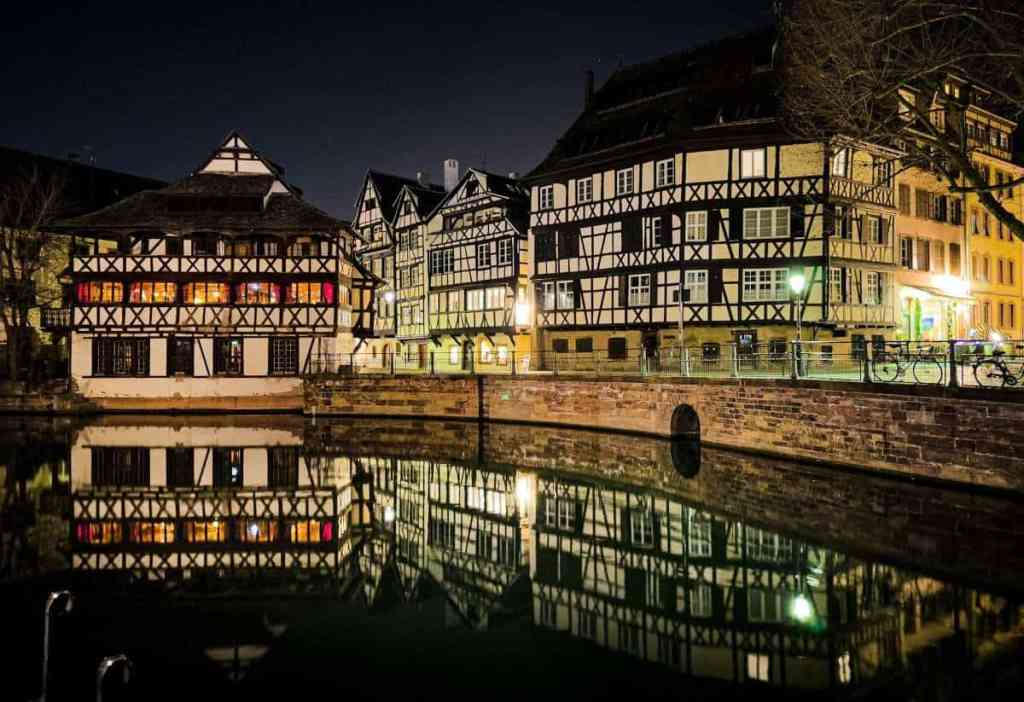
The Ill River forms a delta with five arms through La Petite France and creates Strasbourg’s most picturesque quarter. It preserves narrow cobblestone streets where tanners and millers lived during the Middle Ages.
Half-timbered houses from the 16th and 17th centuries line the waterways in absolute whiteness along Rue du Bain-aux-Plantes. Each features an additional open roof designed to dry animal skins.
The Maison des Tanneurs stands as the district’s crown jewel and is decorated with geraniums from spring through autumn. Place Benjamin-Zix offers shaded views of these buildings reflected in calm canal waters.
The Ponts Couverts span the channels through three bridges anchored by four fortified medieval towers. Despite their name, these structures haven’t been covered since the 18th century.
The Barrage Vauban reinforces the city’s defensive perimeter upstream with thirteen arches built during Louis XIV’s reign. The panoramic terrace atop this dam provides sweeping views of the Covered Bridges, cathedral, and Museum of Modern and Contemporary Art.
Boat tours departing from various points traverse the district’s canals and offer scenic water-level viewpoints of Strasbourg.
35. Road Trip Through the French Alps
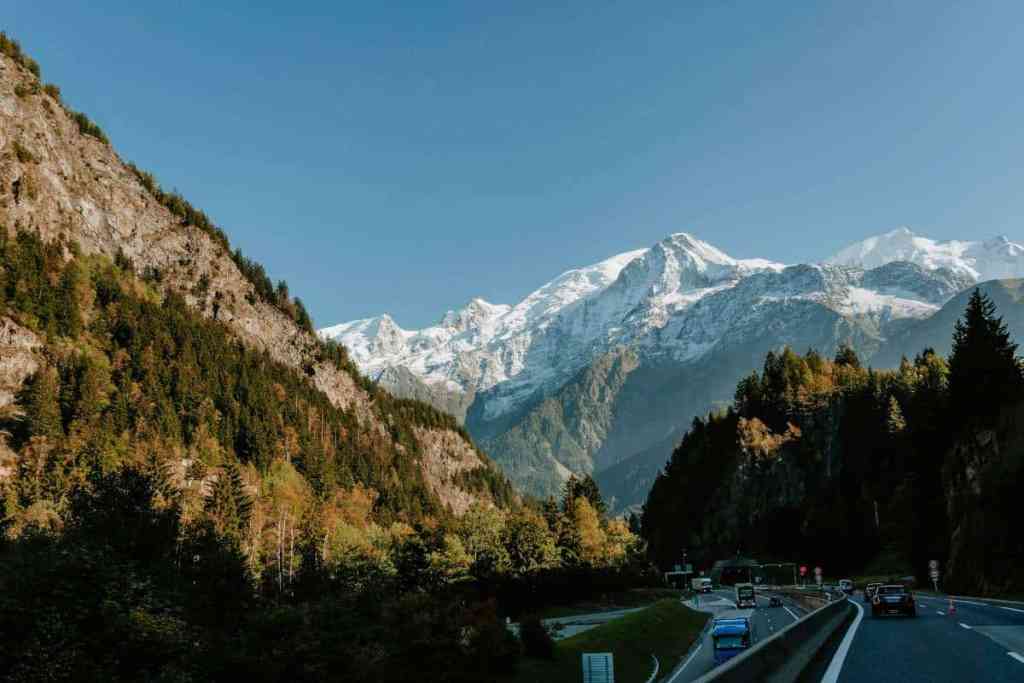
If you’re dreaming of the ultimate alpine road trip, the Route des Grandes Alpes is one you won’t forget.
Stretching roughly 720 kilometers from the shores of Lake Geneva all the way to the Mediterranean, this legendary drive takes you through some of the highest paved mountain passes in Europe.
The sweet spot to experience it? Late June through mid-September, when the snow has cleared and the roads are fully open—giving you those jaw-dropping, wide-open views at every turn.
Your journey will likely begin near Geneva Airport, which puts you just about an hour and a half from Chamonix-Mont-Blanc. This is where you’ll want to slow down and really soak it all in. Spend a few days here riding cable cars high into the mountains—especially up to Aiguille du Midi—where the views feel almost unreal.
From there, continue at a relaxed pace through charming alpine towns like Saint-Gervais-les-Bains and Megève. This area is perfect if you’re craving peaceful hikes through wildflower-filled meadows and scenic viewpoints without the intensity of high-altitude climbs.
Then, make your way toward the lakes region, where places like Annecy and Lac du Bourget offer a completely different vibe—think crystal-clear water, historic villages, and slower, sun-soaked afternoons. Don’t miss the stunning Abbaye de Hautecombe tucked along the lakeshore.
As you continue your drive, you’ll cross some of the most iconic mountain passes in the Alps. The breathtaking Col de l’Iseran is the highest paved pass in the range, while Col du Galibier rewards you with sweeping panoramic views that make every twist in the road worth it.
If you’re planning a shorter stretch, the route between Annecy and Chamonix is especially memorable, winding through picturesque stops like Yvoire and the car-free mountain resort of Avoriaz.
July and August bring the best weather and fully open lifts, but if you prefer a quieter, more relaxed experience, June and September are beautiful alternatives with fewer crowds and cooler temperatures.
Just be sure to book your accommodations and key activities in advance if you’re traveling in peak season—this is one road trip that’s no longer a secret.
Frequently Asked Questions (FAQs)
Conclusion: 35 Epic France Bucket List Experiences
These 35 bucket list experiences showcase France’s remarkable diversity beyond Paris stereotypes. You might not tackle every item on this list during a single trip, and that’s ok.
Some travellers chase alpine adventures while others prefer medieval villages. The key is matching activities to your personal interests rather than checking boxes.
Book accommodations and tickets ahead, especially for popular spots like Versailles and Mont Saint-Michel.
Weather windows matter for lavender fields and paragliding, so build flexibility into your schedule.
Start planning your France bucket list today. You’ll create memories that outlast any postcard!
France Travel Blogs
Best Places to Visit in Central France

France Solo Travel Destinations
Best Day Trips From Paris

Best Natural Attractions in France