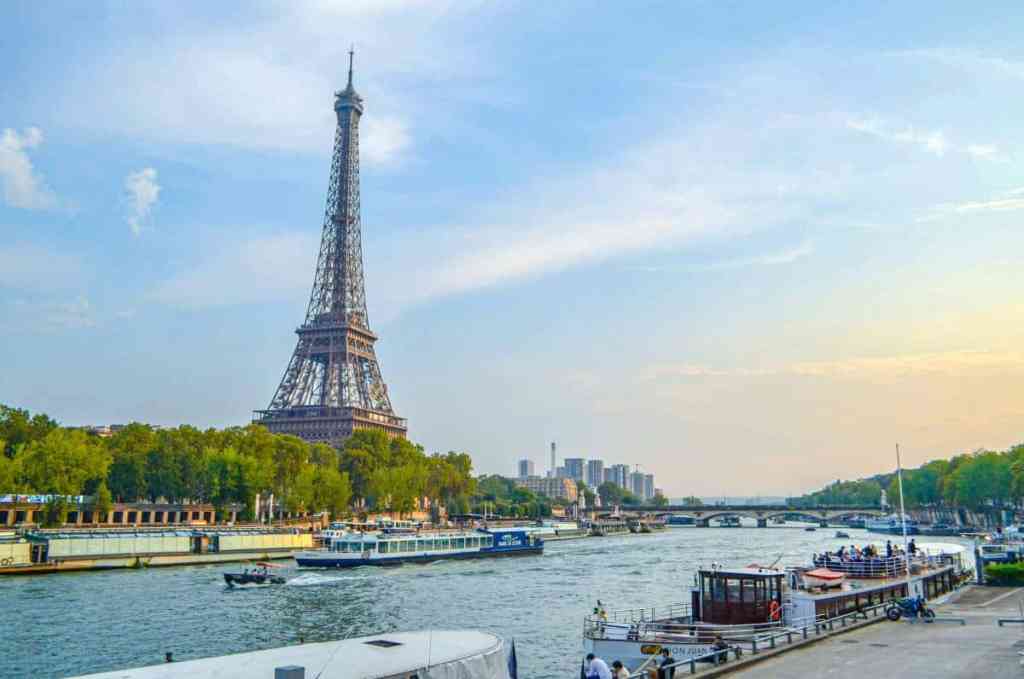
17 Best Day Trips from Paris You’ll Never Forget
Paris is an incredible destination, but some of France’s most unforgettable experiences lie just beyond the city’s borders.
From magnificent royal palaces and charming medieval towns to world-famous wine regions and even neighboring countries, there are countless day trips from Paris that are well worth adding to your itinerary.
One day, you could be exploring the opulent halls of the Palace of Versailles. The next, you might find yourself sipping champagne in Reims, wandering the fairytale streets of Bruges, Belgium, or discovering the breathtaking castles of the Loire Valley—all before returning to Paris in time for dinner.
Whether you’re dreaming of historic landmarks, picturesque villages, coastal scenery, or incredible food and wine, the best day trips from Paris make it easy to experience even more of France (and beyond) without changing hotels.
In this guide, you’ll discover 17 of the best day trips from Paris, complete with travel times, highlights, and tips to help you choose the perfect escape for your itinerary.
Disclaimer: This post may contain affiliate links, meaning I receive commissions for purchases made through those links at no cost to you. Please read my full disclosure for more information.
Versailles – Palace Gardens and Royal Grandeur
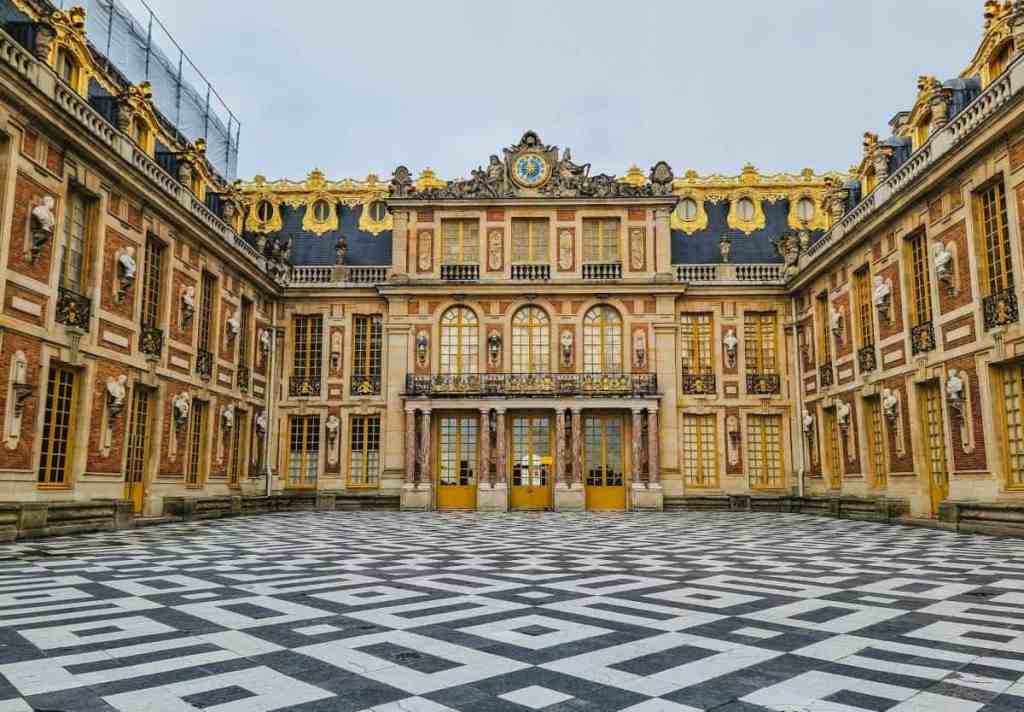
The Palace of Versailles is one of Europe’s most spectacular royal estates, located just 9 miles west of Paris. Around 15 million visitors come here each year.
This UNESCO World Heritage Site gives you a glimpse into the extravagant world of the French monarchy with its sprawling gardens and opulent interiors.
What to See at Versailles

The Hall of Mirrors is the palace centrepiece, featuring 357 mirrors reflecting light across 43 chandeliers.
The Grand Apartment of the King and Royal Chapel showcase royal grandeur. The Gallery of Battles displays massive paintings that honor French military history.
The Gardens span over 800 hectares, with fountains like Neptune and Latona outside.
The Grand Trianon and Petit Trianon palaces offer intimate views of royal life. Marie-Antoinette’s Queen’s Hamlet presents a fascinating contrast with its rustic cottages.
How to Get There from Paris
The RER C train provides the most direct route and takes you to Château Rive Gauche station. The palace is located just 10 minutes away on foot from there.
You can also catch Line L from Paris Saint-Lazare to Versailles Rive Droite or Line N from Montparnasse to Versailles Chantiers.
Each station places you within walking distance of the palace grounds.
Travel Time and Tickets
Expect 15 to 60 minutes total travel time from central Paris, depending on which train you choose. Click here for the fastest route.
A round trip costs 7.3€ per person and covers both metro and train connections.
The Passport ticket grants access to the Palace, Trianon estates and Gardens. It costs €22 for EU citizens or €25 for others.
Best Time to Visit
Wednesday through Friday sees lighter crowds than weekends or Tuesday mornings.
The Palace opens at 9:00 am. The Trianon estate opens at noon.
Early arrival lets you explore the Grand Apartments before crowds build and then visit Trianon after it opens.
Giverny – Monet’s House and Gardens
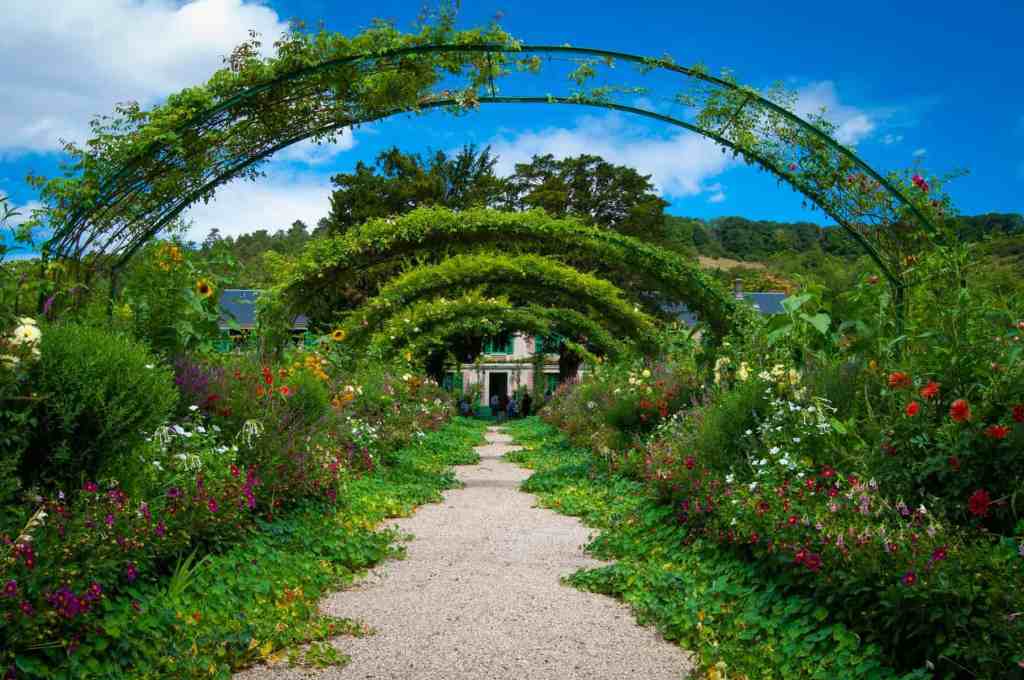
Claude Monet turned a simple farmhouse in Giverny into France’s second most visited attraction in Normandy.
He created the gardens that inspired his most celebrated works. The artist lived here from 1883 until he died in 1926. He painted 272 canvases featuring his water garden.
What Makes It Special
Monet spent hours contemplating his water garden. He employed a full-time gardener to remove every dead leaf.
He started painting his water lilies in 1897 and expanded into abstract art where shimmering colors alone evoked emotions.
You can view his Water Lilies series at Musée de l’Orangerie in Paris.
Monet’s Gardens
Your visit includes two distinct garden spaces connected by an underground passage:
- Clos Normand: This flower garden surrounds the pink house with pathways covered by iron arches draped in climbing roses. Monet planted hundreds of thousands of annuals and perennials.
- Water Garden: Monet purchased this land in 1893 and diverted the Ru stream to create his iconic pond. The green Japanese bridge drips with wisteria in May. Water lilies bloom throughout summer and reach their peak display in July and August.
Getting to Giverny
Direct trains depart from Gare Saint-Lazare to Vernon-Giverny station. The trip takes 45 to 50 minutes.
From Vernon, shuttle buses run €5 single or €10 return and connect you to Giverny in under 15 minutes.
The total trip from Paris takes about 90 minutes.
Tips to Visit
The gardens are open April 1 through November 1, from 10 am to 6 pm (last admission 5:30 pm).
Tickets cost around €14. You can also book a Monet’s House and Gardens Guided Tour.
Plan 1.5 to 2 hours to visit. Arrive early to beat afternoon crowds, especially if you visit on weekends or in August.
Reims – Champagne Tasting and Cathedral
Reims is the unofficial capital of France’s Champagne region, just 45 minutes from Paris by high-speed train.
The city houses more than 250 kilometres of underground champagne cellars and Notre-Dame de Reims, where 25 French kings received their coronations.
Champagne Houses to Visit
Veuve Clicquot operates 24 kilometres of UNESCO-listed tunnels and cellars. Many date to the Middle Ages.
Madame Clicquot revolutionized the industry in 1807 when she turned bottles upside down during aging to remove yeast sediment, and she pioneered blended rosé champagne. Tours cost €36 to €260 and include cellar visits with tastings.
Taittinger features 4 kilometres of cellars with crayères (chalk mines) from the 4th century. The caves became part of a 13th-century abbey and preserve Gothic arches with medieval stonework.
Ruinart, founded in 1729, maintains 24 crayères across 8 kilometres of cellars.
Pommery distinguishes itself with art installations throughout its underground spaces, where Madame Pommery created the first brut champagne that achieved commercial success.
Reims Cathedral and Historic Sites

Notre-Dame de Reims Cathedral showcases High Gothic architecture. Its façade displays 2,303 statues.
Construction began in the 13th century on the site where Clovis, first King of the Franks, was baptized. German shelling during WWI destroyed 95 percent of Reims, but the cathedral survived nearly 300 shells.
Rockefeller donations funded restoration efforts.
How to Reach Reims
TGV trains depart from Gare de l’Est and reach Reims Ville station in 46 minutes. Tickets cost €25 to €60 when booked ahead.
Planning Your Champagne Day
Book champagne house tours two months ahead, especially when you have English-language sessions. Tour groups stay small at 12-15 people.
Space visits with breaks between tastings rather than back-to-back tours.
Mont Saint-Michel – Medieval Abbey on a Tidal Island
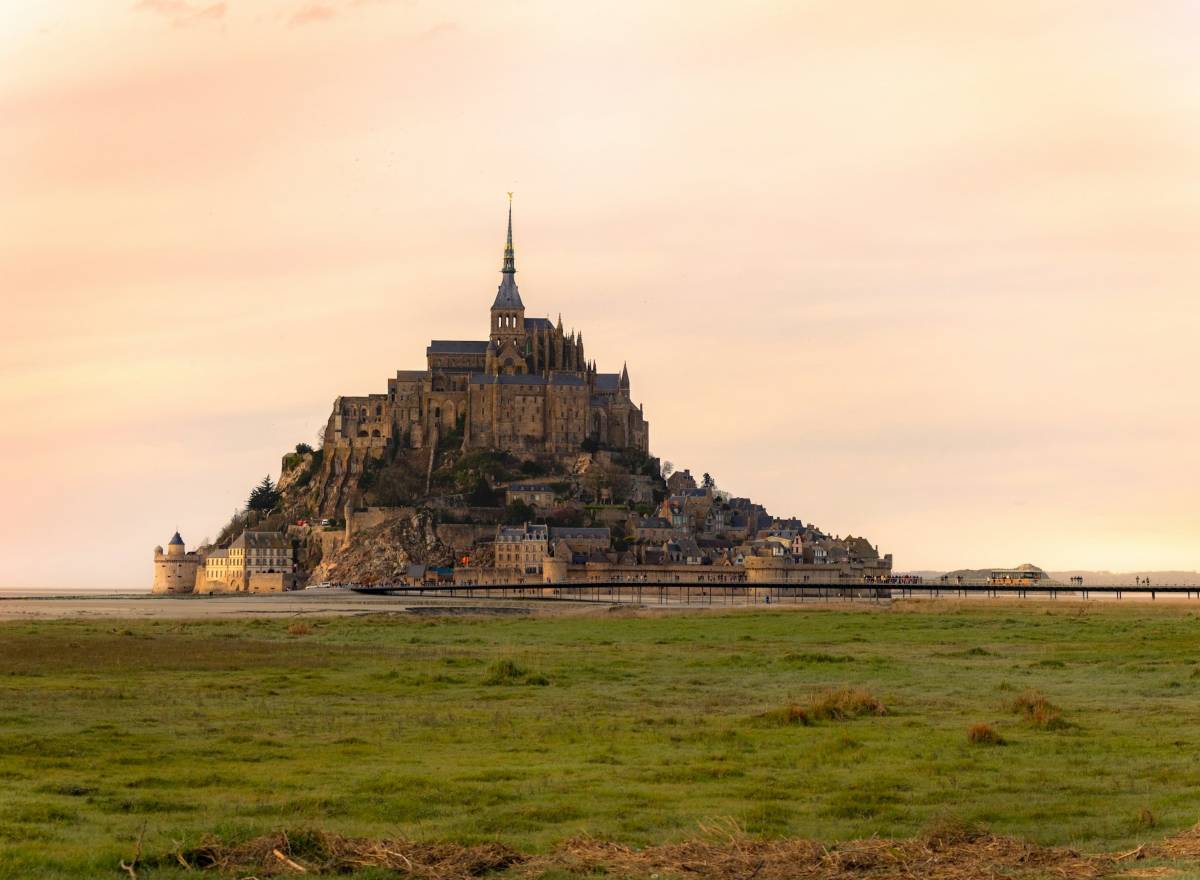
Rising from the Bay of Normandy, Mont Saint-Michel experiences continental Europe’s highest tides, with water levels moving up to 15 meters between low and high tide.
The Abbey and Village

Bishop Aubert of Avranches built the first sanctuary in 708 AD after the Archangel Michael appeared in his dreams commanding construction.
The Benedictine abbey developed from 966 onwards, with the 13th-century Gothic sections nicknamed “La Merveille” (The Marvel).
Ramparts connected by seven towers transformed Mont Saint-Michel into an impregnable fortress during the Hundred Years’ War. The North Tower provides tidal bore phenomenon views.
The medieval village preserves its Grande Rue, lined with shops bearing historical signs. You access it through three successive gates: the Porte de l’Avancée, Porte du Boulevard, and the drawbridge known as Porte du Roy.
Getting to Mont Saint-Michel
The Train du Mont-Saint-Michel departs Paris Montparnasse daily from April through October and reaches Pontorson station.
A shuttle bus connects the station to Mont Saint-Michel. You can also take the TGV to Rennes, then catch the Keolis bus for the remaining distance.
Driving from Paris takes 3 hours 30 minutes to 4 hours 30 minutes.
Travel Time and Tours
The trip from Paris requires 3 hours 53 minutes minimum.
There’s a wide variety of Mont Saint-Michel tour and ticket options to choose from:
What to Expect
Free shuttles run from parking areas to the island and operate from 7:30 am. Walking from parking to the abbey entrance takes 45 minutes to 1 hour.
The climb involves numerous steps, making access difficult for those with mobility limitations.
Abbey tickets cost $15, with free admission for EU residents under 26.
Loire Valley Châteaux – Renaissance Castles
The Loire Valley preserves over 300 châteaux, with approximately 100 open to visitors. T
his UNESCO region became France’s royal playground during the 15th and 16th centuries, when nobility commissioned architects to build Renaissance masterpieces across pastoral hunting grounds.
Top Châteaux to Visit
Château de Chambord
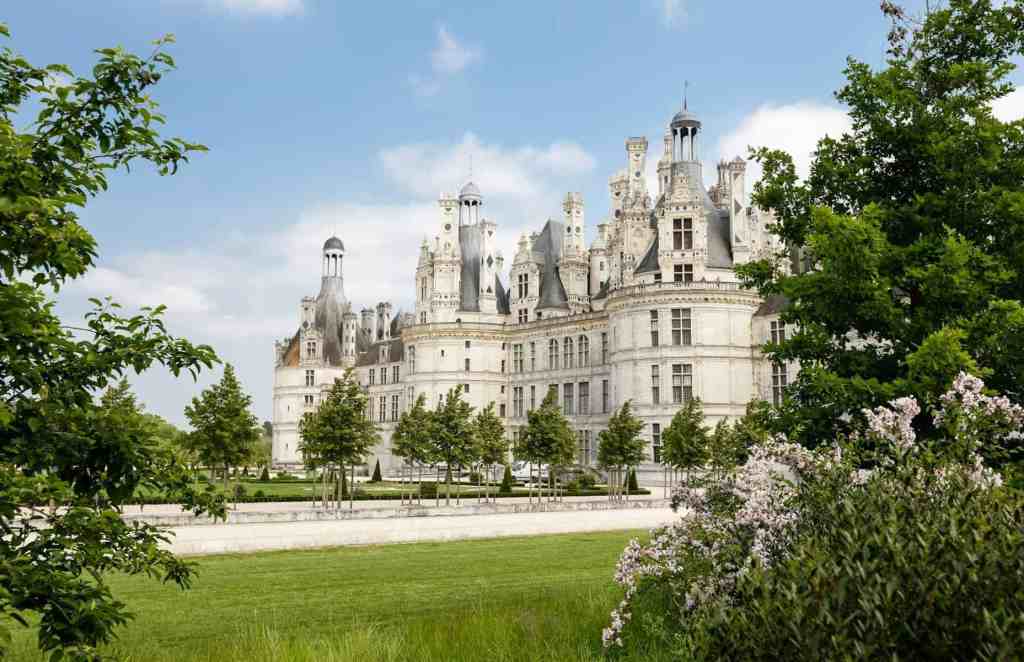
Château de Chambord dominates the landscape as the largest Loire château. The structure has 420 rooms with intricate stone carvings.
Leonardo da Vinci’s influence appears in the double helix staircase and rooftop terrace adorned with ornate chimneys.
The estate has Europe’s largest enclosed forest park, the same size as Paris.
Château de Chenonceau
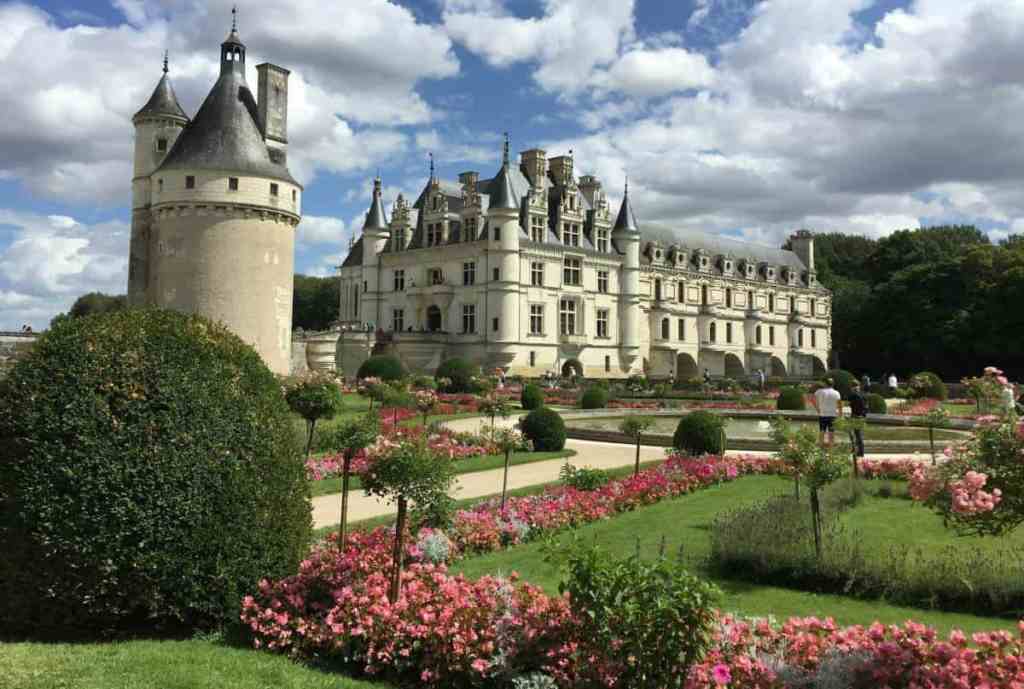
Château de Chenonceau earns its “Ladies’ Castle” nickname from the succession of women who owned and boosted it.
The gallery stretches across the Cher River and creates an architectural wonder.
Fresh flower arrangements fill the furnished rooms, while manicured gardens honor Catherine de Médicis and Diane de Poitiers.
Château de Cheverny
Château de Cheverny maintains its original family ownership through six generations. The château has lavishly furnished interiors and a kennel that houses around 100 hunting dogs.
Château de Villandry
Château de Villandry showcases France’s finest ornamental gardens in geometric patterns.
Getting to the Loire Valley
TGV trains reach Tours from Paris Montparnasse in one hour. St Pierre des Corps serves as the main station for fast connections. Local trains connect to Amboise in 30 minutes.
Touring Options
Full-day tours from Paris visit three châteaux and depart around 7:30 am, returning by 8 pm. These tours cover Chambord, Chenonceau and Cheverny.
Tours from Amboise or Tours cost approximately €227 per person.
Car rentals from Tours or Orleans provide flexibility for independent exploration.
Best Châteaux Combinations
Plan two châteaux per day to avoid rushing.
Chambord pairs well with Chenonceau, located one hour apart. Chenonceau with Amboise maximizes time spent visiting rather than travelling.
Normandy D-Day Beaches – Historic Landing Sites
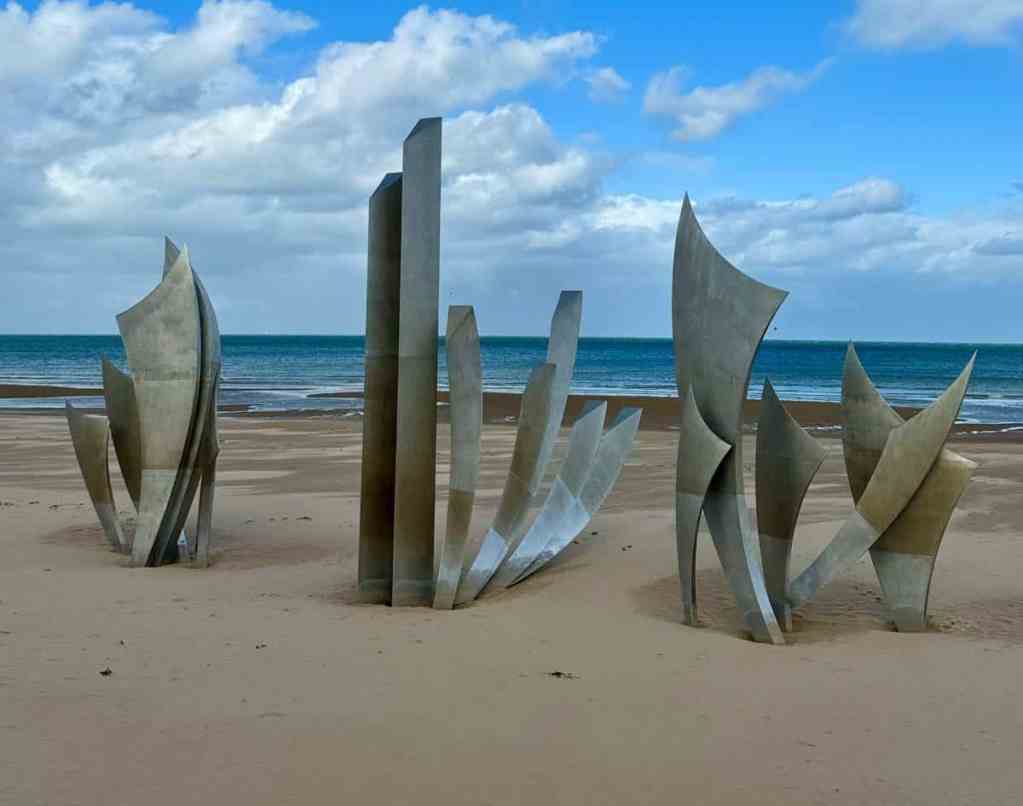
More than 156,000 Allied soldiers stormed five Normandy beaches on June 6, 1944, in history’s largest amphibious invasion.
These landing sites now stand as powerful memorials where you can walk the same shores where troops fought to liberate Europe.
Key Sites to See
Omaha Beach earned its “Bloody Omaha” nickname after 4,100 American casualties. The Normandy American Cemetery overlooks the beach and holds 9,387 graves.
Utah Beach saw lighter resistance. Troops secured the beach within an hour at the cost of 194 lives. The Utah Beach Landing Museum houses a restored B-26 bomber.
Pointe du Hoc preserves crater-pocked cliffs where Rangers scaled 100-foot heights under fire.
Gold Beach saw British forces land 25,000 men, while Bayeux War Cemetery contains over 4,500 Commonwealth graves.
Getting to Normandy
Trains from Paris Saint-Lazare reach Bayeux in 2 hours 20 minutes. Caen is available as well.
Ferries from Portsmouth dock at Ouistreham will put you in the landing beach area.
Tour Options
Full-day tours from Bayeux cost $168 and visit Utah Beach, Omaha Beach, and Pointe du Hoc over 9 hours.
Half-day tour options run $93. Paris-based tours last 14 hours.
Planning Your Visit
Book tours two months ahead to get English-language options.
Two day tours cover all five beaches, whereas single-day tours condense the main American sites into manageable visits.
Disneyland Paris – Theme Parks for Families

Disneyland Paris is located minutes from central Paris, making it one of the easiest top day trips from Paris for families seeking theme park magic alongside cultural exploration.
The Two Parks
Disneyland Park features five lands surrounding Sleeping Beauty Castle, with classic attractions like Big Thunder Mountain and Space Mountain.
Disney Adventure World underwent a €2 billion transformation and reopened on March 29, 2026, with the new World of Frozen land and Adventure Bay lake.
Both parks are minutes apart.
Getting There by Train
The RER A train departs from major Paris stations (Charles de Gaulle Étoile, Gare de Lyon, Nation) toward Marne-la-Vallée Chessy. The journey takes 35 to 45 minutes.
Tickets cost €5 one way, with children under 10 riding half-price.
The station is a 2-minute walk from park entrances.
Ticket Options
Buy tickets in advance as they sell out at the gate.
One-day tickets grant access to one or both parks, while multi-day ticket options (2-4 days) cover both locations.
Prices vary by date and season.
Making the Most of Your Day
Download the Disneyland Paris app for up-to-the-minute wait times and show schedules.
Arrive early in the morning when Disneyland Paris opens , and visit on weekdays to avoid crowds.
Disney Premier Access costs €5-€13 per ride or €90-€190 for ultimate access.
Chartres – Gothic Cathedral and Medieval Town
Chartres Cathedral’s twin spires appear on the horizon long before you reach the town. You can see them from 25 kilometres away across the Beauce Plain.
This Gothic masterpiece sits 88 kilometres southwest of Paris and ranks among the best day trips available from Paris.
What Makes Chartres Cathedral Special
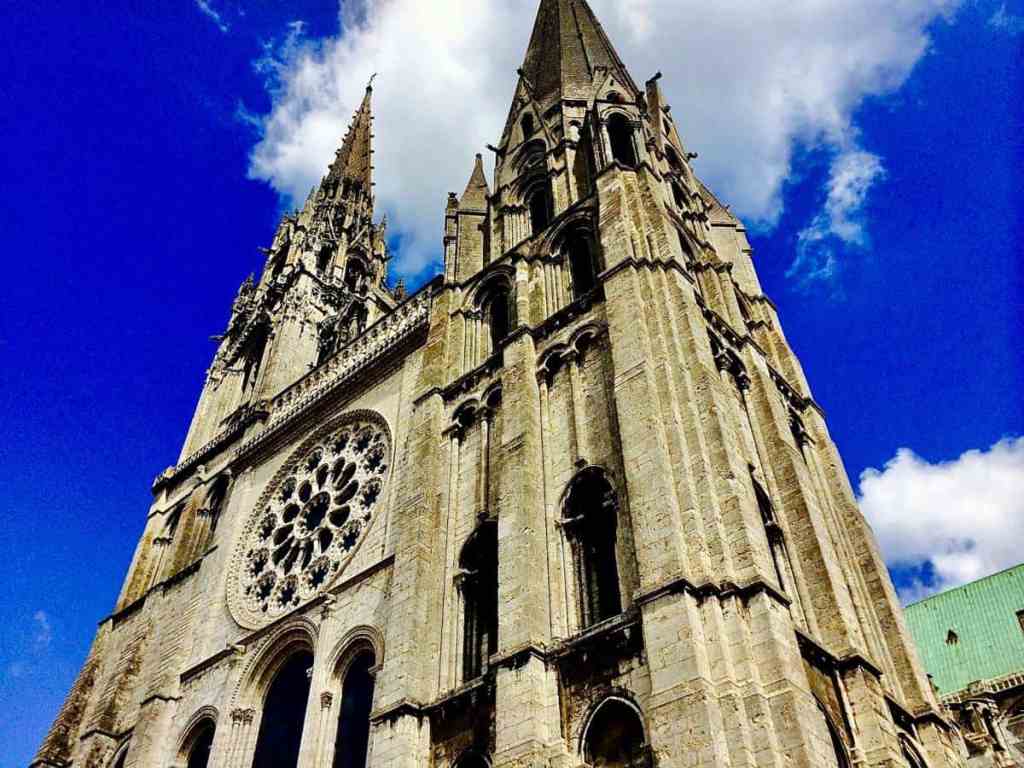
The cathedral was constructed between 1194 and 1220.
It preserves 176 stained-glass windows that feature the legendary “Chartres blue” color. The exact mixture remains a mystery.
The west façade showcases two contrasting spires. One is a 105-meter plain pyramid from 1160 and the other is a 113-meter Flamboyant Gothic spire.
A 12th-century labyrinth stretches across the nave floor inside. Pilgrims once walked it on their knees.
The cathedral holds the Sancta Camisa, believed to be the tunic Mary wore at Christ’s birth.
Interested in visiting the Chartres Cathedral? Here are your options:
- Chartres Cathedral Audio Guide Tour
- Private Chartres Cathedral Tour with Driver & Guide
- Small Group Notre Dame Cathedral Tour with Scheduled Entry
How to Get There
Trains depart hourly from Paris Gare Montparnasse. There are 33 daily connections that reach Chartres in one hour. Train tickets cost €15.60 one way.
The cathedral is just a short walk from the station.
The Old Town
Chartres unfolds on two levels beyond the cathedral. Steep lanes connect the upper and lower sections.
Half-timbered houses line medieval streets.
The Promenade des Bords de L’Eure follows the river past stone bridges and former wash houses.
Interested in a day trip to Chartres? Here’s a list of the top 10 Chartres Guided Tours.
Why Visit Chartres
You can see Chartres in a few hours or spend a full day. The town offers a quieter pace than Paris while giving you access to extraordinary Gothic architecture and preserved medieval charm.
Château de Fontainebleau – Royal Palace and Forest

Thirty-four kings and two emperors called Fontainebleau home over 800 years. This makes it the only château inhabited by all French monarchs from the twelfth to nineteenth century.
UNESCO designated the estate and its 130-hectare grounds a World Heritage Site back in 1981.
Palace Features
The Throne Room is France’s only preserved historical throne room. Napoleon created it by transforming the King’s bedchamber in 1808.
The château houses over 40,000 works of art across 1,500 rooms.
The Francis I Gallery showcases Renaissance artworks by Rosso Fiorentino and Primaticcio and establishes Fontainebleau as the cradle of the French Renaissance.
André Le Nôtre designed the Grand Parterre, which extends 14 hectares as Europe’s largest formal garden.
How to Reach Fontainebleau
Trains depart Paris Gare de Lyon toward Montargis, Montereau, or Laroche-Migennes and reach Fontainebleau-Avon station in 40 minutes.
Bus line 1 runs every 15 minutes from the station to the château stop and takes 10 to 15 minutes.
The Fontainebleau Forest
This UNESCO Biosphere Reserve spans 22,000 hectares and features 6,600 animal species and 5,700 plant varieties.
Marked trails like the 25 Bumps Circuit wind through oak, beech, and pine woods.
Rock formations attract climbers. You can sign up to climb with a registered guide.
Visiting Tips
Château de Fontainebleau is open 9:30 am to 6 pm (April – September) and 9:30 am to 5 pm (October-March) but closes Tuesdays.
You should plan 5 to 7 hours to explore both palace and grounds.
Here are a few guided tour options to consider:
Château de Chantilly – Art and Stables

If you enjoy art, history, and grand architecture, Château de Chantilly deserves a place on your France itinerary.
Located about 40 kilometres from Paris, this elegant estate is famous for its remarkable art collection, beautifully landscaped grounds, and one of Europe’s most impressive historic horse stables.
Discover the Treasures Inside the Musée Condé
The château’s museum is considered one of the country’s finest art museums, surpassed in size only by the Louvre when it comes to collections of antique paintings.
Its galleries are filled with works collected by Henri d’Orléans, the Duke of Aumale, who bequeathed both the estate and its priceless collection to the Institut de France in the late 19th century.
Today, visitors can admire more than a thousand paintings created by celebrated European artists, including Raphael, Fra Angelico, Anthony van Dyck, and Nicolas Poussin.
One of the museum’s greatest distinctions is that it displays three original paintings by Raphael, a rarity that sets it apart from nearly every other museum in France.
Beyond the paintings, the château also protects an extraordinary library containing roughly 60,000 books and handwritten manuscripts.
Throughout the residence, the rooms remain arranged much as they were when the Duke lived here, reflecting the conditions of his original donation and giving visitors the feeling of stepping back into a private aristocratic home rather than a traditional museum.
Stroll Through the Historic Gardens
After exploring the château, spend some time wandering the formal gardens. Their elegant design was created by the renowned landscape architect André Le Nôtre, whose work helped define the classic French garden style with geometric pathways, ornamental water features, and carefully planned vistas.
Explore the Great Stables
Another highlight of the estate is the magnificent Great Stables. Built during the first half of the 18th century for Louis-Henri, Prince of Condé, the enormous building was designed to accommodate as many as 240 horses.
Today, the stables house the Living Museum of the Horse, where interactive exhibits and historic artifacts explore the relationship between horses and people through the centuries.
Visitors can browse 15 exhibition galleries featuring around 200 objects before watching live equestrian performances held beneath the building’s spectacular domed arena.
Getting to Château de Chantilly
Visiting from Paris couldn’t be much easier. Regular trains leave Gare du Nord and reach Chantilly-Gouvieux in around 25 minutes.
Once you arrive at the station, you can hop aboard the complimentary shuttle or enjoy a pleasant walk through the surrounding forest to reach the château.
Tips for Planning Your Visit
The château welcomes visitors from 10:00 a.m. until 5:00 p.m., while the Great Stables open beginning at noon.
Admission is available at different price points depending on age, with reduced rates offered for younger visitors.
Since there’s plenty to see between the museum, gardens, and horse museum, plan to spend most—or all—of the day exploring the estate.
Vaux le Vicomte – Versailles’ Inspiration
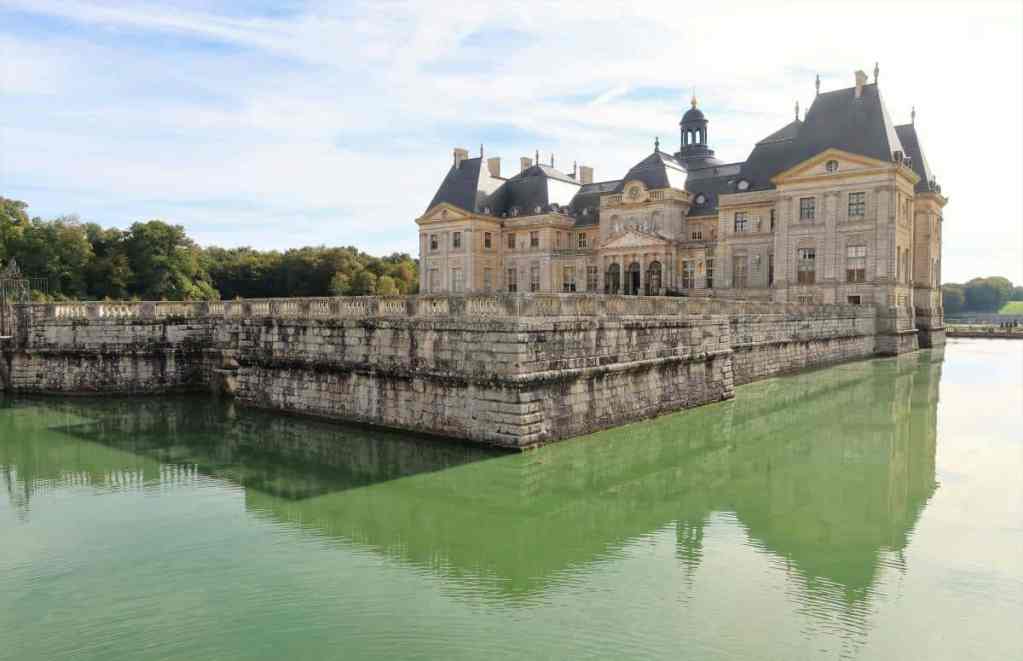
Nicolas Fouquet commissioned three masters to build his dream château 50 kilometers from Paris: architect Louis Le Vau, painter Charles Le Brun, and landscape designer André Le Nôtre.
Their collaboration between 1658 and 1661 inspired Louis XIV’s Versailles, though Fouquet’s lavish housewarming party in August 1661 triggered the king’s jealousy and landed him in prison for life.
The Château and Gardens
Le Nôtre created the first grand formal French garden here across 33 hectares. He established a 3-kilometer vista that became the model for European landscape design.
The gardens feature theatrical grandeur with water features and sculptures from the 17th and 19th centuries. Visual tricks using trompe-l’œil effects add to the spectacle.
How to Get There
Trains depart Paris Gare de Lyon toward Melun and take 25 minutes.
From Melun station, taxis cost €18-€25. You can also catch the château’s shuttle service.
Candlelit Evening Events
Every Saturday from May 16 to September 26, 2,000 candles light up the château and gardens. Tickets cost €22, with fireworks launching at 11pm.
Shuttle buses run from Paris during candlelit evenings.
Why It’s Worth Visiting
Vaux-le-Vicomte offers an intimate experience without Versailles crowds. It showcases the complete vision that inspired the Sun King’s palace.
Auvers-sur-Oise – Van Gogh’s Final Home

Vincent van Gogh arrived in Auvers-sur-Oise on May 20, 1890, spending his final 70 days creating over 70 paintings before his death on July 29.
This riverside village is located 30 kilometres from Paris and preserves the sites where the artist produced some of his most celebrated final works.
Van Gogh Sites to Visit
Auberge Ravoux has the attic room where Van Gogh lived and died, preserved unchanged since 1890. Entry costs €6.
The Church at Auvers is the subject of his famous June 1890 painting, now displayed at Musée d’Orsay.
Walk to the cemetery where Vincent rests beside his brother Theo, their graves covered in ivy.
Maison du Docteur Gachet showcases the garden and home of Van Gogh’s physician and friend. The wheat fields beyond the village mark where he painted Wheatfield with Crows.
How to Get There
Trains depart Paris Gare du Nord on Line H, requiring one connection at Valmondois for a total trip of about 1 hour. Tickets cost €4-€6.
Direct trains run weekends and holidays (April-October), departing 9:38 AM.
Walking in Van Gogh’s Footsteps
The village remains walkable, with marked paths connecting painting locations to their real-life counterparts. The riverside path follows the Oise through landscapes that inspired his final landscapes.
Tips for Art Lovers
A full day lets you experience both museums and countryside walks where Van Gogh worked.
Provins – UNESCO Medieval Town
Less than an hour and a half from Paris, Provins feels like a place where medieval France has been frozen in time.
Located about 90 kilometres southeast of the capital, this beautifully preserved walled town was once a thriving centre of commerce during the famous Champagne fairs.
Its exceptional state of preservation earned Provins UNESCO World Heritage recognition in 2001, making it one of the best places in France to experience an authentic medieval city.
Wander the Historic Upper Town
Most of Provins’ best-known attractions are found within the fortified upper town. As you stroll along its narrow streets, you’ll pass centuries-old stone buildings, defensive walls, and historic landmarks that reveal the town’s importance during the Middle Ages.
One of the most recognizable landmarks is Tour César, a striking 12th-century tower that has served as both a watchtower and a prison throughout its history. Climb to the top for sweeping views across the rooftops and surrounding countryside.
Another impressive feature is the town’s defensive wall. While the original fortifications stretched for roughly five kilometres, around 1.2 kilometres still remain today, giving visitors an excellent glimpse into Provins’ medieval defenses.
Beneath the streets lies another fascinating part of the town. A network of underground vaulted chambers once provided secure storage for valuable merchandise traded during the Champagne fairs, adding another layer to Provins’ rich commercial history.
Be sure to visit the Church of Saint-Quiriace, an elegant Gothic church dating back to the 12th century. The church is also connected to French history, as Joan of Arc is said to have visited here in 1429.
Experience Medieval Entertainment
If you’re visiting between March and November, don’t miss the live historical performances that bring Provins’ past to life.
Popular shows include thrilling horseback demonstrations in The Legend of the Knights and impressive birds of prey displays during The Eagles of the Ramparts.
These family-friendly performances add an extra dimension to any visit.
Visiting During the Medieval Festival
For an even more immersive experience, consider planning your trip around the annual Provins Medieval Festival.
The town transforms into a lively celebration of medieval life with costumed performers, musicians, craftsmen, and historical reenactments filling the streets.
Admission is €12 when purchased online or €13 at the entrance.
Getting to Provins from Paris
Provins is an easy day trip from Paris.
Direct trains leave Gare de l’Est on Line P and reach the town in approximately 80 to 90 minutes.
The journey is covered by a Zone 5 Navigo pass, while individual tickets are also available at an affordable price.
Getting Around Provins
After arriving at the station, you’ll find it easy to explore the town. Most visitors spend their time in the elevated, fortified section where the main historical sites are located.
Visitors who don’t want to make the uphill walk can catch the tourist train, which runs throughout the day between the station and the upper town.
Rouen – Monet’s Cathedral and Joan of Arc
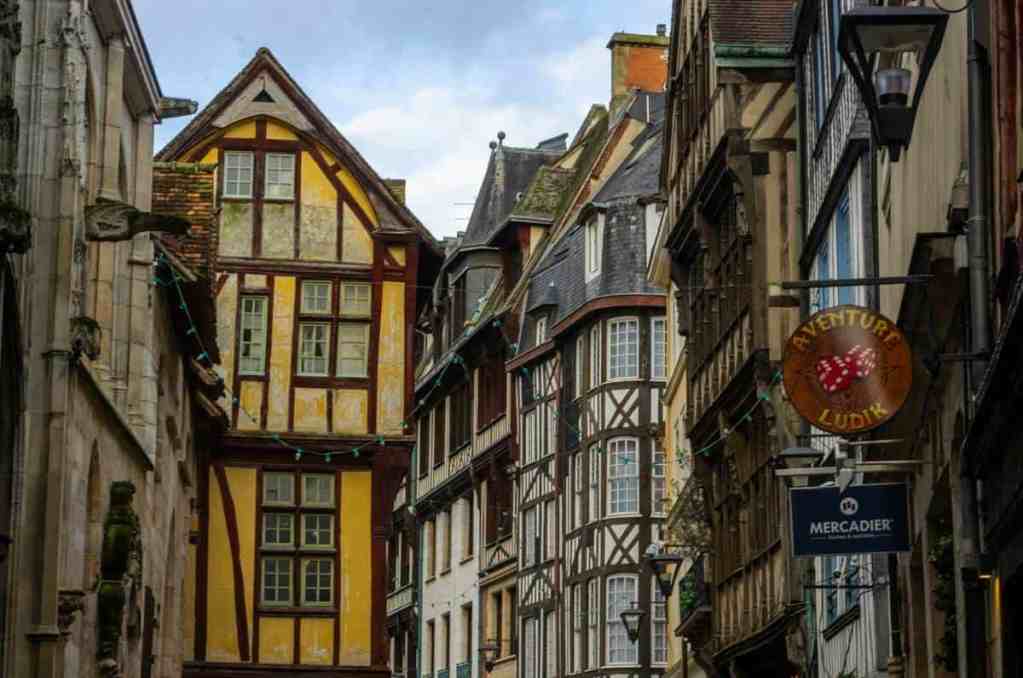
Claude Monet painted more than 30 versions of Rouen Cathedral between 1892 and 1893. He rented a studio across the street to capture how changing light transformed the Gothic façade throughout different times of day.
Fast trains now place you in this Norman capital in 1 hour 13 minutes from Paris, where Monet’s subject and Joan of Arc’s final chapter await exploration.
Rouen Cathedral and Old Town
Rouen preserves around 2,000 half-timbered houses from the late Middle Ages.
The cathedral’s 151-meter iron spire once ranked as the world’s tallest building. Two contrasting towers frame the western façade: the 12th-century Tour Saint-Romain and the 15th-century Tour de Beurre.
Wealthy citizens funded the latter to have the privilege of eating butter during Lent. Richard the Lionheart’s embalmed heart also rests inside.
The Gros Horloge astronomical clock spans the main pedestrian street, connecting the cathedral to Place du Vieux-Marché. This clock dates from 1389.
Historic Highlights
Joan of Arc burned at the stake in Place du Vieux-Marché on May 30, 1431, at age 19. The modern Église Sainte-Jeanne-d’Arc marks the execution spot with architecture that evokes flames.
The Historial Jeanne d’Arc occupies the Archbishop’s palace where her trial occurred in 1431 and her rehabilitation trial took place in 1456.
Getting to Rouen
Trains depart Paris Saint-Lazare hourly and reach Rouen Rive Droite station in 1 hour 28 minutes on average. Tickets start at $11.99 when booked ahead.
Walk 15 minutes from the station to reach the historic center.
Planning Your Day
Arrive early on weekdays to photograph medieval streets before crowds gather.
Visit between April and September to see evening light shows that project colors onto the cathedral façade.
Épernay – Avenue de Champagne
Avenue de Champagne stretches one kilometer through Épernay’s center and earned its nickname as the “Champs Elysées of Champagne”.
There are more than 200 million bottles in 110 kilometres of cellars beneath the cobblestones.
UNESCO designated this boulevard a World Heritage Site in 2015 for its Renaissance and 19th-century architecture.
Champagne Houses in Épernay
Moët & Chandon operates the region’s largest cellars, with 28 kilometres of galleries.
Mercier offers self-guided mini-train tours through 18 kilometres of cellars 30 meters underground.
Perrier-Jouët showcases its Art Nouveau heritage at Maison Belle Époque, while De Castellane features a 66-meter tower with panoramic views.
Bollinger maintains 4,000 oak barrels in nearby Aÿ village.
Getting There
Trains from Paris Gare de l’Est reach Épernay in 1 hour 20 minutes and cost €26 to €55.
The compact town center is walkable from the station.
Combining with Reims
Épernay is located just 27 kilometres from Reims and is connected by trains every 30 minutes.
Tours from Reims visit both cities plus Hautvillers, Dom Perignon’s village.
Champagne Day Trip from Paris to Reims and Épernay with 6 Tastings
What Makes Épernay Special
Épernay positions itself as a quieter champagne base than Reims.
The town centers around its legendary avenue, where prestigious houses line both sides.
Brussels – Belgium’s Capital City

Brussels is Belgium’s capital and the European Union headquarters.
It sits just 1 hour 22 minutes from Paris by high-speed train. This proximity makes it one of the best day trips from Paris to experience another country’s culture and cuisine in a single day.
Must-See Brussels Attractions
The Grand Place is a UNESCO World Heritage Site. 17th-century guildhalls and the neo-Gothic Town Hall surround it.
The Manneken Pis, a 50cm bronze statue designed in 1619, has become a symbol of Brussels despite its small size.
The Atomium was constructed for the 1958 World Fair and represents an iron crystal magnified 165 billion times. Its top sphere offers panoramic city views.
What to Experience
Belgian chocolate shops like Neuhaus and Godiva cluster near Grand Place.
Sample Belgian beer at establishments like Delirium Café, or try fresh waffles and mussels with frites.
The Magritte Museum showcases Belgian surrealist art.
The Comic Art Museum celebrates Belgium’s graphic novel heritage.
Train from Paris to Brussels
Eurostar trains depart Paris Gare du Nord and arrive at Brussels-Midi/Zuid station in 1 hour 22 minutes. There are multiple daily departures to choose from.
Travel Time and Tips
Depart in the early morning to maximize exploration time in this compact, walkable city center.
Bruges – Medieval Belgian Charm

Bruges preserves its medieval heritage as a UNESCO World Heritage Site. The town has maintained its historic fabric and Gothic constructions that evolved over centuries.
This Belgian destination is located 267 kilometres from Paris and attracts visitors who seek cobblestone streets, winding canals, and historic architecture.
Bruges Highlights
Rozenhoedkaai provides the town’s most photographed views.
The Belfry Tower rises 83 meters above Markt Square. It features 366 steps that lead to panoramic views and a 47-bell carillon. Medieval buildings reflect in the canal beneath the Belfry’s silhouette.
Michelangelo’s Madonna and Child are located in the Church of Our Lady, the only sculpture by the artist that left Italy during his lifetime.
What to Do in Bruges
Canal boat tours run 30 minutes from multiple departure points and glide past stone bridges. Centuries-old houses line the waterways.
Belgian chocolate shops like Dumon and The Chocolate Line fill the streets.
The Groeningemuseum displays Flemish Primitives and includes works by Jan van Eyck and Hans Memling.
Getting to Bruges from Paris
Trains depart Paris Gare du Nord for Brussels-Midi via Thalys or Eurostar. An SNCB Intercity connection follows to Bruges. The total trip takes around 2 hours 30 minutes.
Travel Time and Tips
Depart Paris between 7:00 and 8:00 AM to maximize exploration time.
Visit on weekdays and arrive before 10:00 AM to avoid crowds.
Conclusion: Best Day Trips From Paris
One of the best things about visiting Paris is that incredible adventures are waiting just beyond the city limits.
Whether you dream of wandering through fairytale villages, exploring magnificent châteaux, sipping Champagne in historic cellars, or walking in the footsteps of famous artists, there’s a day trip to match every travel style.
You don’t have to see every destination on this list. Choose a few that spark your curiosity, plan ahead to secure the best train fares, and leave room for a little spontaneity along the way.
Stepping outside Paris gives you the chance to experience another side of France—one filled with medieval towns, picturesque countryside, coastal landscapes, and fascinating history.
These unforgettable day trips will add even more memorable moments to your Paris adventure and may just become the highlight of your trip.
Frequently Asked Questions (FAQs)
Key Takeaways
Paris serves as an exceptional base for exploring France and beyond, with world-renowned destinations accessible within 45 minutes to 4 hours by train.
- Royal palaces like Versailles (60-90 min) and Fontainebleau (40 min) offer opulent architecture and gardens, while lesser-known Vaux-le-Vicomte inspired Versailles itself.
- Champagne lovers can visit Reims (45 min) or Épernay (80 min) for cellar tours and tastings at prestigious houses like Moët & Chandon and Veuve Clicquot.
- Art enthusiasts shouldn’t miss Giverny (90 min) for Monet’s gardens, Auvers-sur-Oise (60 min) for Van Gogh’s final home, or Chartres (60 min) for stunning Gothic stained glass.
- History buffs can explore Normandy D-Day beaches, medieval Mont Saint-Michel (4 hours), or UNESCO-listed Provins (80 min) for authentic medieval experiences.
- Book train tickets and attraction entries 1-2 months ahead for better prices, visit weekdays to avoid crowds, and limit yourself to 2-3 châteaux per day to avoid rushing.
The beauty of these day trips lies in their diversity—you can experience Renaissance castles, WWII history, Impressionist art, champagne tastings, and medieval towns all while keeping your Paris hotel as a base.
Most destinations connect via direct trains from major Paris stations, making logistics straightforward even for first-time visitors.
Paris Travel Blogs
Paris 5 Day Itinerary
Paris 4 Day Itinerary
Paris 3 Day Itinerary